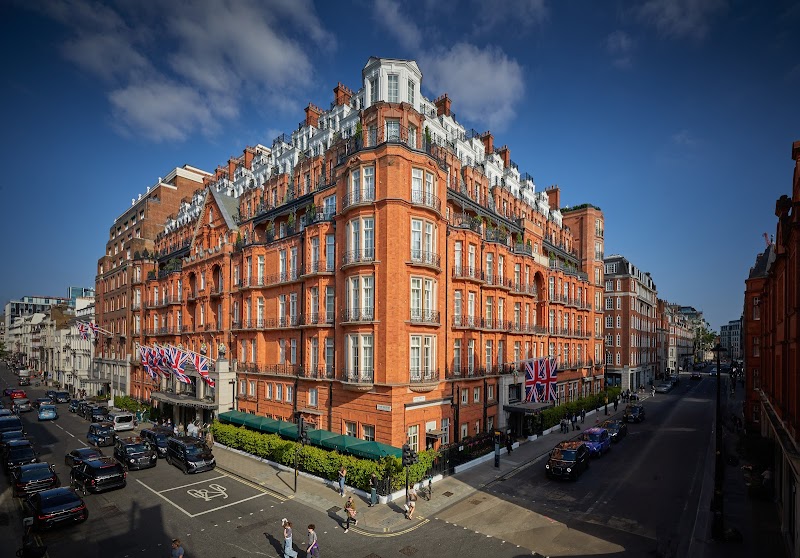
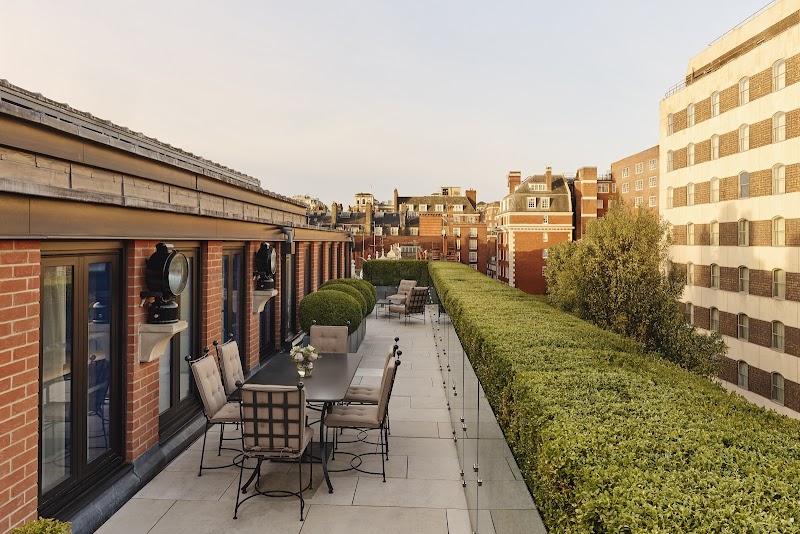
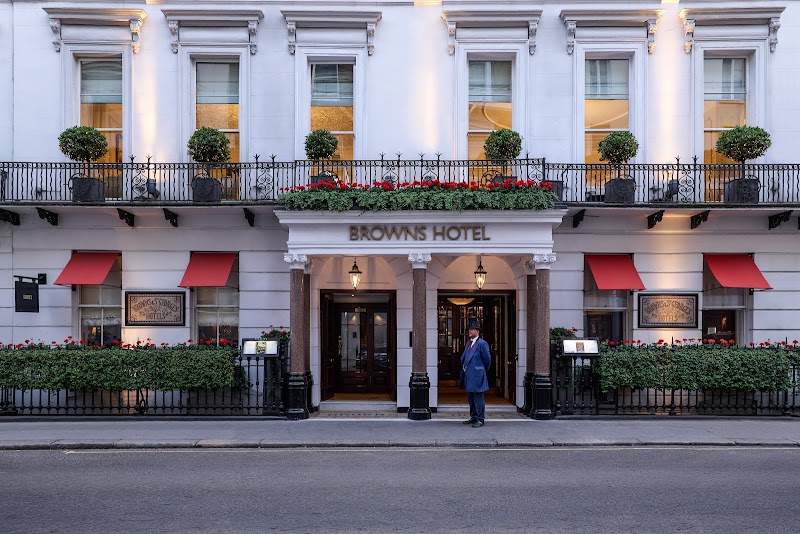
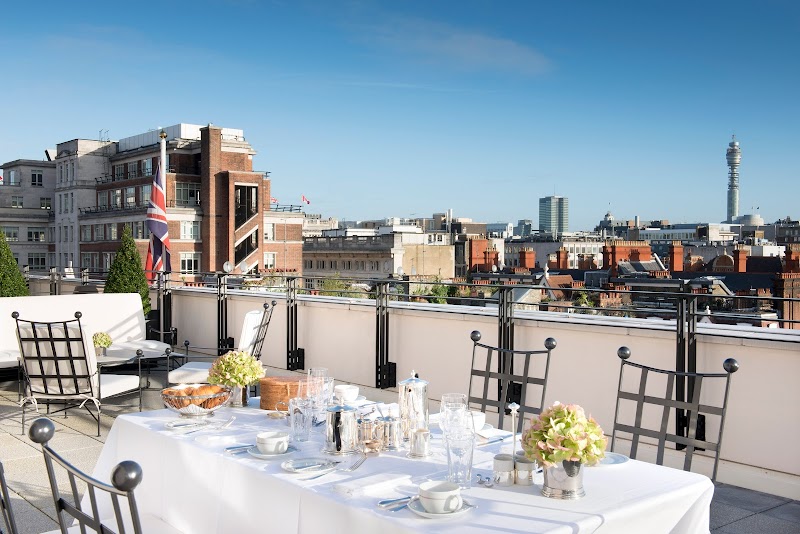
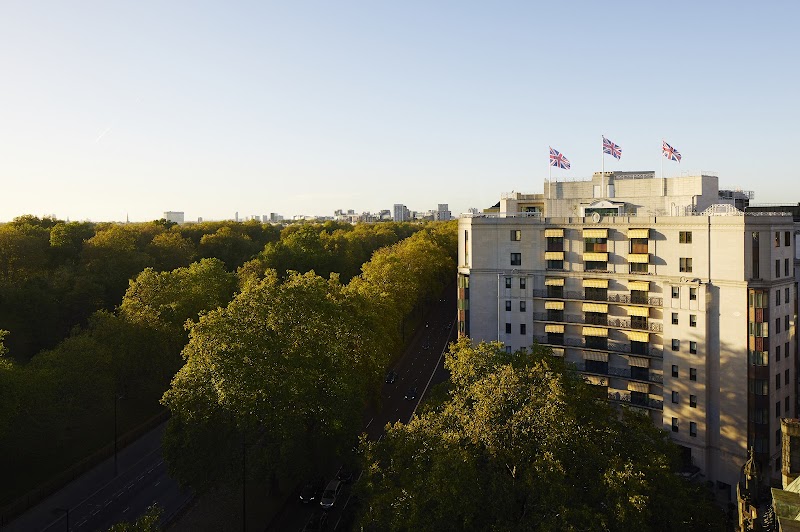
Mayfair's hotel geography is dense and distinguished: Claridge's on Brook Street (the social heart of the neighbourhood), The Connaught on Carlos Place (the most intimate of the grands), Brown's on Albemarle Street (the oldest operating hotel in London, opened 1837), The Dorchester on Park Lane (the most architecturally prominent), and The Ritz on Piccadilly (the most theatrical). These five properties define British luxury hospitality globally and have done so for the better part of a century.
Beyond the palaces, Mayfair's smaller properties offer something different: the intimacy of a house stay with the services of a full hotel. The Beaumont, on Brown Hart Gardens, is the most architecturally inventive Mayfair option — a 1920s hotel reimagined with modernist touches and an Antony Gormley sculpture built into the building's exterior. The May Fair Hotel on Stratton Street offers a larger, more party-inclined experience while retaining genuine Mayfair DNA.
The neighbourhood's cultural life extends well beyond its hotels. Cork Street — London's gallery street — has recently expanded and remains the centre of the British commercial art market. The Royal Academy of Arts on Piccadilly holds major exhibitions year-round. The Handel & Hendrix in London museum (on Brook Street, adjacent to Claridge's) celebrates two musicians who lived in adjacent houses a century apart. Shepherd Market, a village square of restaurants and pubs in the southeast corner of Mayfair, provides the neighbourhood's most approachable social infrastructure.
For shopping, Bond Street (Old and New) is the world's most concentrated luxury retail corridor: Cartier, Bulgari, Graff, Asprey, and Tiffany on the same street as Saint Laurent, Gucci, and Prada. The Burlington Arcade — a Regency-era covered shopping passage patrolled by uniformed beadles who enforce a no-running, no-singing, no-whistling rule — is London's finest retail architectural experience.