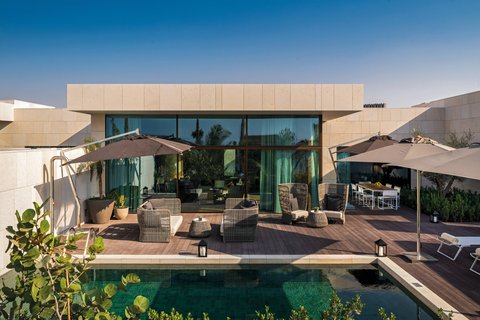
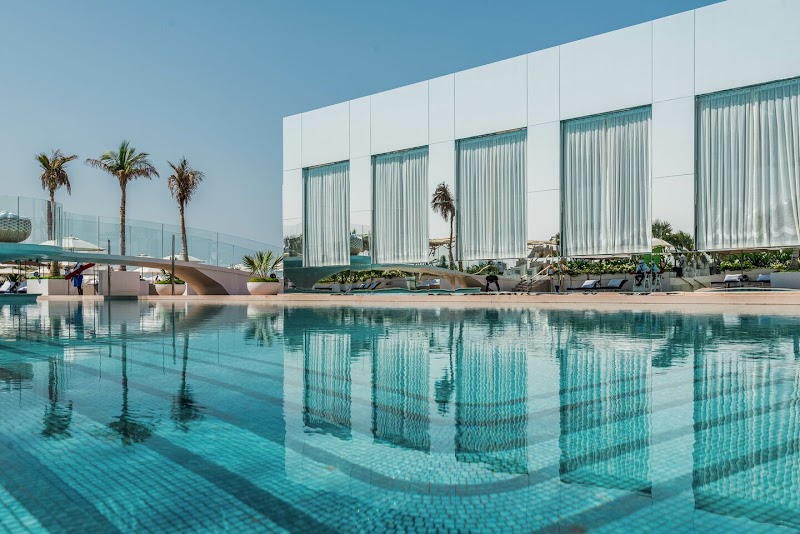
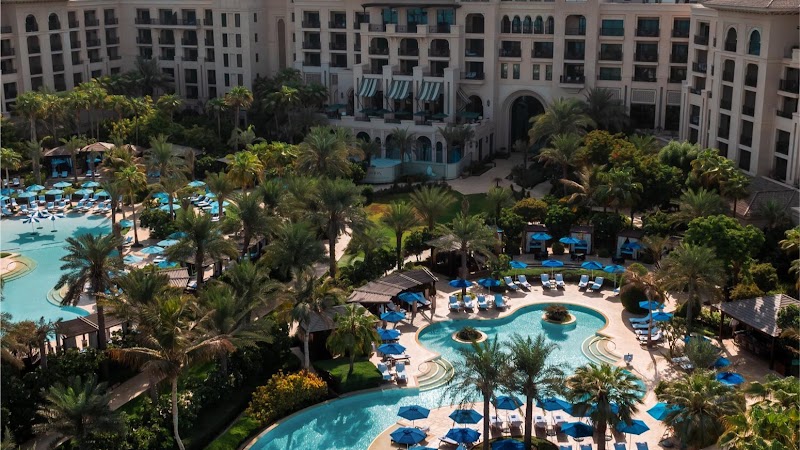
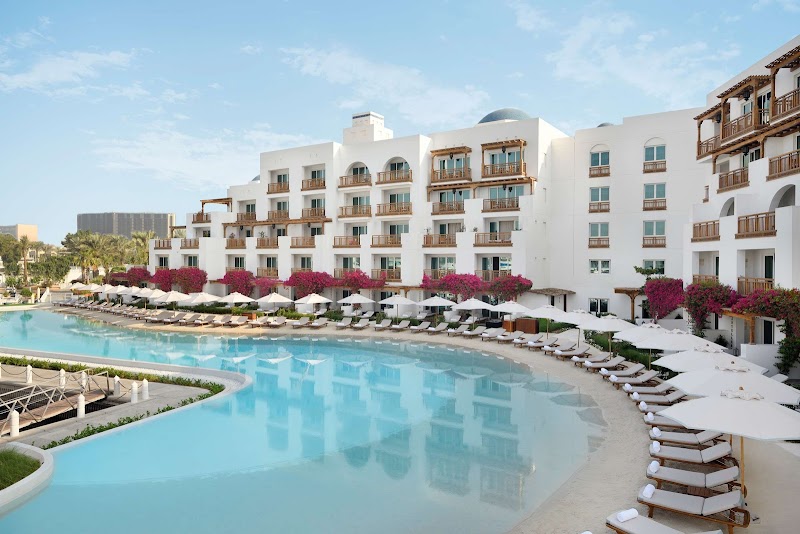
Dubai's luxury hotel market is one of the most competitive on earth. The Burj Al Arab opened in 1999 and effectively created a template for ultra-luxury hospitality that has been refined and challenged by every major global brand in the decades since. Today, properties like Atlantis The Royal, the Bulgari Resort, and the Four Seasons DIFC compete not just on rooms but on their entire hospitality universe — the restaurants, spas, beach clubs, and experiences that make a guest's entire trip happen within the hotel's own ecosystem.
The most stratospheric addresses in Dubai occupy distinct geographies. The Palm Jumeirah has the largest concentration of ultra-luxury resorts: Atlantis The Royal, One&Only The Palm, Anantara The Palm, W Dubai The Palm, and FIVE Palm Jumeirah. Each offers a version of seclusion that the mainland simply cannot replicate. The Palm's outer crescent hotels look back at the Dubai skyline — the sunset view from the Atlantis The Royal's Drift Beach is among the most dramatic urban panoramas available from a pool lounger anywhere.
For those who prefer the energy and connectivity of the city over resort isolation, the Four Seasons DIFC stands out as the finest urban luxury address. The property has an intimacy rarely found in Dubai's hotel landscape — just 106 rooms, each enormous — and its restaurants, including Zuma, are among the city's most consistent. The financial district location means easy access to the older Creek area and the cultural institutions of Al Seef.
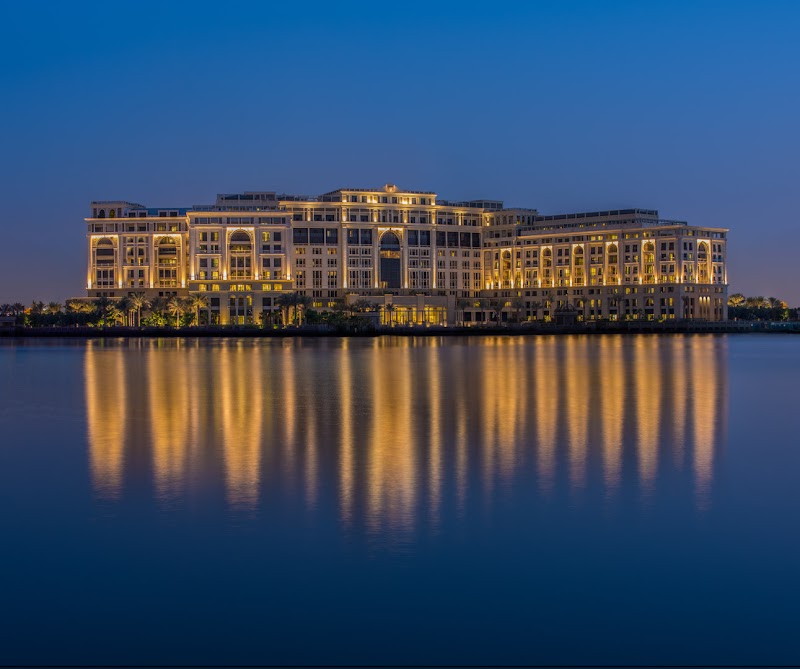
The Ritz-Carlton and Four Seasons chains have multiple properties in Dubai, and their DIFC and JBR locations respectively represent the best each has to offer. Palazzo Versace on the Creek delivers exactly the Italian fashion-house luxury its name promises — marble, Versace patterns, and the most ornate pool in the city. This is a hotel for people who find the Burj Al Arab too modern.
What all Dubai luxury hotels share is an exceptional staff-to-guest ratio, reliable air-conditioning engineering (critical for summer), and a willingness to accommodate unusual requests. The culture of service here draws from a workforce of over 200 nationalities, and the instinct to please is genuine rather than performative.