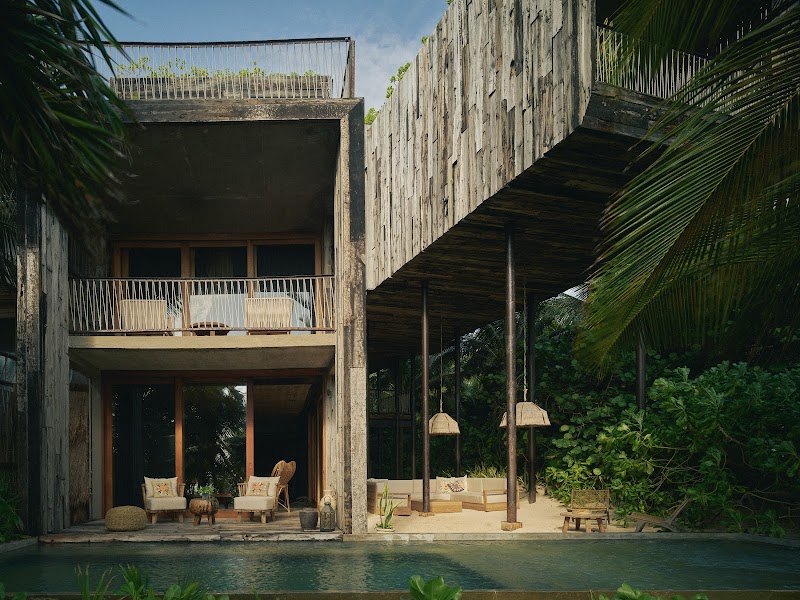
Tulum's visual identity divides between the Archaeological Zone's clifftop ruins and the beach hotel corridor stretching south from the ruins along the Tulum Beach Road. The ruins sit on a limestone bluff 12 meters above the Caribbean, and the view from within the ruins — looking east over the turquoise water with the El Castillo temple in the foreground — is the quintessential Tulum image, reproduced infinitely but retaining its power regardless of familiarity. Hotels on the beach road to the south of the ruins can see the Archaeological Zone from their rooftops and elevated pools on clear days.
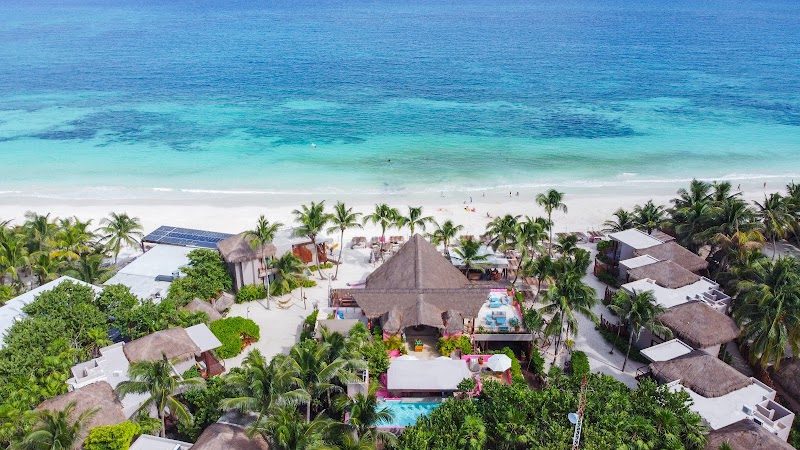
The beach road itself runs parallel to the Caribbean coast for 10km south of the ruins, with the hotel properties set in the jungle and beach alternately on either side. The east-facing sea views from beach road hotels are Caribbean-standard tropical beauty — white sand, turquoise water in multiple shades from pale aquamarine over the sand to deep teal at the reef edge, and the occasional glimpse of fishing boats and sailboats on the horizon. The sunrise from this east-facing coast is particularly dramatic: the sun rises directly out of the Caribbean, and the first light on the white sand is unlike any other coastal dawn.
The inland cenote landscape, visible during the day from elevated positions around Tulum, provides a different kind of view context. The Yucatán Peninsula's karst limestone surface, peppered with circular collapse holes (cenotes) revealing crystal-clear groundwater beneath, is most visible from the air (various ultralight and small aircraft operators offer flights from Playa del Carmen) but some of the larger cenotes near Tulum — Gran Cenote, Cenote Dos Ojos — offer swimming-pool-like views from their edges that combine jungle canopy, Caribbean blue-green water, and stalactite formations in extraordinary combinations.
The Sian Ka'an Biosphere Reserve, beginning 15km south of the Tulum hotel zone, offers the most pristine coastal views accessible from a Tulum base. The reserve's 530,000 hectares of tropical forest, mangroves, and coral reef create a visual landscape of extraordinary ecological richness — bird species, marine life, and the absence of development create a view context that makes the Tulum hotel zone's development feel like a temporary intrusion on a much larger natural canvas.
Tulum's night sky is increasingly recognized as one of the Caribbean region's best — the relative lack of light pollution south of the hotel zone, combined with the coastal humidity-free nights of the dry season, creates conditions for extraordinary star visibility. Several Tulum hotels have rooftop observation platforms or beach areas specifically designed for stargazing, and the combination of the Caribbean horizon, the Milky Way arc, and the reflection on the calm midnight sea is one of the most memorable night views available in the Mexican Caribbean.