Paris has been the world's honeymoon capital by popular consensus for at least a century, and the city has the hotel infrastructure to back it up. The Ritz, the Bristol, the Plaza Athénée — these are not just famous names but genuinely extraordinary places to stay, with service cultures built over generations specifically around the idea that some guests are marking a once-in-a-lifetime occasion and deserve to feel it. The challenge for honeymooners is that Paris also has hundreds of hotels that trade on the city's reputation without earning it independently. This guide is about the ones that earn it.
**The Best Arrondissements for a Paris Honeymoon**
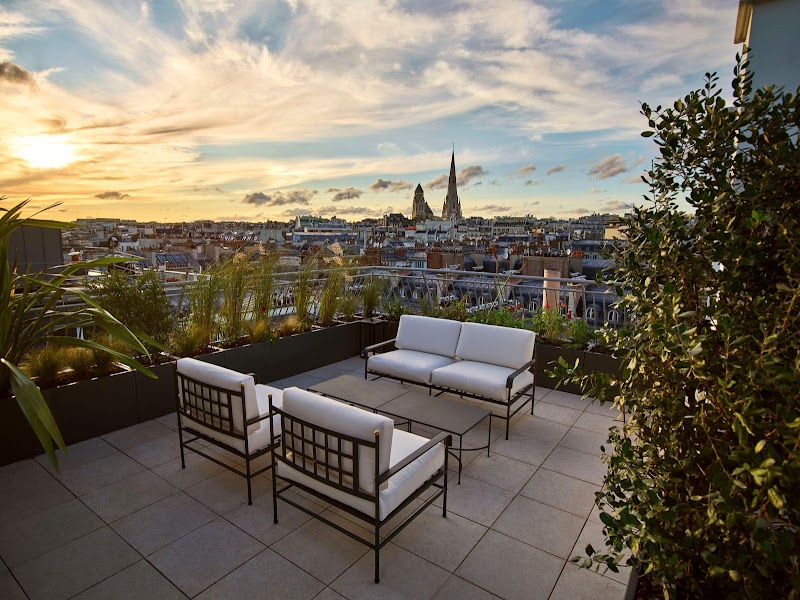
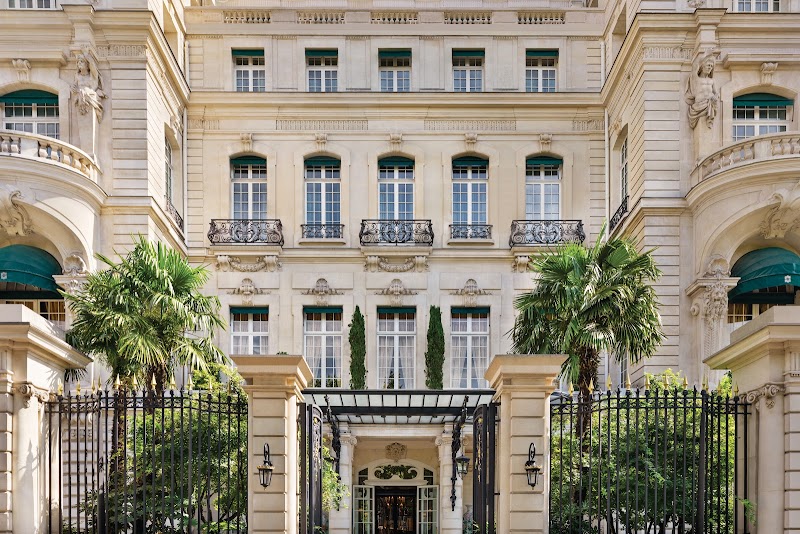
The 8th arrondissement — the Triangle d'Or and the Champs-Élysées district — is home to the city's most storied palace hotels. Le Bristol, the Plaza Athénée, and the Shangri-La are all within a 15-minute walk of the Arc de Triomphe and the Seine, and this part of the Right Bank combines proximity to the Eiffel Tower, excellent shopping, and the concentrated grandeur of Haussmann's Paris. If you want the 'Paris of postcards' experience — wide boulevards, monumental architecture, white-glove hotel lobbies — the 8th is your base.
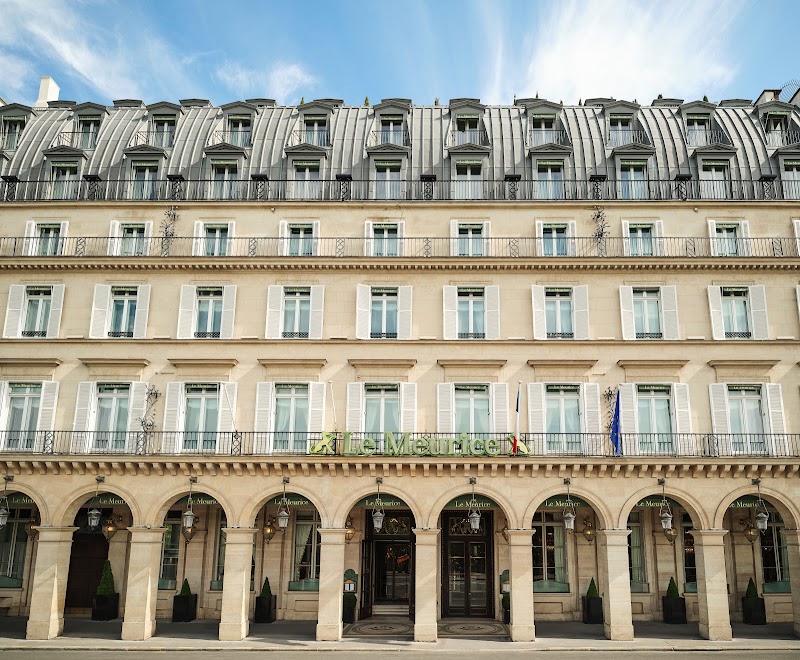
The 1st arrondissement, just across the river from the Left Bank, contains Le Meurice and the Tuileries Garden. This is the geographical heart of Paris — the Louvre is your backyard, the Palais Royal is a ten-minute walk, and the Seine embankment is immediately accessible. For honeymoons built around art, gardens, and flaneur-style wandering through the city's oldest districts, the 1st is an excellent choice.
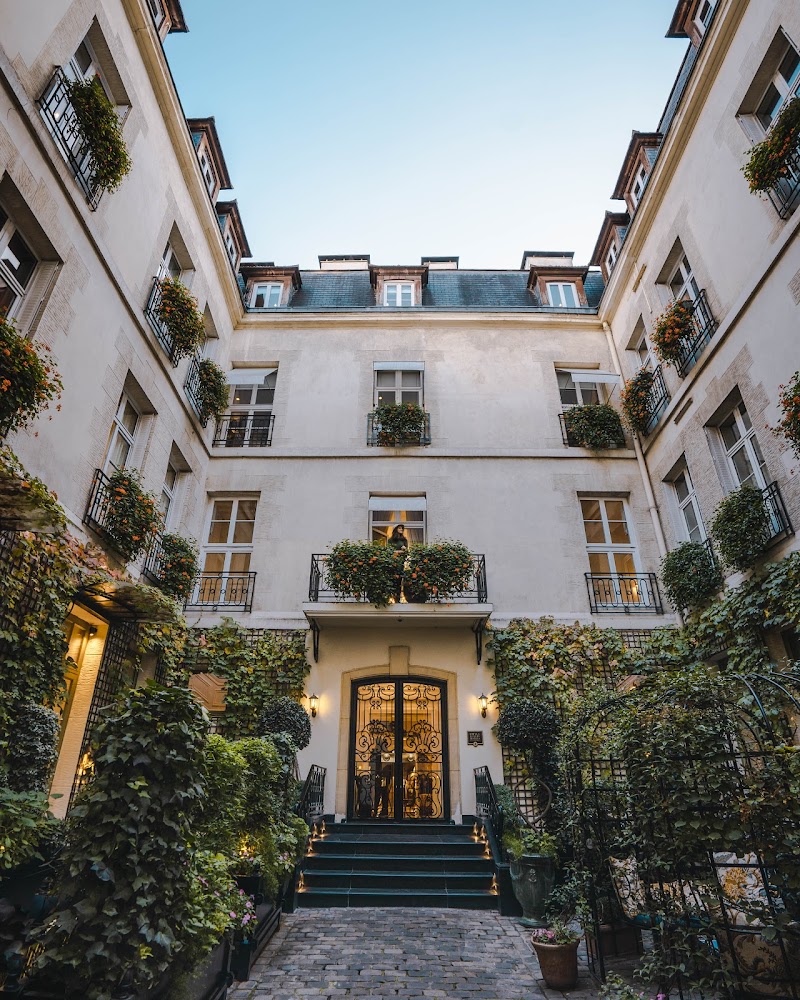
The Marais (3rd and 4th arrondissements) has emerged as the city's most exciting neighborhood for boutique hotel stays. The area is dense with 16th–17th century hôtels particuliers — grand private mansions converted into small luxury hotels — and the neighborhood's mix of Jewish heritage, contemporary art galleries, and excellent restaurants gives it a texture that the palace-hotel districts lack. Pavillon de la Reine and Cour des Vosges, both on or adjacent to the Place des Vosges, offer honeymoon experiences that feel genuinely Parisian rather than internationally luxury-generic.
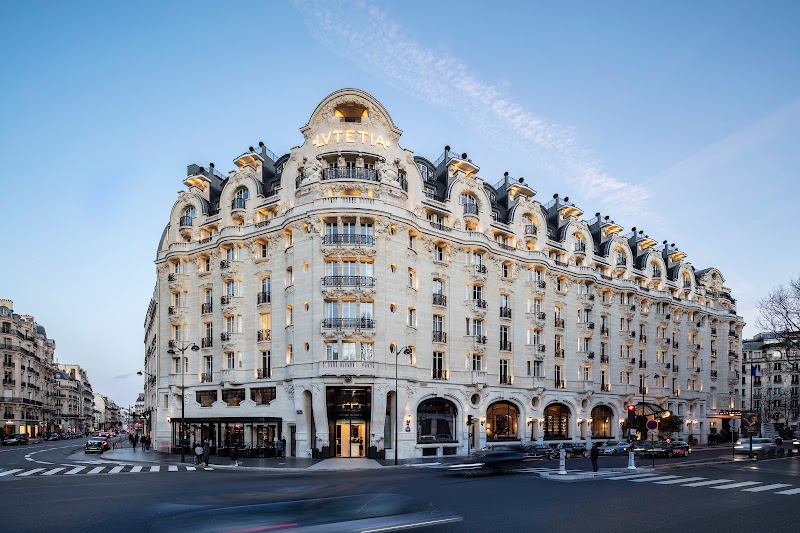
The Left Bank (6th arrondissement, Saint-Germain-des-Prés) is the literary and intellectual Paris of Hemingway, Sartre, and Simone de Beauvoir — now considerably more expensive and rather less bohemian, but still beautiful, intimate, and considerably quieter than the Right Bank palace-hotel districts. Hôtel Lutetia (the Left Bank's only palace hotel) and Relais Christine occupy this territory and suit honeymooners who want cobblestone streets, bookshop windows, and candlelit bistros over grand boulevards and luxury retail.
**Eiffel Tower Views: The Reality**
Every second Paris hotel claims Eiffel Tower views, and the term covers everything from a clear sightline from a private balcony (genuinely special) to a distant glimpse from a rooftop bar (pleasant, not transformative). For actual Eiffel Tower views from your room, the Shangri-La Paris is the gold standard: the hotel faces the tower directly across the Seine from Trocadéro, and the Tower Eiffel Suites have floor-to-ceiling glass walls with the structure filling the view completely. The Plaza Athénée has more limited Eiffel Tower views from certain rooms on the avenue Montaigne side. Le Bristol, Le Meurice, and the Left Bank hotels do not have Eiffel Tower views — they offer other, equally compelling reasons to be there.
A note on the Eiffel Tower light show: the tower's hourly sparkle display (every hour from dusk to midnight) is visible from the Trocadéro facing suites at the Shangri-La with theatrical clarity. Booking a Tower Suite for the first night of your honeymoon, then watching the midnight light show from your private balcony with a bottle of Champagne, is one of the more effortlessly romantic things you can do anywhere in the world.
**What Paris Palace Hotels Actually Provide**
Paris has a formal 'Palace' designation — awarded by the French government to a small number of hotels (currently around 30) that meet extraordinarily high standards for service, facilities, and heritage. Of the eight hotels on this list, Le Bristol, Plaza Athénée, Shangri-La, and Le Meurice hold Palace status. What this means practically: butlers are standard, not exceptional; the concierge team can secure restaurant reservations, opera tickets, and private museum access that most hotels cannot; room service operates at the level of a serious restaurant; and the physical spaces — lobbies, gardens, courtyards — are maintained as expressions of France's most rarefied hospitality tradition.
For a honeymoon, the Palace designation is worth paying for, not for the status but for what it translates to in practice: on your first morning as a married couple in Paris, breakfast in the Le Bristol garden (the most beautiful hotel garden in Paris) or dinner at Le Meurice's Philippe Starck-designed restaurant is an experience of a different order than what most hotels can provide.
**Seine-Side Romance and the Left Bank Alternative**
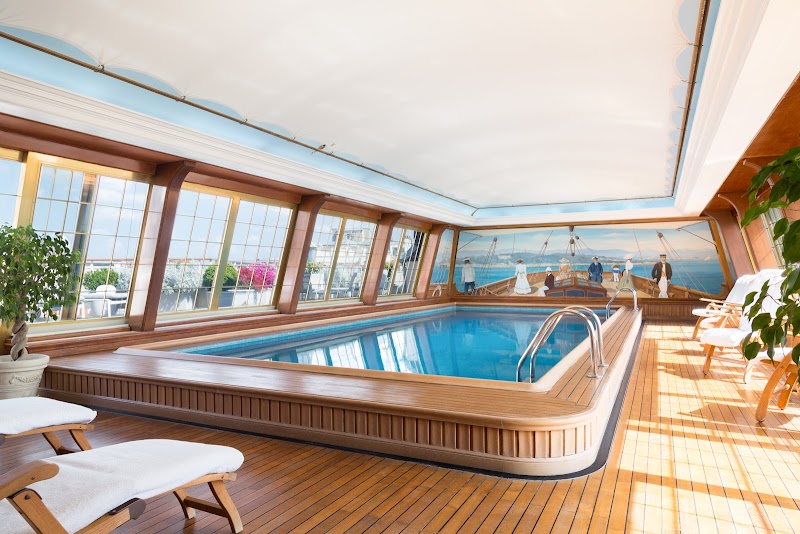
The Hôtel Lutetia, reopened after a four-year renovation in 2018, is one of the most beautiful hotels in Paris — the only palace hotel on the Left Bank, occupying a curved Art Deco building at the intersection of Rue de Sèvres and Boulevard Raspail. The renovation preserved the hotel's extraordinary original Art Deco interiors while adding a spa and pool that are genuinely among the best in Paris. For honeymooners who want Saint-Germain's intellectual atmosphere alongside palace-level service, Lutetia is without competition.
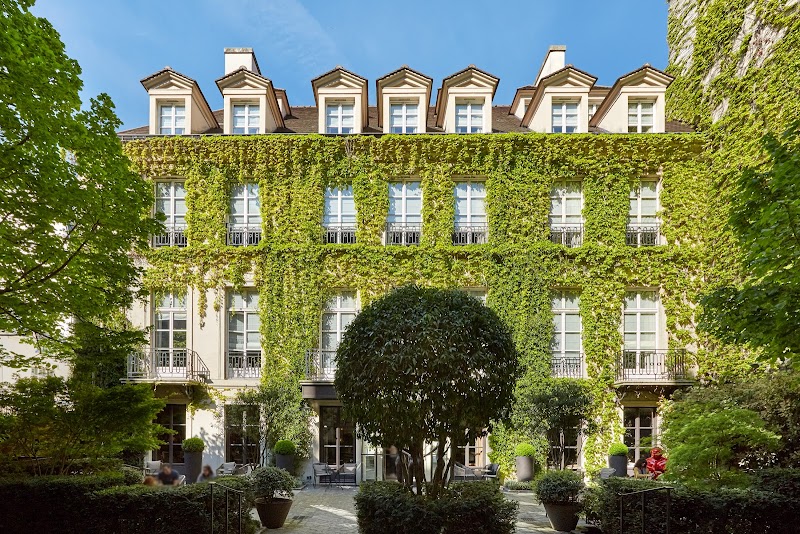
Relais Christine, hidden behind tall gates on a Rue Christine in the 6th, is a more intimate and considerably less expensive alternative. The hotel occupies a 16th-century abbey and the rooms feel genuinely historic without sacrificing comfort. The courtyard is one of the city's quietest outdoor spaces. For couples who prioritize character and atmosphere over grand public spaces and five-star facilities, Relais Christine represents exceptional value.
**The Marais: Paris's Most Romantic Neighborhood for Honeymooners**
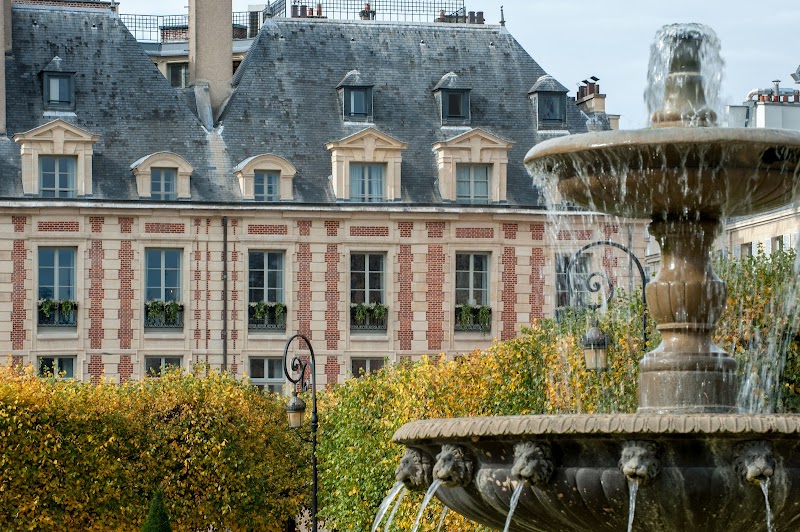
The Place des Vosges is the most beautiful square in Paris — 36 matching red-brick pavilions arranged around a central garden, built by Henri IV in 1612 and barely changed since. Both Pavillon de la Reine and Cour des Vosges are positioned either on or immediately adjacent to this square, and staying at either puts you at the geographical and emotional heart of historic Paris. The Marais's streets in the morning — before the tourists arrive — have a stillness and beauty that the busier arrondissements rarely achieve.
The neighborhood's restaurant scene has also become Paris's most exciting in the last decade: Septime, Frenchie, Le Mary Celeste, and Breizh Café are all within walking distance of the square, and the Marais's Jewish deli tradition (L'As du Fallafel on Rue des Rosiers) provides a completely different kind of excellent meal for lunch.
**Practical Considerations**
Paris hotels charge city tax (taxe de séjour) on top of the room rate — at palace and luxury hotels this runs €5–10 per person per night. Most luxury hotels include breakfast in higher-tier room rates; confirm before arrival whether it's included, as Paris hotel breakfasts (particularly at the palaces) are genuinely exceptional and worth €50–80 per person.
For restaurant reservations, book before you depart: Paris's most celebrated restaurants (Guy Savoy, Le Grand Véfour, Taillevent, Septime) have wait times of 4–8 weeks minimum. Your hotel concierge at a palace property can often secure reservations that are nominally unavailable online — this is one of the genuine practical benefits of palace-level spending.
April–May and September–October are the best months for a Paris honeymoon: the weather is mild, the light is particularly beautiful, and the city is fully operational without the tourist peak of July–August. Paris in winter (November–February) has its own appeal — the crowds genuinely thin, the Champagne bars feel festive, and hotel rates drop significantly — but the cold and shorter days require an adjustment in expectations.
**Private Museums and Cultural Experiences for Honeymooners**
Paris's cultural infrastructure rewards advance planning. The Louvre's private early-morning access programme — available through palace hotel concierges — allows small groups to enter before the museum opens to the public, making it possible to stand in front of the Venus de Milo or the Winged Victory of Samothrace without another visitor in the frame. This experience, which costs considerably less than you might expect, is the single most dramatic thing a hotel concierge can organise for a Paris honeymoon.
Musée d'Orsay's Impressionist collection and the Musée Rodin's sculpture garden also offer private access options. The Rodin garden — with The Thinker and The Gates of Hell in a beautiful outdoor setting — is one of the most romantic spaces in Paris and relatively unknown to the tourist crowds that queue for the Louvre.
**Seine Walks and Riverbank Romance**
The Seine embankment has been a UNESCO World Heritage Site since 1991, and the lower embankments (the Voies sur Berges) were pedestrianised in 2013 — creating a continuous riverside walk from the Trocadéro to the Île Saint-Louis that is one of the finest urban walks in Europe. An evening walk from the Eiffel Tower, across the Pont d'Iéna, along the Right Bank embankment to Notre-Dame, and across the Île de la Cité back to the Left Bank covers the most beautiful 4 kilometres of Paris at grade level and takes approximately 90 minutes at a casual pace.
The bateaux mouches (river cruise boats) that operate on the Seine range from tourist-trap group dinners to genuinely excellent private charter options. Bateaux Parisiens and Yachts de Paris both offer private dinner cruises for two on purpose-built vessels with white-glove service and a menu worth eating — not just the view. A two-hour private dinner cruise past Notre-Dame, the Eiffel Tower, and Pont Neuf is a predictably romantic activity that earns its cliché.
**Paris Dining at the Level That Matches the Hotels**
The palace hotels all have three-Michelin-star restaurants attached (Epicure at Le Bristol, Alain Ducasse at Le Meurice, the Alain Ducasse restaurant at Plaza Athénée), and eating at all three in the same trip is not as excessive as it sounds — they are entirely different experiences: Epicure is classical French with exceptional depth; Ducasse at Plaza Athénée pursues the 'naturalité' philosophy with ingredients that are extraordinarily seasonal and sourced; Ducasse at Le Meurice occupies a room so beautiful it operates as dinner theatre.
For less formal but equally memorable meals: Pierre Gagnaire's eponymous restaurant in the 8th is creative French cuisine at its most playful; Septime in the 11th is the best neighbourhood bistro meal in Paris and requires booking weeks ahead; L'Astrance in the 16th serves a single set tasting menu that is one of the most interesting meals in the city. For a purely Parisian lunch, the zinc counters of Café de Flore or Les Deux Magots in Saint-Germain — croissants, café crème, watching Paris walk past — are worth experiencing once regardless of the tourist associations.
**Paris by Season: What No One Tells You**
The Paris most people imagine — the golden light, the chestnut trees in bloom, the café terraces full — is Paris in April and May. This is not a myth. Spring in Paris is genuinely exceptional, and it accounts for much of the city's romantic reputation.
What is less discussed is Paris in late September and October: the light is different (lower angle, warmer colour, longer golden hours), the fashion season is in progress, the opera and theatre schedules are at peak, and the city has a particular high-energy autumn quality that spring lacks. Hotel rates in October are often 20–30% lower than May. For honeymooners who have flexibility in timing, late September to mid-October is arguably the finest window of the year.