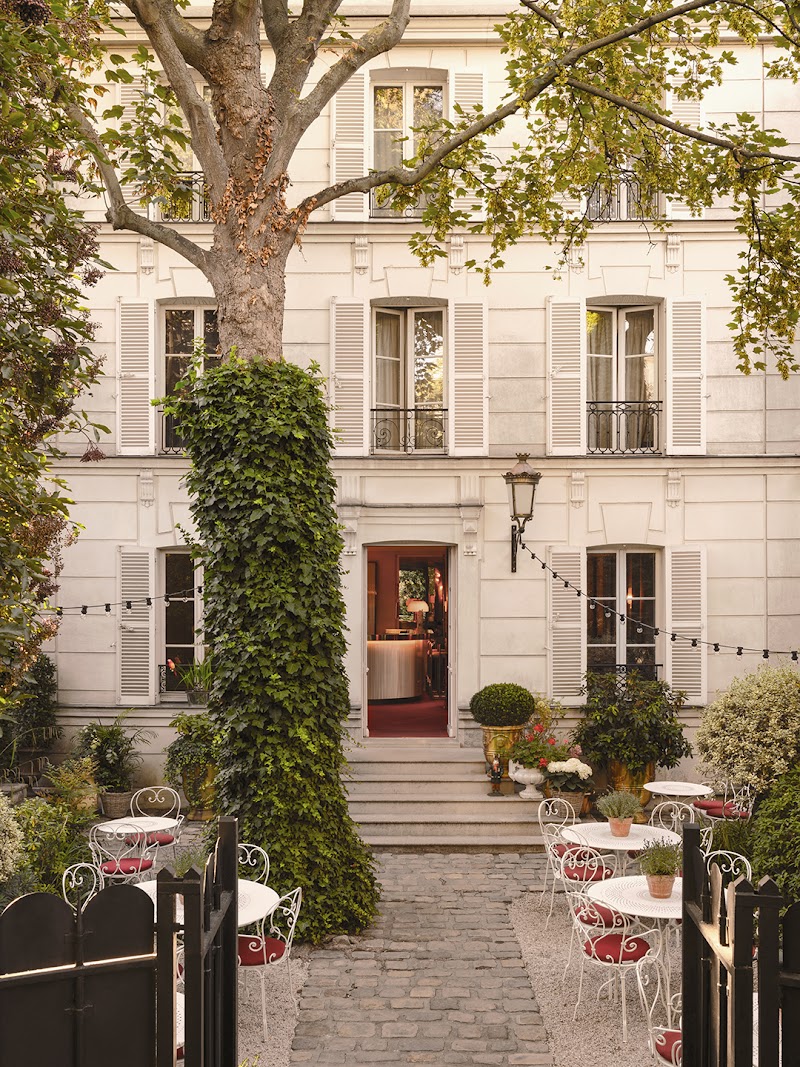
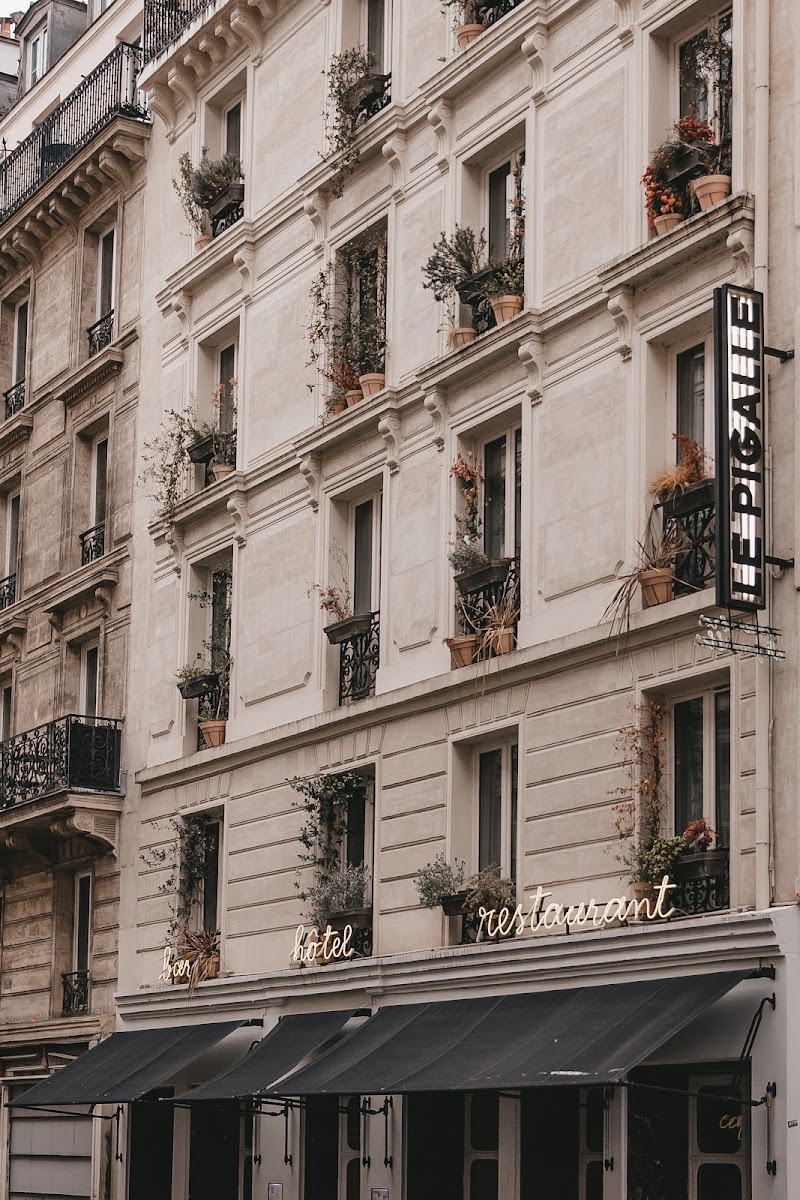
The boutique hotel movement in Paris traces its roots to the 1990s, when a generation of hoteliers grew tired of the beige-and-brass uniformity that had colonised international luxury travel. They bought neglected Haussmann buildings and post-industrial lofts, hired architects who'd never worked in hospitality before, and created properties where the aesthetic was inseparable from the experience. That tradition has only deepened — Paris now has some of the world's most consistently excellent boutique properties, many of which could command five-star rates if they chose to.
The Marais (4th) and Saint-Germain-des-Prés (6th) are the twin epicentres of Parisian boutique hospitality. In the Marais, you'll find hotels that feel like extensions of the gallery scene — raw concrete beside gilded mirrors, contemporary art beside 17th-century ceiling frescoes. Saint-Germain skews literary and romantic: wood-panelled reading rooms, garden courtyards, and a general sense that Simone de Beauvoir might appear at the next table.
Montmartre and the 9th arrondissement have emerged as the new frontier for boutique accommodation, with hoteliers drawn by lower property prices and a neighbourhood aesthetic that blends bohemian art-world energy with a village-like domestic calm. These properties tend to be younger in spirit, less reverent, more likely to stock natural wine in the minibar and host gallery openings in the lobby.
What separates a great Paris boutique hotel from a merely stylish one is the quality of human attention. The best properties anticipate — a theatre recommendation before you've asked, an umbrella at the door before the rain arrives, a handwritten note in your room because you mentioned in passing that you were celebrating an anniversary. This is the dimension that no chain hotel can replicate, and it's why the boutique model continues to command fierce loyalty among the world's most discerning travellers.