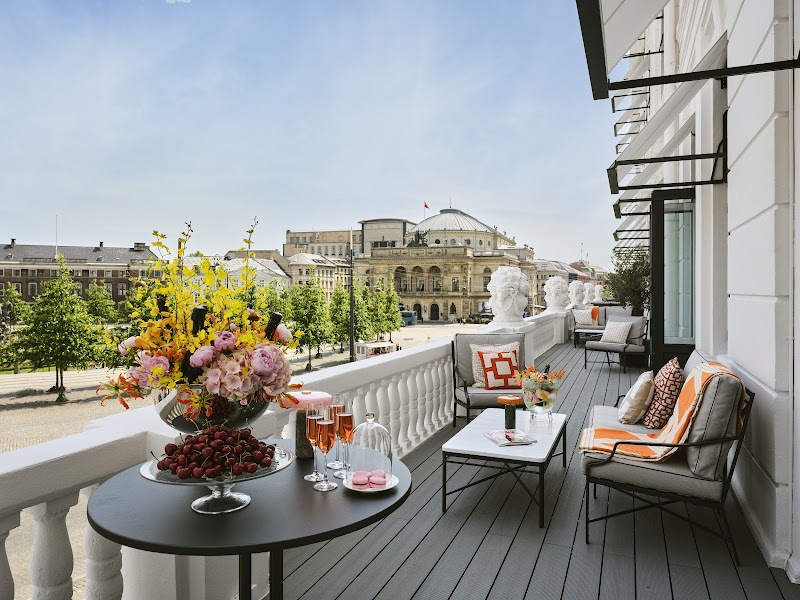
Copenhagen's historic core — Indre By — anchors a compact, walkable city whose neighborhoods each have distinct characters. The Nyhavn canal, with its colored merchant houses along the waterfront, is the city's famous image; the actual experience is a string of outdoor restaurant terraces, boat tours departing every hour, and the perpetual photography of the most Instagrammed facade in Scandinavia. Staying near Nyhavn but exploring inward — through the Frederiksstaden neighborhood with its Rococo mansions, past the Marble Church to the Amalienborg palace square, and toward the Botanic Garden — reveals a Copenhagen of extraordinary architectural and natural richness.
Frederiksberg and Vesterbro, west of the city center, represent Copenhagen's contemporary cultural life. Vesterbro's Meatpacking District (Kødbyen) — once the city's meat processing area, now its most dynamic restaurant and bar hub — contains some of the best restaurants in Denmark alongside galleries, vinyl shops, and cocktail bars where the 30-something Copenhagen creative class gathers. The neighborhood has a particular energy on Thursday evenings when Copenhagen treats dinner as a social event rather than fuel, and restaurants run at full capacity with waiting times that suggest booking the week before.
The Danish culinary revolution is the city's most globally famous contribution to contemporary culture, and Copenhagen's restaurant scene operates at a level that rewards both adventurous and traditional approaches. Noma closed in its Copenhagen form but the team's influence is visible throughout the city — Geranium (three Michelin stars, the finest tasting menu in Scandinavia), AOC (two stars in a medieval vaulted cellar in Indre By), and the newer generation of fermentation-led, locally-sourced restaurants that have made Denmark's New Nordic philosophy the most imitated in world gastronomy.
The Louisiana Museum of Modern Art, 35 kilometers north of Copenhagen on the Øresund coast, is among the greatest small art museums in the world and one of the most beautiful buildings anywhere — a converted Victorian villa connected by glass corridors to a series of galleries in lush coastal gardens above the sound. The permanent collection (Giacometti, Calder, Warhol, Picasso) and the views from the sculpture garden across to Sweden make this one of the finest half-day excursions available from any major European city. Combine it with a swim in the Øresund at the museum's private shoreline access.
Copenhagen's harbor baths are a genuinely Danish phenomenon that honeymooners should participate in. The Islands Brygge Harbor Bath — a public outdoor swimming complex in the inner harbor — operates from June to September and represents the Danish civic culture of accessible public luxury at its finest. The water is clean enough to swim in safely (the harbor has been continuously cleaned since the 1990s), the views of the Christianshavn waterfront are excellent, and the experience of swimming in a harbor surrounded by a working city, with kayakers and small vessels passing, is entirely Copenhagen.