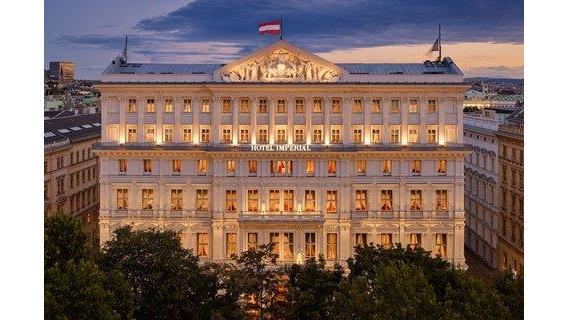
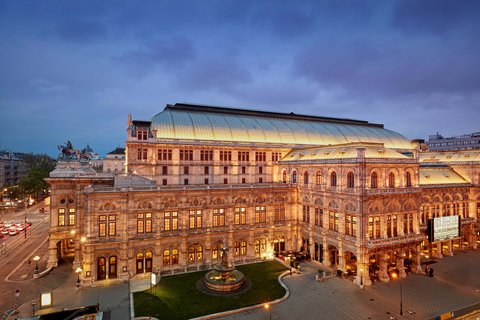
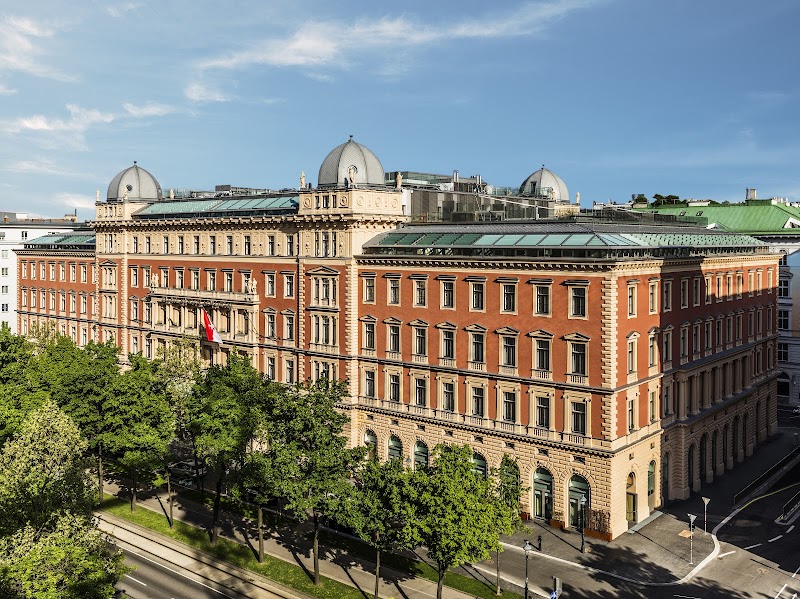
Vienna's cityscape was engineered for visual effect with deliberate imperial intention. Franz Joseph I's transformation of the inner city in the 1860s and 1870s — replacing the old city walls with the Ringstraße boulevard lined with purpose-built palaces of culture (the Opera, the Natural History Museum, the Kunsthistorisches Museum, the Parliament, the Rathaus) — created one of the world's most coherent urban compositions. Hotel rooms and terraces facing the Ring have front-row seats to this architectural theater.
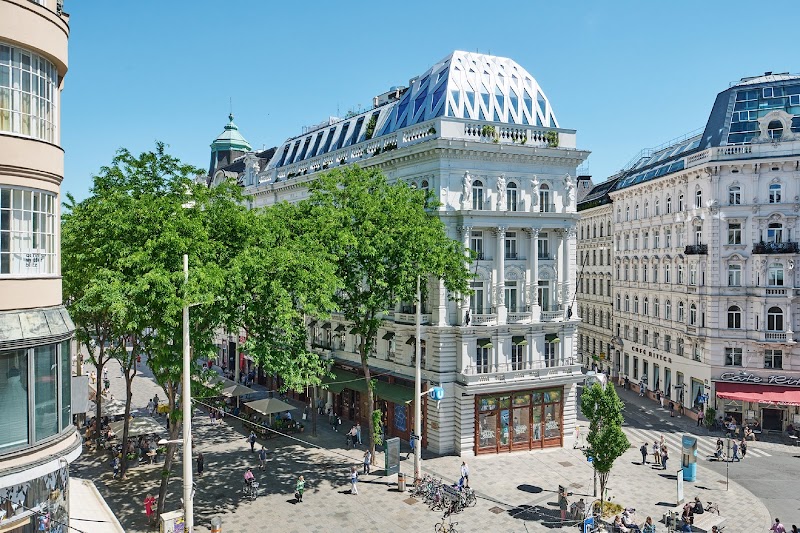
The historic 1st district, the Innere Stadt bounded by the Ringstraße, is the most densely viewable area in the city. Stephansdom's south tower, rising 137 meters above the compact medieval streets below, is Vienna's defining vertical element — visible from almost everywhere in the city and dominating every panoramic view. Hotels near the Graben and Kohlmarkt pedestrian streets, immediately adjacent to the cathedral, have the closest relationship with the Gothic spire, and the hotel terraces here capture the stone tower against changing light through the day.
The Belvedere Palace complex, just south of the Ringstraße, provides the city's most spectacular garden panorama — the formal baroque garden descends from the Upper Belvedere palace on the ridge to the Lower Belvedere in the valley, with the city's tower and dome silhouette visible across the intervening greenery. The nearby Landstraße and Rennweg hotels have views toward this complex, and the garden walk from the Upper Belvedere facing north toward the Stephansdom silhouette is one of Vienna's great compositional views.
The Kahlenberg and Leopoldsberg hills, rising 484 and 425 meters respectively above the Danube to the northwest of the city, provide Vienna's only genuinely elevated panoramic views. The Kahlenberg ridge restaurant and the church at Leopoldsberg look across the Vienna Woods and directly over the entire city spread below — the Danube's braided channels, the compact 1st district, the long boulevard of the Ring, and the distant Schneeberg mountain range to the south on very clear days. Several vineyard hotels in the Grinzing and Sievering districts on the lower slopes of this ridge have partial city views.
Vienna's Prater district, east of the city center, offers the Riesenrad's iconic Ferris wheel view — the 1897 wooden cabin gondolas provide a rising panorama of the Prater's chestnut avenue, the city beyond, and the Danube to the north. The Prater area's hotel scene is limited but growing, and the view of Vienna from the Riesenrad at dusk, with the lit city spreading west, is one of Europe's most nostalgic panoramas.