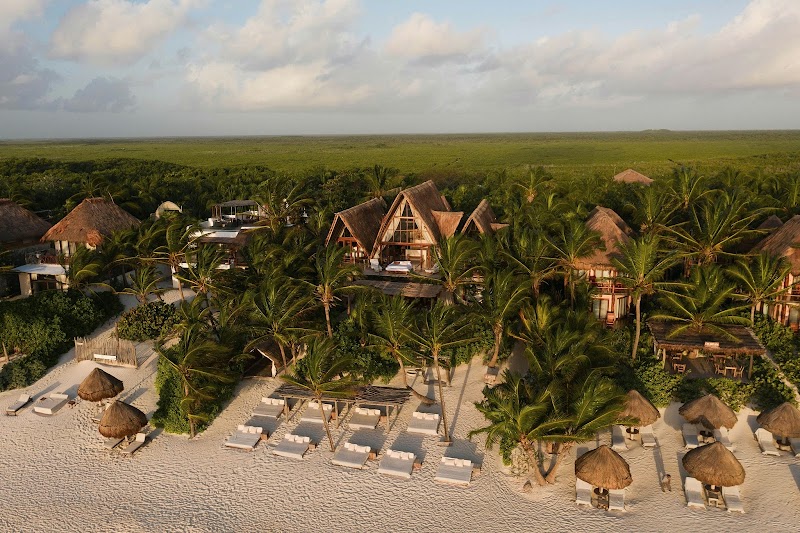
The Tulum Hotel Zone stretches 15 kilometers south of the archaeological site along an unpaved jungle road that runs between the Caribbean beach and the Sian Ka'an Biosphere Reserve — 1.3 million acres of protected tropical forest, wetlands, and coastline that begins where the hotel strip ends. This setting defines what makes a Tulum honeymoon fundamentally different from the rest of the Riviera Maya: staying here means sleeping where the jungle meets the sea, hearing howler monkeys from your bed, and knowing that the darkness of the night sky is genuine rather than artificially maintained.
The hotel zone road runs north-south and properties divide into beachfront (Caribbean-facing) and jungle-side (lagoon-facing). Beachfront properties in the northern section of the strip, between the ruins and the Weary Traveler hostel corridor, front the best beach and the clearest water — also the most photographed and most populated. The southern section, approaching the Sian Ka'an boundary, becomes progressively quieter and more secluded as the road deteriorates and the number of day-trippers from the pueblo diminishes. The finest honeymoon properties occupy this quieter southern stretch.
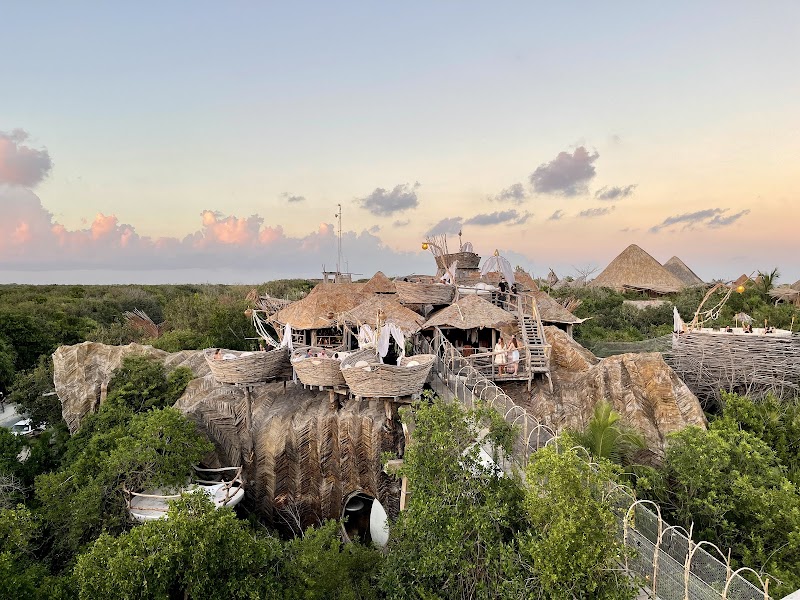
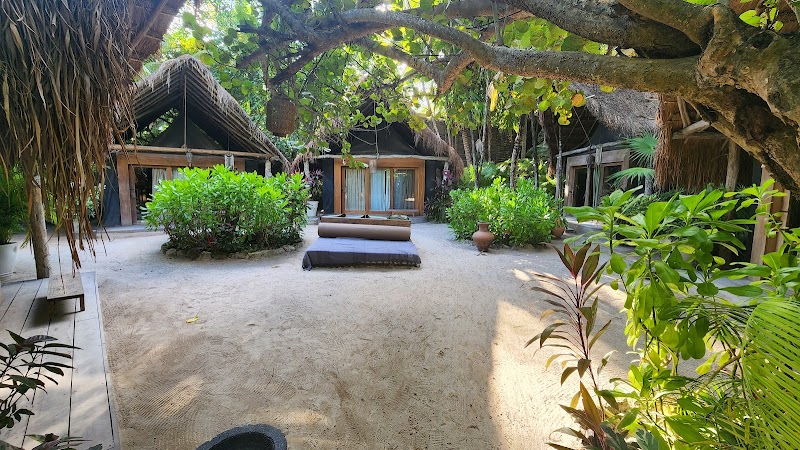
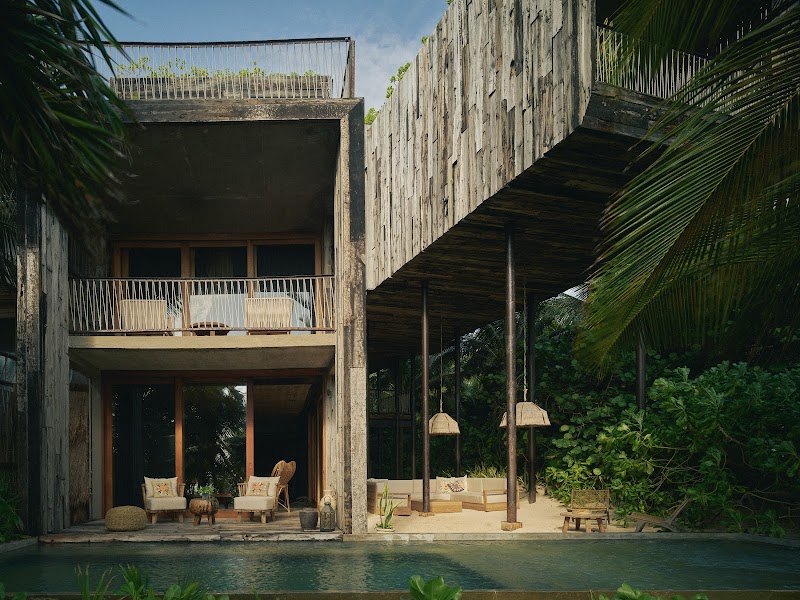
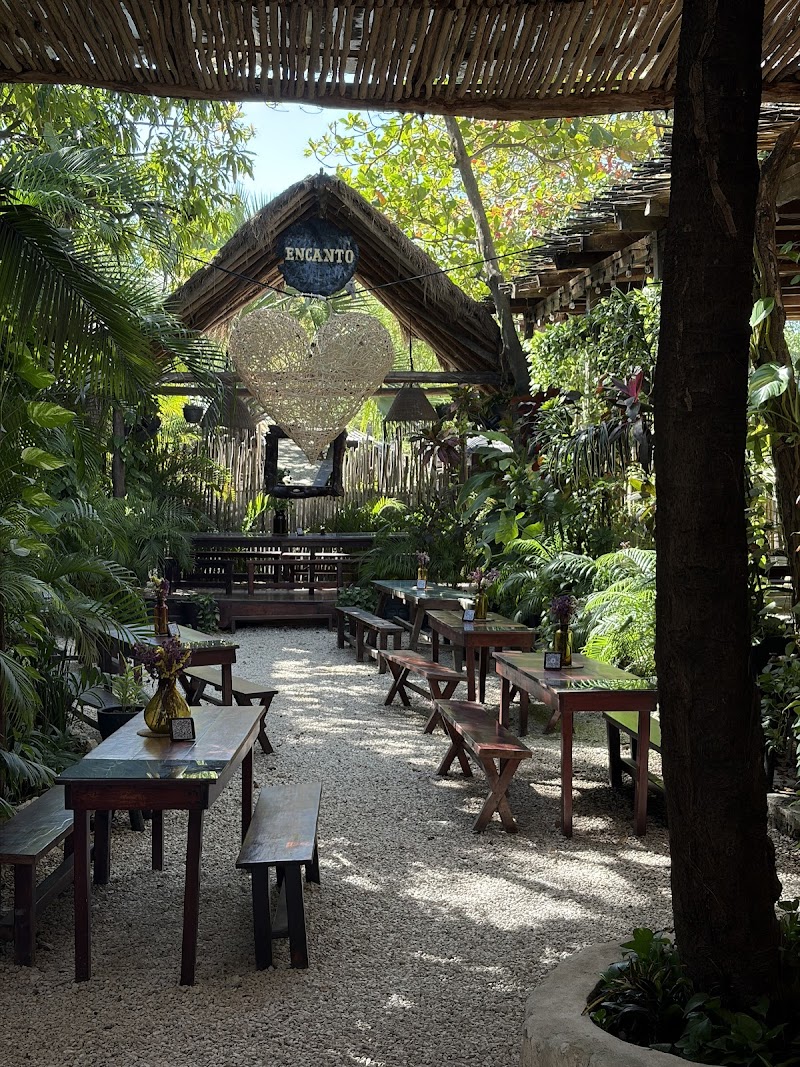
Tulum's architectural language is unlike anywhere in the Caribbean. Treehouse villas built from repurposed wood and sustainably harvested palm, open-air dining platforms suspended above the jungle canopy, outdoor showers enclosed by palm walls and open to the stars — these are buildings that treat the natural environment not as a backdrop but as the primary design material. The aesthetic is labor-intensive and genuinely beautiful, and it gives Tulum hotels a character that makes equally priced properties in Cancun or Playa del Carmen look flat by comparison.
The cenote experience is central to a Tulum honeymoon in a way it simply isn't at most Caribbean destinations. Gran Cenote, just a few kilometers from the hotel zone on the road toward Coba, is the most accessible — an open cavern where sunlight beams through cracks in the limestone roof and illuminates crystal-clear water of ethereal blue-green. Dos Ojos and the connected system of cenotes accessible from the hotel zone's inland side offer increasingly spectacular cave environments for couples who snorkel. The experience of swimming in an underground river, alone or nearly so in the early morning, in water that has filtered through limestone for millennia, is one of those travel experiences that recalibrates perspective.
Tulum's dining scene deserves special attention from honeymooning couples. Hartwood, the most acclaimed restaurant in the Yucatan, runs on fire alone — no gas, no electricity — and the daily menu of wood-fired fish, vegetables from local farms, and chili-honey sauces from local markets changes entirely based on what arrives from the morning market. Reservations fill weeks in advance. Nearby, Gitano Jungle (in the hotel zone) and Kitchen Table (in Pueblo) represent entirely different but equally thoughtful approaches to Yucatecan food.