Santorini's beach geography separates into two distinct zones. The caldera side — the famous western rim — has no accessible beaches; the volcanic cliffs drop straight to deep water. The accessible beaches are on the eastern coast (Kamari, Perissa, Monolithos) and southern coast (Red Beach, Vlychada, Perivolos), where the terrain descends more gently to the sea.
The most famous beaches are Kamari and Perissa — both black-sand, both well-developed with sunbeds, watersports, and beach tavernas, and both genuinely excellent. The black volcanic sand is a unique sensory experience: fine-grained, very dark, and intensely hot in midday summer sun — beach shoes are strongly recommended. The water is typically clear and slightly calmer than open-ocean Aegean; both beaches are safe for families.
Red Beach, near the Akrotiri archaeological site, is arguably the most dramatic beach in Greece — blood-red volcanic cliffs rising directly behind a crescent of dark sand, accessible only by water taxi or a short clifftop walk. It's not swimmable in rough weather (the cliffs shed rocks) but the visual impact on a calm day is extraordinary. No hotels sit directly on Red Beach, but Akrotiri village hotels are nearby.
Perivolos and Perissa merge into a continuous 12 km stretch of black sand — the longest continuous beach in the Aegean. The southern end (Perivolos) has more clubs and beach bars; the northern end (Perissa) is calmer. Both have a range of accommodation from budget guesthouses to mid-range resort hotels.
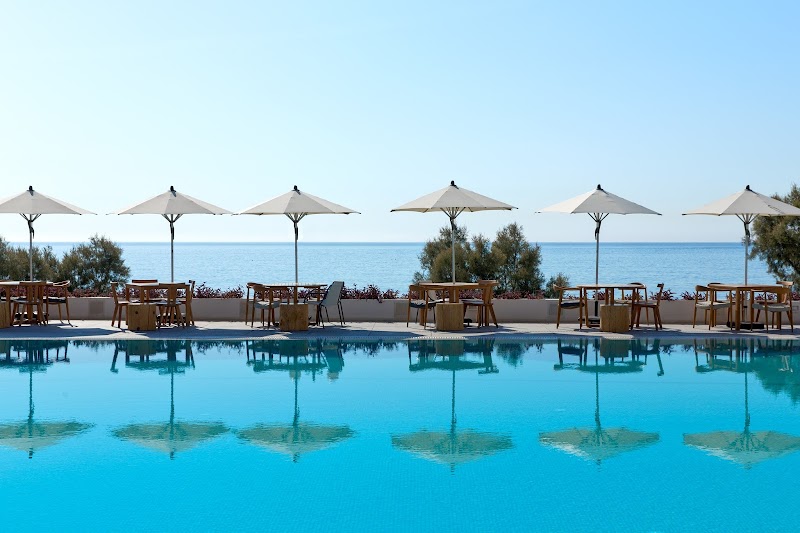
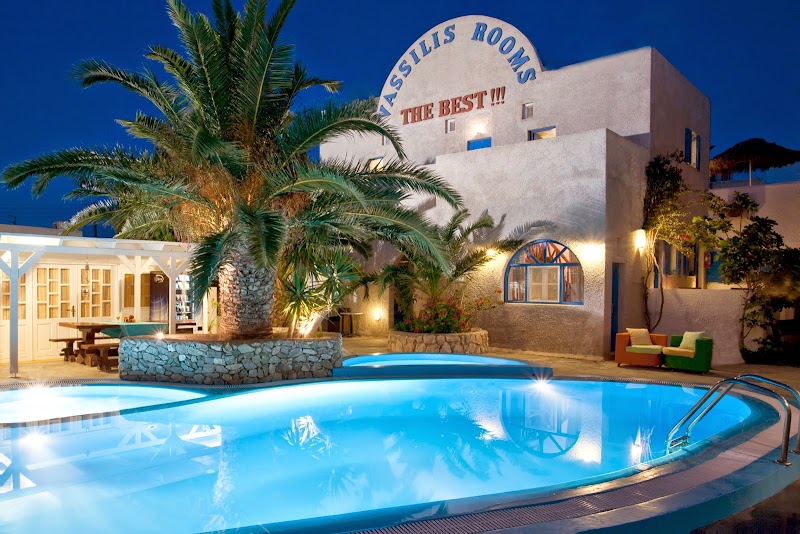
For beach hotel selection, the key decision is beach-town convenience versus caldera-view access. Kamari Beach Hotel and the various Perissa properties offer the full beach experience but require a bus or car to see the caldera. A practical solution for many travellers is a beach hotel for the first half of the trip and a caldera hotel for the second, experiencing both facets of the island.