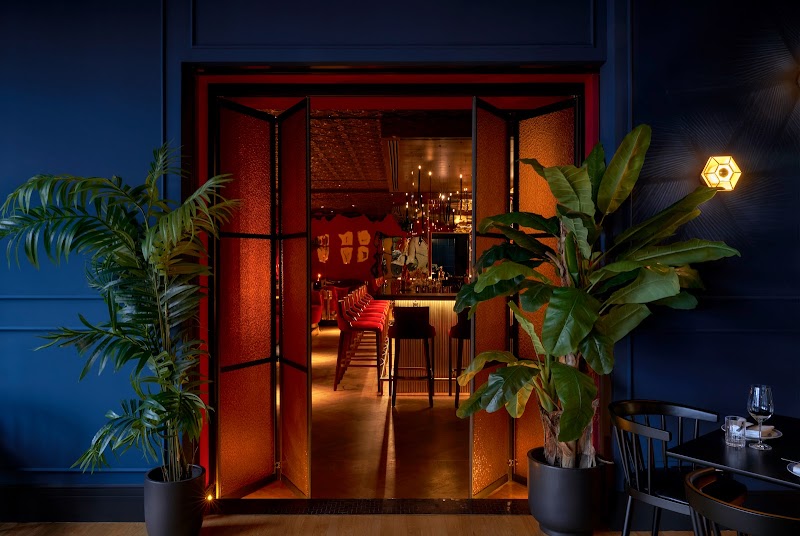
Berlin's food geography follows the city's historic divisions in ways that still shape where you eat. The old West Berlin neighborhoods — Charlottenburg, Wilmersdorf, Kreuzberg's western half — have more established restaurant institutions and the city's most formal fine dining. Charlottenburg's Kantstraße and Savignyplatz area are lined with excellent Chinese, Thai, and Japanese restaurants that date from the 1970s and '80s, when Berlin's large Southeast Asian community created a food culture invisible to most tourist guides. Restaurant Tim Raue (two Michelin stars) nearby in Kreuzberg synthesizes Asian precision with German ingredients in ways that justify its reputation as one of the country's finest tables.
Mitte and Prenzlauer Berg in the former East represent the city's most rapidly evolved food scene. Prenzlauer Berg's Helmholtzplatz and Kollwitzplatz areas are the neighborhood restaurant culture: wine bars, Italian trattorias, excellent Vietnamese and Thai spots, and a Saturday organic market at Kollwitzplatz that is the most atmospheric farmers' market in the city. The Sunday flea market at Mauerpark in Prenzlauer Berg includes excellent street food vendors alongside the antique furniture and vintage clothing.
Kreuzberg and Neukölln — straddling the former Wall corridor — are where Berlin's food creativity is currently most concentrated. The stretch of Bergmannstraße in Kreuzberg has excellent neighborhood restaurants; the street markets in the adjacent Viktoripark area are superb on summer weekends. Neukölln's Sonnenallee is the center of Berlin's extraordinary Turkish and Arab food culture — the best döner kebab in the city (arguably in Europe) is a matter of fierce local debate, but Sonnenallee's vendors and Kreuzberg's Mustafa's Gemüse Kebab on Mehringdamm are regularly cited. The canal-adjacent streets of Neukölln have also developed a strong natural wine bar and small-plates restaurant scene.
Berlin's street food culture is a world unto itself. Currywurst — sliced braised sausage in a spiced tomato ketchup sauce, served with fries — is Berlin's most debated fast food. Curry 36 at Mehringdamm and Konnopke's Imbiß (operating from a U-Bahn arch since 1930) are the two poles of the debate. The Turkish market on Maybachufer canal (Tuesday and Friday afternoons) is the most vibrant street market in the city.
Berlin's natural wine scene is genuinely world-class — Cordobar on Großbeerenstraße, Weinbar Rutz (adjacent to the Michelin-starred Rutz restaurant), and the various new wine bars in Neukölln and Kreuzberg have made the city one of the most exciting places to drink natural wine in Europe. The city's coffee culture, centered on specialty roasters like The Barn and Five Elephant, has also matured into a destination in its own right.