How to Choose the Right Neighbourhood for Your Hotel
Where in a city you sleep determines far more about your trip than the hotel itself. The neighbourhood shapes your walks, your restaurant access, your ambient noise, your safety, and your daily taxi bill. Here's how to get it right every time.
The Neighbourhood Is the Hotel's Context
The most common hotel booking mistake is optimising for the hotel without optimising for its location within the city. A traveller can research thread counts, photograph gallery quality, and loyalty program redemption rates with great precision and then book into a neighbourhood that adds 45 minutes of daily friction to every element of their trip. The neighbourhood is not a secondary consideration; for most urban hotel stays, it's the primary one.
The key variables: proximity to your actual itinerary (not to a famous landmark you'll visit once), ambient noise and atmosphere, transport infrastructure, dining and retail quality within walking distance, and — for travellers who care — neighbourhood character. The last of these is the most difficult to quantify and the most significant for trip satisfaction.
Step 1: Map Your Actual Itinerary Before You Search for Hotels
The first discipline is to establish where you're actually going before you consider where you'll sleep. List your non-negotiable itinerary items — the museums, the meetings, the restaurants, the neighbourhoods you want to explore — and plot them on a map. The cluster of activity should define your search radius for hotels. The mistake most travellers make is reversing this: finding an appealing hotel and then mapping an itinerary from it, which typically means the itinerary accommodates the hotel location rather than the other way round.
In practice: if your Paris trip is anchored by the Louvre, the Musée d'Orsay, and dinner reservations on the Left Bank, a hotel in the Marais is objectively better positioned than one near the Eiffel Tower, despite the Eiffel Tower neighbourhood's romance. If your Tokyo trip is focused on Shibuya, Shimokitazawa, and Shinjuku, a hotel in Ginza adds unnecessary metro time to every day's beginning and end.
Step 2: Understand the Noise Profile
City noise is distributed unevenly, and hotel bookings that ignore this produce miserable early mornings and jet-lagged afternoons. The general rules: streets near bar districts (Soho in London, the Marais in Paris, Shinjuku's Golden Gai in Tokyo) are incompatible with early bedtimes. Hotels adjacent to major roads — particularly routes used by delivery and sanitation vehicles between 4 and 7 AM — are noisier than their star rating suggests. Hotels near mosques in Islamic countries have early morning calls to prayer that no blackout curtain affects.
The research method: Google Street View the hotel's address. Note what's immediately across the street. Check whether there are bars, clubs, or live music venues within half a block. Read recent hotel reviews specifically for noise complaints — they are among the most reliable signals of a real problem because guests who were woken at 3 AM by street noise are motivated to document it.
Step 3: Transport Infrastructure Matters More Than Taxi Cost
Many travellers evaluate transport access by taxi distance, which is the wrong metric. The relevant metrics are: is there a metro stop within 10 minutes' walk? Does the metro go where you need to go without excessive transfers? Is the airport transit system accessible from this neighbourhood? At what hour does public transport stop running?
The practical value of metro proximity cannot be overstated for urban travel. A hotel four minutes' walk from a metro station in a city with good transit infrastructure is often more accessible to more of the city than a hotel centrally located but requiring taxis to every destination. In Tokyo, Paris, Singapore, and London — cities with exceptional metro networks — metro proximity is the single most important transport variable.
In cities without strong metro infrastructure (Bangkok's limited coverage, most North American cities outside New York), the calculus shifts: proximity to taxis and rideshare-friendly streets (wide, well-lit, busy enough for Grab or Uber to be consistently available) matters more.
Neighbourhood-Specific Advice by City Type
Historic European capitals operate on a classic core-versus-periphery model that most travellers intuitively understand: the historic centre is expensive, characterful, and convenient; the outer neighbourhoods are cheaper and require more transport effort. The nuance is that the historic centre of most European cities has itself differentiated: Paris's 1st arrondissement (tourist centre) feels different from the 4th (Marais, more residential), which feels different from the 6th (Saint-Germain, literary-intellectual). These distinctions are worth caring about.
In Asian megacities — Tokyo, Singapore, Bangkok, Hong Kong — the concept of a single 'centre' is less applicable. These cities have multiple poles of activity with significant character differences. In Tokyo, the neighbourhoods of Shinjuku, Shibuya, Shimokitazawa, Yanaka, and Ginza represent completely distinct social environments. A hotel in one will provide a genuinely different trip context than a hotel in another, even for guests doing nominally the same itinerary.
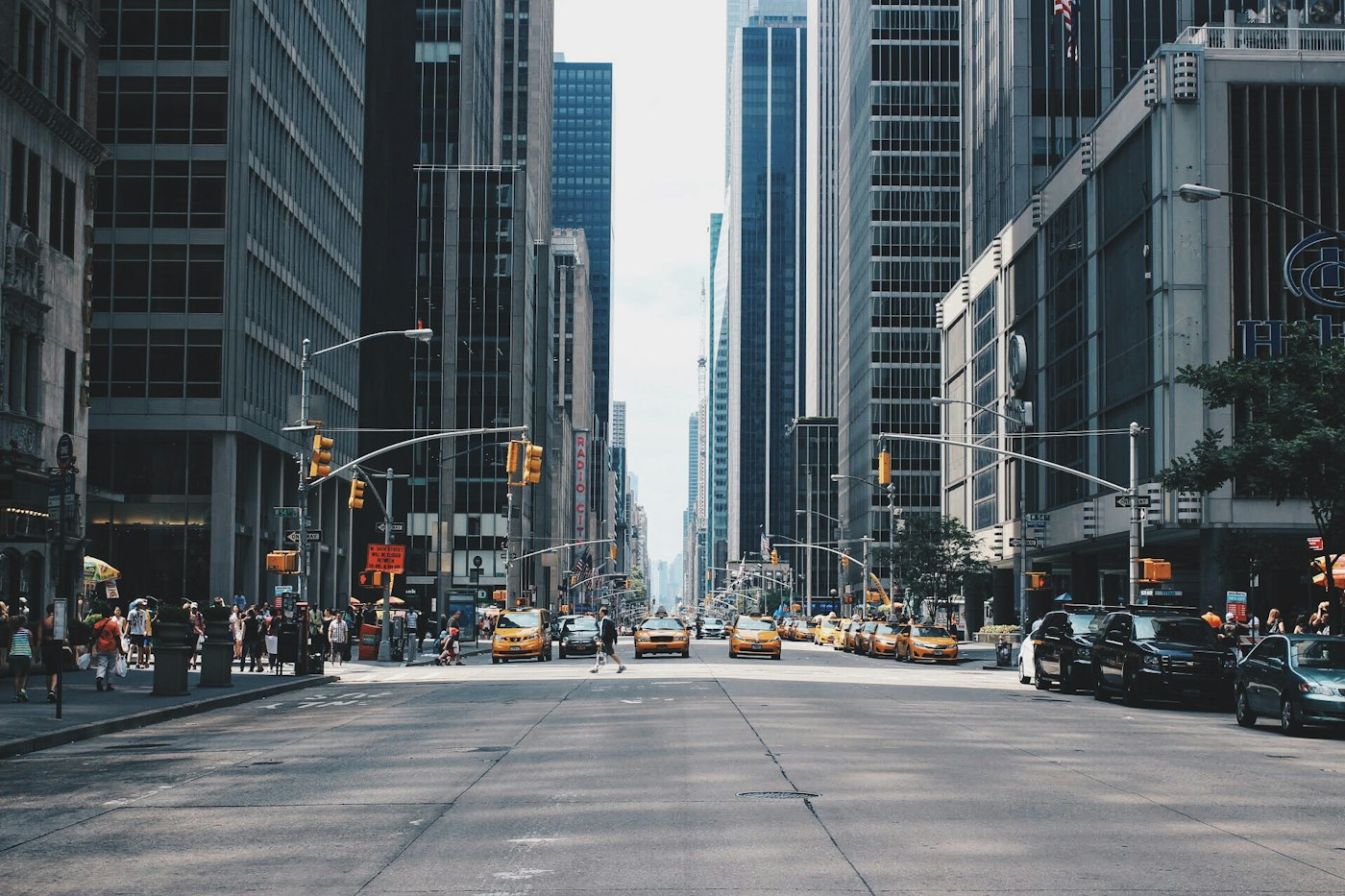
In North American cities, the downtown/financial district hotel default is often the worst choice for leisure travellers. New York City's Midtown hotel concentration services business travellers who want conference facilities and CNN in the breakfast area; leisure travellers in a Midtown hotel and leisure travellers in a Lower East Side or Brooklyn hotel are having qualitatively different New York experiences. Choose the neighbourhood that reflects the version of the city you actually want to visit.
Safety: How to Assess It Accurately
Safety concerns about hotel neighbourhoods are often either over- or under-stated relative to reality, and the inflation typically runs in both directions simultaneously: travellers from lower-crime countries overestimate risk in statistically safe neighbourhoods, while travellers from high-crime contexts underestimate risk in genuinely challenging areas.
The most reliable method: read the hotel's own description of its neighbourhood, then read reviews from solo female travellers specifically. This demographic has the highest motivation to accurately assess ambient safety and the lowest tolerance for manageable-but-real street-level risk. Their review language is precise: they distinguish between 'felt completely safe walking home after midnight' and 'wouldn't walk back alone after dark' — a distinction that is both meaningful and honest.
Additional signal: the presence of other quality hotels in the neighbourhood is a strong safety indicator. A neighbourhood with a Four Seasons, a boutique hotel, and several quality restaurants is almost universally safe for tourists; hotel brands conduct security assessments as part of their site selection process, and their presence implies a baseline of ambient safety.
The neighbourhood defines the ambient experience of your trip in ways that hotel quality cannot override. A perfect room in the wrong part of town is a poor trade; a good room in the right part of town is the start of a great trip.
When Being Off-Centre Is Right
There are travel profiles for which the conventional advice to stay in or near the city centre is actively wrong. Travellers seeking local neighbourhood immersion — who want to shop in markets, eat in restaurants without tourist menus, and observe daily city life — are better served by staying in residential neighbourhoods that cater primarily to residents. Paris's 11th and 20th arrondissements, Tokyo's Yanaka or Koenji, London's Dalston or Peckham: these are places where the hotel is a base rather than an attraction, and where daily life is genuinely more interesting than the postcard destinations a central hotel would orient you toward.
Families with young children often benefit from non-central hotels that offer apartment-style accommodation, quieter surroundings, and proximity to parks or green space rather than proximity to museums that require significant queuing. A family hotel in Paris's 16th arrondissement, near the Bois de Boulogne, serves a different but entirely valid family travel philosophy than a Louvre-adjacent property.
Frequently Asked Questions
How important is hotel location versus hotel quality?
For most urban trips, hotel location is at least as important as hotel quality, and often more so. The neighbourhood determines your walking commute to attractions, your access to restaurants, your ambient noise environment, and your daily transport costs. A well-located mid-range hotel often delivers a better trip experience than a luxury property in an inconvenient area. The one caveat: if the hotel is a destination in itself — a resort property, a spa retreat, a design hotel with significant on-site programming — the quality-over-location calculus shifts.
How do I research a hotel neighbourhood before booking?
Google Maps satellite and Street View are your primary tools: walk the hotel's immediate surroundings virtually, noting what's directly across the street and within a two-block radius. Check the distance and walking time to the nearest metro or transit stop. Read hotel reviews sorted by 'most recent' and look for mentions of neighbourhood character, noise, and safety. Travel forums (TripAdvisor, Reddit's r/travel and city-specific subreddits) provide candid neighbourhood assessments from recent visitors. For safety assessment specifically, read reviews from solo female travellers — they are typically the most precise and reliable assessors of ambient safety.
Is it better to stay in the city centre or a quieter neighbourhood?
It depends on your travel style. City-centre hotels maximise convenience — the most visited attractions are walkable, transport connections are strong, and restaurant variety is highest. The tradeoffs are noise (city centres are active around the clock), higher prices, and a tourist-dense environment that can feel disconnected from how the city actually lives. Off-centre hotels in residential neighbourhoods offer authenticity, quiet, and lower prices at the cost of added transit time to major attractions. The right choice depends on whether your priority is efficiency and access or experience and immersion.
What are the best neighbourhoods to stay in major cities?
Brief neighbourhood recommendations: Paris — Marais (4th) or Saint-Germain (6th) for character, 8th for luxury. London — Mayfair or South Kensington for luxury, Shoreditch for boutique design. New York — Lower East Side or Greenwich Village for character, Midtown only if you have business there. Tokyo — Shinjuku or Shibuya for convenience, Yanaka for atmosphere, Ginza for luxury. Singapore — Marina Bay for views and business, Tiong Bahru for local character. Barcelona — Eixample for central convenience, El Born for atmosphere. For any specific city, the Hotelier's Choice neighbourhood guides provide more detailed coverage.