The Conscious Traveller's Guide to Sustainable Hotels 2026
Sustainability has become one of the most greenwashed concepts in the hotel industry. Every major chain now has an environmental programme with an aspirational name — but which properties have genuinely built their operations around ecological responsibility? This guide separates the authentic from the performative and identifies the world's best truly sustainable hotels.

The Problem with Hotel Sustainability Claims
In 2026, nearly every major hotel group claims some form of environmental commitment. Reusing towels is presented as an eco programme. Removing plastic straws is called a sustainability initiative. A solar panel on the roof certifies a property as 'green'. The gap between genuine sustainability commitment and marketing language has become so large that discerning travellers who care about their environmental impact genuinely struggle to identify the properties worth supporting.
This guide focuses on hotels with verifiable, third-party certified sustainability practices — and explains what to look for when assessing any property's environmental claims.
What Genuine Hotel Sustainability Looks Like
Energy and Carbon
Genuinely sustainable hotels source 80-100% of their electricity from renewable energy (solar, wind, geothermal, hydro). Many of the world's leading eco-properties generate more energy than they consume. Carbon neutrality claims should be backed by independent verification from standards bodies like the Science Based Targets initiative (SBTi) or Gold Standard, not self-certification.
Water Management
In water-stressed destinations (the Mediterranean, Caribbean, Southeast Asia), water management is more critical than carbon. Look for rainwater harvesting, greywater recycling, and native-plant landscaping that reduces irrigation requirements. Properties that serve a private island or remote location in a low-rainfall environment without water recycling are hiding a significant sustainability problem behind the scenery.
Food and Supply Chain
Farm-to-table language is ubiquitous in luxury hospitality marketing. Genuine commitment means: specified local suppliers by name, seasonal menus tied to actual local growing seasons, elimination of endangered species from menus (no bluefin tuna or shark fin, regardless of local custom), and composting or food-to-energy programmes for kitchen waste.
Certifications That Mean Something
- Green Key: The leading international certification for tourism accommodation, operating in 65 countries. Requires third-party audit and meets GSTC criteria.
- Rainforest Alliance Certified: Particularly relevant for Latin American and Caribbean properties. Covers environmental, social, and economic sustainability.
- LEED Certification: Building certification that assesses energy efficiency, water use, and materials. LEED Platinum is the highest tier.
- B Corp Certification: Covers the entire business, not just the building — including supply chain, staff treatment, and community impact. Only a handful of hotels hold B Corp status globally.
- Biosphere Responsible Tourism: Used widely in Mediterranean Europe and Latin America, with GSTC recognition.
The World's Best Genuinely Sustainable Hotels
Soneva Fushi — Maldives
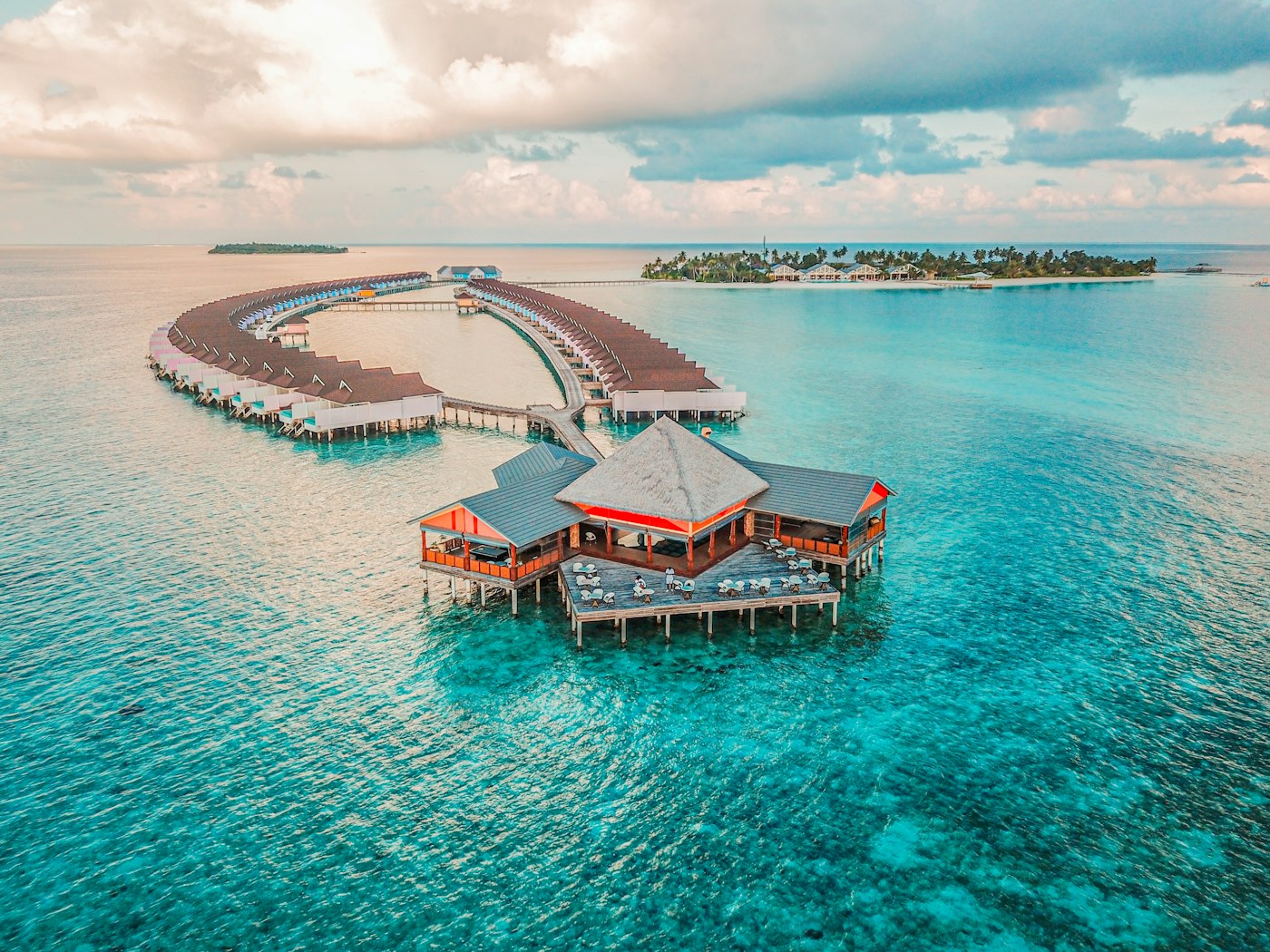
The benchmark for island sustainability in luxury hospitality. Soneva Fushi in the Maldives generates 80% of its electricity from solar, operates a waste-to-wealth programme that recycles or repurposes 90% of resort waste, maintains its own coral nursery to support reef recovery, and has removed single-use plastics entirely since 2008. The resort's Mr Friday environmental sustainability programme has been independently verified annually for 15 years. Critically, these commitments predate sustainability becoming a marketing trend. From $1,400/night. Book Soneva Fushi.
Six Senses Hotels Resorts Spas — Global
The Six Senses brand, now owned by IHG, was founded on sustainability principles and has maintained them through the acquisition more rigorously than most predicted. Properties operate zero-waste programmes, organic gardens (each resort grows a proportion of its own food), and guest sustainability education programmes. Six Senses properties in Bali, Phuket, Oman, and Portugal all carry independent certifications. Browse Six Senses properties.
Whitepod Eco-Luxury Hotel — Swiss Alps
In the Swiss Alps above Monthey, Whitepod's 15 geodesic dome pods are positioned on a slope with minimal ground disturbance, heated by wood pellets from local forests, and served by a certified organic farm kitchen. The pods blend into the snow in winter and the mountain meadow in summer. Carbon footprint is calculated and offset for every guest stay. From €350/night. Book Whitepod Switzerland.
Grootbos Private Nature Reserve — South Africa
Forty kilometres from Cape Town near Hermanus, Grootbos is both a luxury safari lodge and a fynbos conservation project protecting one of the world's six floral kingdoms (the Cape Floral Region). Its Foundation supports 17 social upliftment projects in local communities, with 300+ staff members from those communities. Green Key certified. From $500/night. Book Grootbos Nature Reserve. Also see our Cape Town guide.
Sustainable Coastlines Certified Hotels — Seychelles
The Seychelles government has implemented mandatory sustainability standards for all tourist accommodation since 2021, making it one of the world's most comprehensively regulated sustainable tourism destinations. North Island Lodge and Fregate Island Private operate zero-landfill policies, island rewilding programmes, and endangered species protection (giant tortoises, hawksbill turtles) as core parts of their operation. Explore Fregate Island Private.
Chumbe Island Coral Park — Tanzania
Off the coast of Zanzibar, Chumbe Island is a private nature reserve where the coral park is the property's primary function — the seven eco-bungalows (built from local materials, no concrete, rainwater collection only, solar power, composting toilets) fund the conservation work rather than the reverse. This is hotel as conservation mechanism, and it represents the model most closely aligned with genuine sustainability principles. From $600/night full board. Book Chumbe Island.
Inkaterra Machu Picchu Pueblo Hotel — Peru
Inkaterra was the first hotel group in Latin America to be certified carbon neutral. The Machu Picchu Pueblo Hotel sits in cloud forest at the base of the Inca citadel, within a 12-acre private cloud forest reserve housing over 200 species of orchid and running reintroduction programmes for the spectacled bear and Andean condor. From $400/night. Book Inkaterra Machu Picchu.
UXUA Casa Hotel — Trancoso, Brazil
In the protected historic village of Trancoso in Bahia, UXUA Casa has restored 10 indigenous casas using local craftsmen and materials, maintains a permaculture garden supplying the restaurant, and operates a Foundation supporting local culture and education. A model for sensitive luxury development in a protected heritage environment. Check UXUA Casa Hotel rates.
How to Spot Hotel Greenwashing
Warning signs that sustainability claims are more marketing than substance:
- No third-party certification: Self-declared sustainability is meaningless. Genuine commitments are verified externally.
- Vague language: "We care about the environment" and "committed to reducing our footprint" are not commitments. Look for specific, measurable targets with progress reporting.
- Focus on guest-facing optics: Removing plastic straws while still buying all supplies in plastic packaging, or installing a recycling bin while sending 90% of waste to landfill, is cosmetic.
- No community component: Genuine sustainability in tourism destinations includes local economic benefit. If all staff are expatriate or imported, and all supplies come from outside the community, environmental performance is only part of the picture.
- Carbon offset without reduction: Carbon offsetting should be the last resort, applied to residual emissions after genuine reduction. Properties that offset without any operational changes are buying permission to pollute.
Carbon-Aware Hotel Booking in 2026
Your hotel carbon footprint is typically dwarfed by your flight emissions — particularly on long-haul journeys. Flying from London to Bali produces roughly 3 tonnes of CO2 equivalent per passenger, while even a week at a mid-range Bali hotel might add 200-400kg. The most significant environmental decision you make as a traveller is whether and how far to fly — not whether your hotel has recycling bins. That said, supporting hotels that are genuinely building more sustainable operations sends the right market signal and typically means a better experience for you too.
The Future of Hotel Sustainability: Trends for 2026 and Beyond
The hotel industry is navigating the intersection of genuine environmental necessity and market pressure in ways that will reshape the sector significantly over the next decade. Several trends are particularly worth watching.
Building electrification: Natural gas boilers are being replaced with heat pump systems at a significant rate in European hotels, driven by EU building regulations. Properties completing this transition reduce their operational carbon emissions by 40-60%. Ask hotels whether their heating and cooling systems are gas-fired or electric — it's a reliable indicator of real-world carbon commitment.
Regenerative tourism: Beyond sustainability (maintaining current states) toward active regeneration — improving ecosystems, increasing biodiversity, restoring damaged environments. North Island in the Seychelles has introduced species of bird not present on the island for 150 years; Grootbos near Cape Town has tripled the fynbos species density on its land since taking ownership. This is a fundamentally different ambition from simply reducing a hotel's operational footprint.
Local economic integration: The sustainability movement in hotels is increasingly recognising that environmental sustainability without economic benefit for local communities is incomplete. Programmes that ensure 60%+ of hotel procurement comes from local suppliers, that train and employ local people for skilled positions (not just housekeeping), and that share ownership structures with communities represent a more integrated model of responsible tourism.
Questions to Ask Any Hotel About Its Sustainability Programme
When evaluating a hotel's sustainability claims, these are the questions that separate genuine commitment from marketing:
- What percentage of your electricity comes from renewable sources, and how is this verified?
- Do you have a third-party sustainability certification? Which body issued it, and when was it last audited?
- What is your water recycling and conservation strategy?
- What percentage of your food procurement is locally sourced, and can you name specific suppliers?
- How do you manage solid waste? What percentage goes to landfill vs recycling vs composting?
- What community benefit programmes do you operate in the surrounding area?
- Do you have a carbon reduction target with a specific baseline year and measurement methodology?
Hotels with genuine programmes will answer all of these questions confidently and specifically. Hotels with cosmetic sustainability marketing will deflect to vague language about their 'commitment to the environment'. The quality of the response tells you more than any sustainability badge on a booking platform.
Budget Sustainable Hotel Options
Sustainable travel doesn't require staying at properties in the $500+/night category. Several budget-accessible accommodation formats have strong environmental credentials:
Hostels with Green Key certification: Generator Hostels, with properties in London, Paris, Amsterdam, and elsewhere, hold Green Key certification and have committed to specific sustainability targets. Private rooms available from €70/night. Browse Generator Hostels in Europe.
Farm stays: The agriturismo concept in Italy, the gîte rural in France, and similar rural farm accommodation formats often have very low environmental footprints — local food, minimal waste, no air conditioning in the contemporary style, organic or integrated farming systems. Rates typically €80-€150/night including meals.
Train travel + urban hotels: The lowest-carbon European trip is one that uses overnight trains rather than flights between destinations. Paris to Barcelona by AVE train takes 6.5 hours, emitting roughly 4kg of CO2 versus 170kg by air. The growing network of Railjet, ICE, and high-speed services across Europe makes this option increasingly practical.
Regional Sustainability Leaders: Where Entire Destinations Are Setting Standards
Individual hotel sustainability matters, but the most significant environmental impacts come when entire destinations develop coherent regulatory frameworks that raise the floor for all properties operating within them.
Costa Rica: The global pioneer in sustainable tourism regulation, Costa Rica's Certificate for Sustainable Tourism (CST) has been rating hotel sustainability since 1997. Over 300 properties hold CST certification, and the country's combination of biodiversity (it contains 5% of the world's species on 0.03% of its land area), protected natural areas (26% of national territory), and well-regulated tourism infrastructure makes it the benchmark for ecologically responsible destination development.
Bhutan: The Kingdom of Bhutan operates a 'High Value, Low Impact' tourism policy — visitors pay a $200/day sustainable development fee (reduced to $100 in 2024 to encourage recovery from the COVID impact) that funds environmental protection, infrastructure, and community programmes. The result: limited visitor numbers, highly regulated hotel development, and one of the world's most intact Himalayan environments.
Galápagos Islands, Ecuador: The strictest hotel and tourism regulations in any archipelago environment. Maximum visitor numbers to each island are set by the national park authority; hotels are limited in size and location; all guides must be certified naturalists. The result is the world's most successful example of wildlife tourism that genuinely funds conservation rather than threatening it.
New Zealand: The Qualmark sustainable tourism certification programme covers all accommodation categories from backpacker hostels to luxury lodges. New Zealand's 100% Pure environmental brand is actually substantiated by genuine biodiversity protection policy and one of the world's most active conservation programmes for endemic species. See our Queenstown and Auckland guides for specific property recommendations.