Best Safari Lodges and Hotels in Africa for 2026
Safari accommodation has evolved far beyond the canvas tent. The best lodges in Africa now combine Big Five proximity with architectural vision, culinary ambition, and conservation programmes that make the stay as meaningful as the game drive. These are the ones worth planning a trip around.
The Safari Lodge as Destination
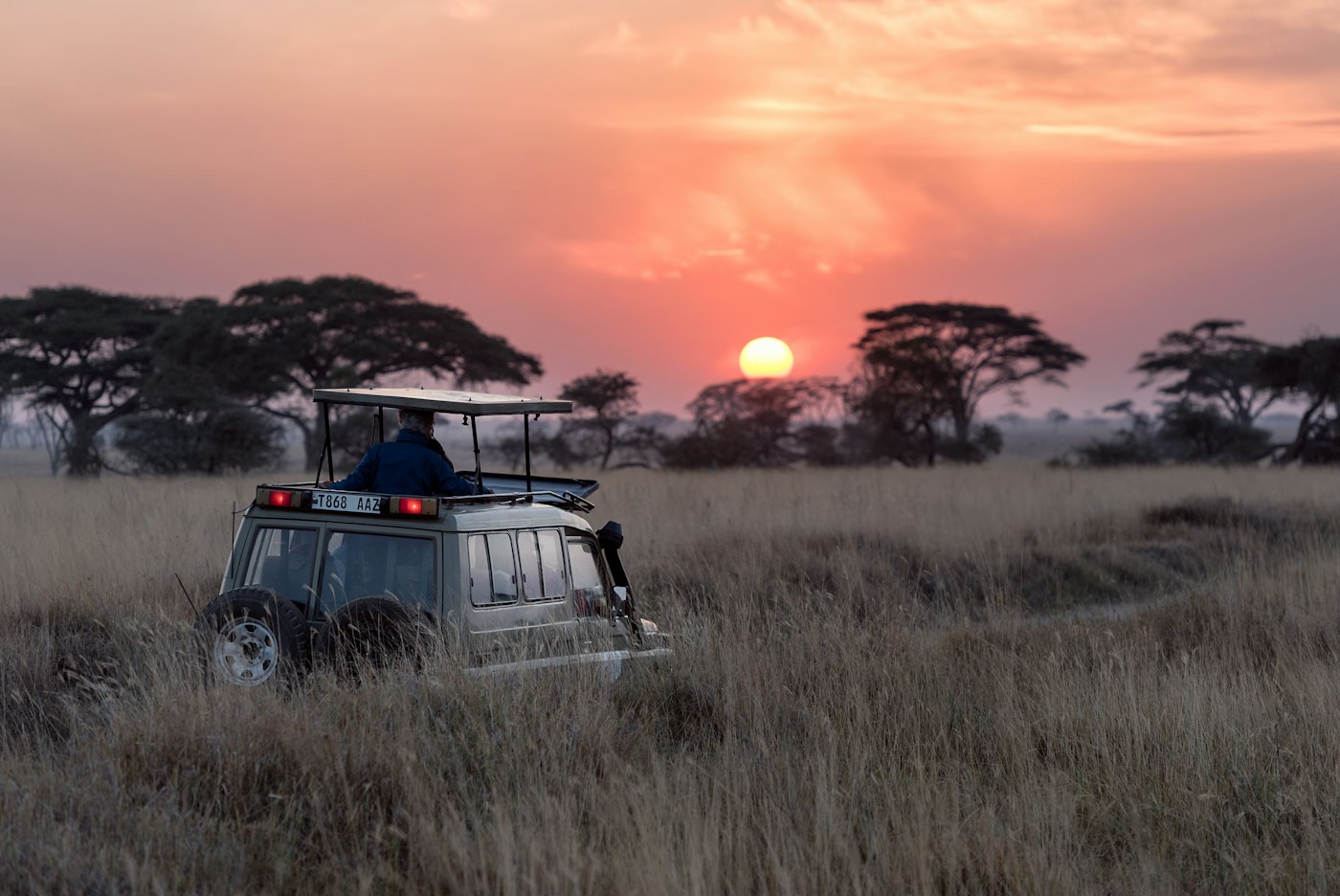
The economics of African safari accommodation have always been unusual. Because the best wildlife experiences require private concessions, minimal traffic, and highly experienced rangers, they are inherently supply-constrained. The best lodges in the Masai Mara, the Okavango Delta, or the Serengeti are not competing on price; they're competing on how completely they can deliver the experience of being in one of the world's last great wildernesses.
The result is a category of accommodation that has, at its best, no equivalent anywhere. These lodges have solved problems — design in the bush, food supply in remote locations, guest experience across massive variations in what the bush provides on any given day — with an ingenuity that genuinely impresses. They have also, in the best examples, developed conservation and community models that align the lodge's commercial interests with the preservation of the ecosystem that makes the whole enterprise possible.
Singita Grumeti — Serengeti, Tanzania
Singita operates a 350,000-acre private concession adjacent to the Serengeti that is managed as a wildlife corridor rather than a tourist facility. The conservation results — lion population increases, invasive species management, anti-poaching programmes — are documented and verifiable. The lodge experience itself, across the Serengeti House, Sabora Tented Camp, and Faru Faru River Lodge, operates at the top tier of African luxury: food prepared from produce grown on the Singita farm, wine lists that represent Stellenbosch and international vintages at a level that would suit a serious city restaurant, and ranger and tracker teams that have been developed within Singita's own training programme for decades.
Wilderness Jao Camp — Okavango Delta, Botswana
The Okavango Delta is the world's largest inland delta — a UNESCO World Heritage site where the Okavango River fans out into the Kalahari Desert, creating a labyrinthine network of channels, islands, and floodplains that supports one of Africa's most diverse concentrations of wildlife. Jao Camp, operated by Wilderness Safaris on a 60,000-hectare private concession, places guests at the heart of this ecosystem in stilted treehouses designed to have minimal footprint on the delta's fragile ground-level ecology. The mokoro (dugout canoe) excursions through lily-covered channels are, for many guests, the defining experience — quieter and more intimately wildlife-connected than any game drive.
Royal Malewane — Greater Kruger, South Africa
South Africa's Greater Kruger region offers something the East African safari circuit cannot easily provide: accessibility. Direct flights from Johannesburg reach Hoedspruit in under two hours, and the quality of the Big Five wildlife viewing in the private reserves bordering the Kruger National Park is comparable with anything in Kenya or Tanzania. Royal Malewane operates in the Thornybush Game Reserve with a product that blends serious wildlife tracking with spa luxury: the heated pool overlooking the bush, the Rangers' Table dinner programme under the African night sky, and suites that manage to be architecturally distinctive without distracting from the landscape.
Mahali Mzuri — Masai Mara, Kenya
Richard Branson's Mahali Mzuri camp sits on a 1,500-acre private conservancy bordering the Masai Mara National Reserve in a location selected specifically for the Great Migration viewing — the camp overlooks a river crossing point where millions of wildebeest attempt the crossing from Tanzania annually between July and October. The 12 tented suites are elevated with private decks facing directly onto the plains, and the camp's connection to the Mara's Maasai community is structured as a genuine partnership rather than a patronage model, with conservation fees directly funding local livelihoods.
Phinda Rock Lodge — KwaZulu-Natal, South Africa
&Beyond's Phinda Private Game Reserve is one of Africa's most significant conservation success stories: land that was degraded cattle and pineapple farmland has been rewilded since 1991 into a 22,000-hectare reserve that now supports cheetah, black rhino, elephant, and all of the Big Five. The Rock Lodge — six suites cantilevered into a rocky outcrop on the reserve's highest point — is architecturally the most striking of the four &Beyond lodges on the reserve, with glass-walled living spaces that place guests within the landscape rather than merely adjacent to it.
Bisate Lodge — Volcanoes National Park, Rwanda
Rwanda's gorilla trekking has become one of Africa's most sought-after wildlife experiences, and Bisate Lodge — built into the slope of an extinct volcano within trekking distance of the gorilla habitat — is the defining accommodation for the experience. Six 'forest villas' are designed to reference Rwandan royal architecture while meeting the environmental performance standards of a model eco-lodge: renewable energy, greywater recycling, and a reforestation programme that has planted over 100,000 trees on the surrounding degraded farmland. Gorilla permits are limited to eight people per group per day, making Bisate's combination of intimate scale and extraordinary wildlife access difficult to replicate.
Zarafa Camp — Linyanti Wetlands, Botswana
Great Plains Conservation's Zarafa Camp in the Chobe Enclave of northern Botswana operates one of the most exclusive wildlife-viewing setups in Africa: four tented suites on a 320,000-acre private photographic concession where no hunting is permitted and motor vehicles on game drives are limited to a single vehicle per group. The Linyanti Wetlands ecosystem supports dense concentrations of elephant and lion, and the combination of waterway and floodplain environments gives guests access to both land and water safari experiences. The 'dhow' houseboat for sundowner cruises on the Chobe River channel is an operational detail that elevates the experience considerably.
Ol Donyo Lodge — Chyulu Hills, Kenya
Great Plains Conservation's Kenyan property sits between Amboseli and Tsavo, on a private conservancy with views of Kilimanjaro that seem so perfectly positioned they appear art-directed. The lodge's horse safari programme is among Africa's most developed — multiday rides through the Chyulu Hills give guests a velocity and proximity to wildlife that vehicle safaris cannot match. The 'star bed' accommodation option — sleeping platforms that roll out from the main structure to position guests under the open African sky — is one of the most distinctive sleep experiences available in the safari category.
Leobo Private Reserve — Limpopo, South Africa
Leobo is a private reserve rather than a traditional lodge — the entire 10,000-hectare property can be booked exclusively, meaning no other guests, complete programme flexibility, and a level of personalisation that group lodges cannot accommodate. The accommodation within the reserve ranges from a clifftop villa to a treehouse and a traditional 'rondavel' camp. The flying activities — powered paragliding, hot air ballooning, microlight flights — add a dimension to the wildlife viewing experience that is unique in the African safari context.
A great safari lodge resolves the apparent contradiction at the heart of the experience: you are in one of the world's most fragile ecosystems, consuming resources, paying people to drive you toward wild animals. The best lodges transform this tension into something genuinely beneficial — where the luxury generates the conservation that makes the luxury possible.
Practical Safari Planning: What to Know Before You Book
Safari seasons vary by region. East Africa's Great Migration in the Masai Mara runs July to October; the southern circuit (Botswana, South Africa, Zimbabwe) is broadly good year-round with a preference for the dry winter months (May to October) when vegetation is lower and wildlife concentrates around water sources. Rwanda's gorilla trekking has no specific season, though the dry months of June to September and December to February offer easier hiking conditions.
The cost structure of top-tier safari lodges typically follows a 'fully inclusive' model: the nightly rate includes all meals, beverages, game drives (usually two daily), and sundowner experiences. Exclusions typically include international and domestic flights, conservation fees (Botswana's are among the highest and most important), and tipping. Build 15–20% onto the lodge rate for these additional costs when budgeting a safari trip.
Frequently Asked Questions
What is the best safari lodge in Africa?
Singita properties — particularly Singita Grumeti in Tanzania and Singita Lebombo in South Africa — are consistently rated among Africa's finest safari lodges for their combination of conservation impact, food quality, and Big Five wildlife access. &Beyond's portfolio (Phinda, Ngorongoro Crater Lodge, Bateleur Camp in Kenya) represents the broadest geographic coverage at the luxury level. For exclusivity, Great Plains Conservation's Zarafa Camp in Botswana and Bisate Lodge in Rwanda are frequently cited as category-defining experiences. The 'best' lodge depends significantly on the specific wildlife experience you're seeking.
How much does a luxury safari lodge cost per night?
Top-tier safari lodges in Africa typically cost $1,000–4,000 per person per night on a fully inclusive basis. This includes accommodation, all meals, beverages, and usually two daily game drives. Singita properties range from $1,500–3,500 per person. &Beyond and Great Plains lodges are typically $1,000–2,500 per person. The higher end of the range reflects ultra-exclusive properties with very limited capacities (4–6 tented suites) on private concessions. Mid-range quality safari lodges cost $300–800 per person per night and can still deliver excellent Big Five viewing on the right reserve.
What is the best time of year to go on an African safari?
The optimal timing varies by destination. For East Africa's Great Migration in the Masai Mara and Serengeti, the primary crossing season is July to October, with the Serengeti offering calving season viewing in January to February as a complementary experience. Southern Africa (Botswana, South Africa, Zimbabwe) is best from May to October during the dry winter season, when reduced vegetation and concentrated wildlife make sightings more reliable. Rwanda's mountain gorilla trekking is best in the dry seasons of June to September and December to February. Year-round destinations include South Africa's Greater Kruger region, which offers consistent Big Five viewing in any month.
Do I need vaccinations and visas for safari destinations in Africa?
Vaccination and visa requirements vary significantly by destination and nationality. Yellow fever vaccination is required for entry into several sub-Saharan African countries and is strongly recommended for most others. Malaria prophylaxis is strongly advised for all major safari destinations including Kenya, Tanzania, Botswana, Zimbabwe, and Mozambique; South Africa's Greater Kruger is a lower but non-zero malaria risk area. Visa requirements: Kenya, Tanzania, and South Africa currently offer electronic or on-arrival visas for most Western nationalities. Rwanda and Botswana are generally visa-free for EU, UK, and US passport holders. Always check current requirements through official government travel advisory sources well in advance of travel.