Firenze opera a un ritmo e su una scala diversi rispetto a Roma o Venezia, e questa è una delle sue maggiori virtù per i viaggi di nozze. Il centro storico della città è percorribile a piedi in un giorno; gli Uffizi, l'Accademia, i Giardini di Boboli e Palazzo Pitti sono tutti a 20 minuti l'uno dall'altro. La pressione di 'vedere tutto' è sufficientemente gestibile da permettere davvero una settimana qui lunghi pranzi, riposini pomeridiani e quel tipo di esplorazione senza fretta che rende una luna di miele diversa da una semplice vacanza.
La scena alberghiera della
**Viste sull'Arno vs. Ville in Collina: Scegliere la Vostra Base**
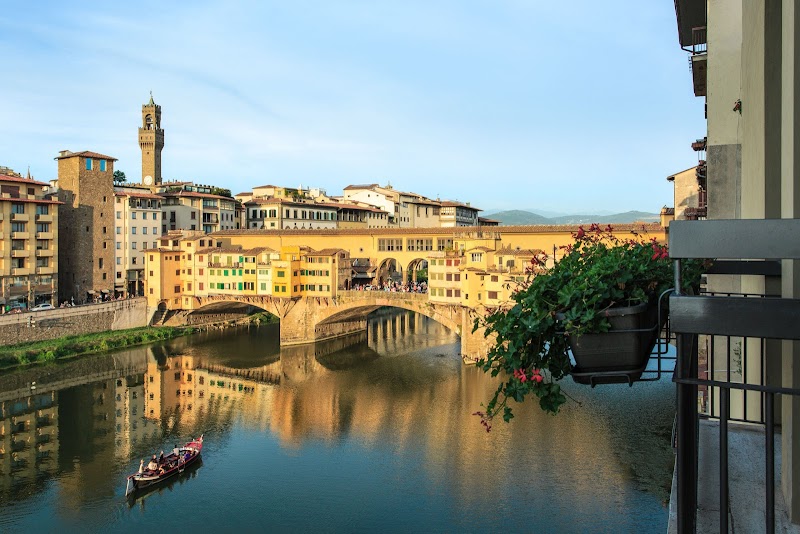
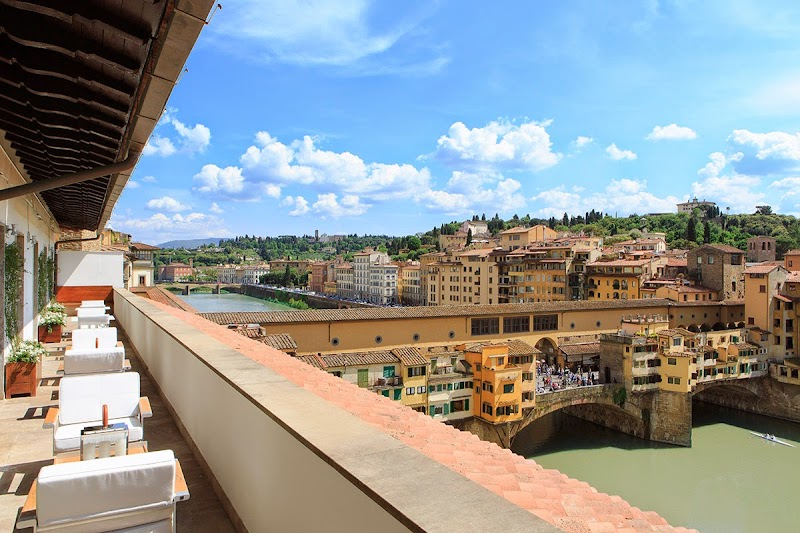
Gli hotel lungo l'Arno — Hotel Lungarno, Portrait Firenze e le proprietà della Lungarno Collection — offrono l'esperienza visiva più immediatamente romantica di Firenze: il fiume, i ponti medievali, Ponte Vecchio che risplende al tramonto e le colline dell'Oltrarno che si ergono sullo sfondo. Portrait Firenze, in particolare, vanta una qualità di terrazza con vista sul fiume che lo fa sentire più una residenza privata che un hotel commerciale. Queste proprietà vi collocano nel cuore del centro storico della città, con tutto raggiungibile a piedi.
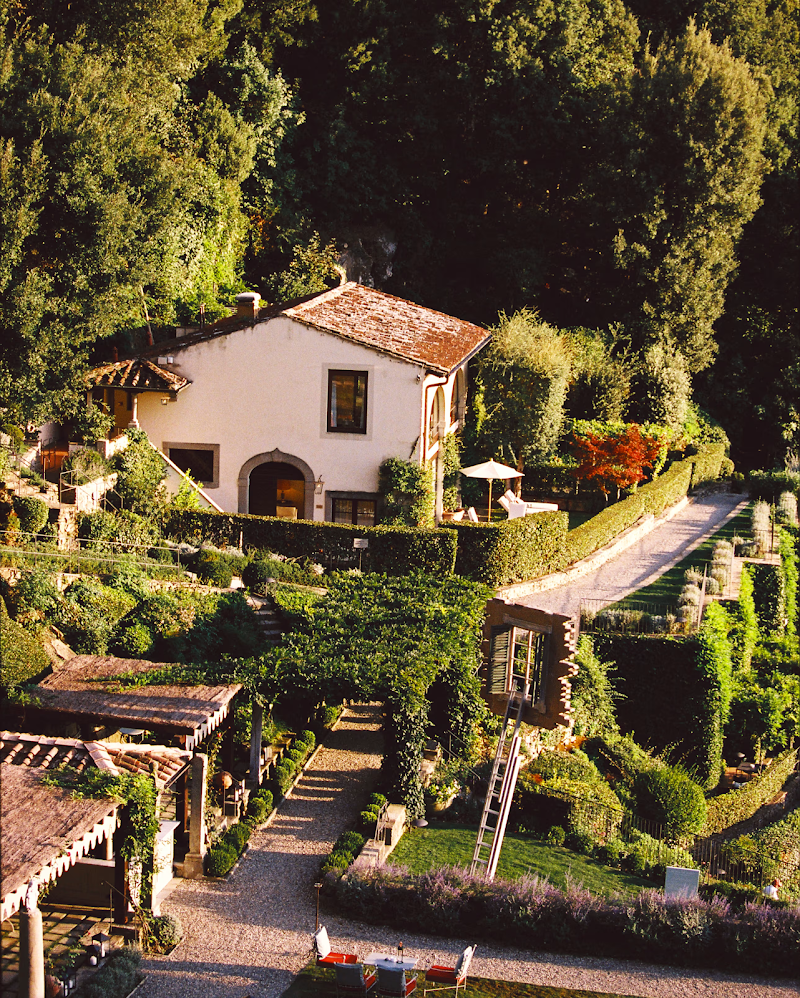
Le alternative in coll
For most honeymooners, a useful structure is to begin the trip at a hilltop villa — arriving by taxi from the airport, drinking in the views, doing nothing much for the first two days — then move into the city centre for the final nights when you're ready to explore more actively.
**The Four Seasons Florence: Scale and Garden**
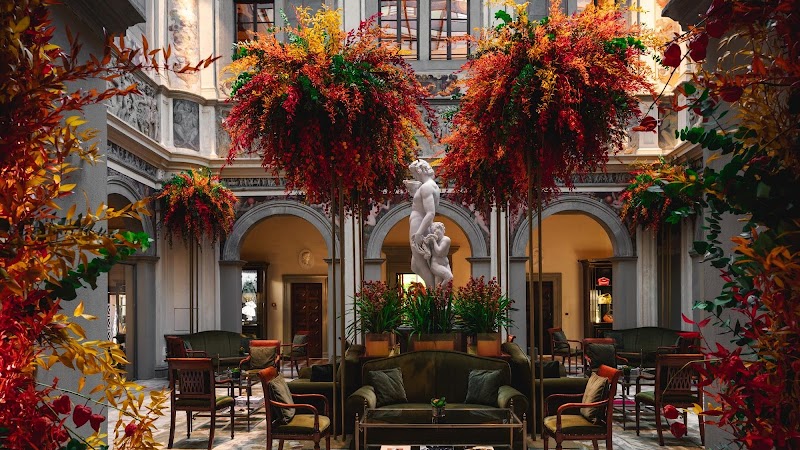
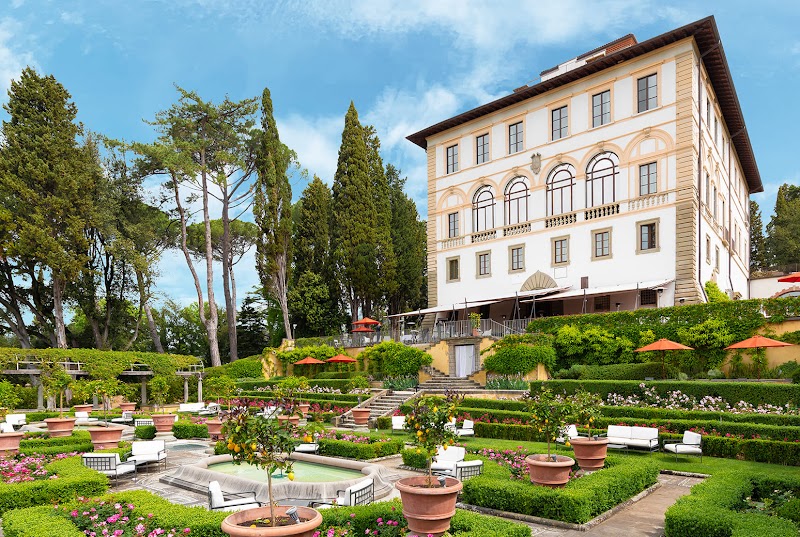
The Four Seasons Florence is exceptional in ways that have nothing to do with chain-hotel associations. The hotel occupies two 15th-century palaces — the Palazzo della Gherardesca and the adjacent Villa — connected by what is, at 4.5 acres, the largest private garden in Florence. The garden is a Renaissance design, laid out with precision and maintained immaculately; wandering it in the early morning, before any other guests are present, is one of the finest private-space experiences in Italy. The Spa Four Seasons is the best in Florence. The restaurants are excellent. The rooms in the Palazzo are extraordinary — high vaulted ceilings, original frescoes, windows looking onto the garden. For honeymooners who want grandeur alongside intimacy, the garden-facing Palazzo suites are the right choice.
**Portrait Firenze: The Ferragamo Standard**
Portrait Firenze is the hotel that most feels like it was designed for exactly one purpose: two people in love with Florence. The 37 suites are all named after Ferragamo shoe styles, furnished with the family's art collection and period pieces, and positioned — particularly on the upper floors — to face the Arno with private outdoor spaces that look directly at Ponte Vecchio. The hotel has no gym, no conference facilities, and minimal public spaces beyond an outstanding breakfast room and a small lobby bar. What it has is a specific and very high quality of private space and an Arno-side position in Oltrarno that is genuinely incomparable. Book the Terrace Suite or the Grande Suite Arno for the best view configurations.
**Oltrarno: Florence's Most Romantic Quartiere**
The Oltrarno — 'beyond the Arno' — is the south bank neighborhood that contains the Pitti Palace, the Boboli Gardens, the artisan workshops of the Borghese district, and a collection of small restaurants and wine bars that are considerably more local in character than the tourist-saturated north bank. The neighbourhood has a quietness and texture that the Duomo-adjacent streets lack entirely: walking through the Via Maggio in the morning, when the antique shops are just opening, or sitting in the Piazza Santo Spirito for an aperitivo, produces a sense of actually inhabiting the city rather than visiting it.
Hotel Lungarno is the Oltrarno's flagship property and the anchor of the Lungarno Collection. The Arno-facing rooms have a view across to the north bank and Ponte Vecchio that is, on a clear evening, the most beautiful view in Florence. The collection of 20th-century art (the owners are the Ferragamo family, who also own Portrait Firenze) runs throughout the public spaces and contributes to an atmosphere that feels genuinely cultured rather than decoratively aspirational.
**Day Trips: Wine Country and the Tuscan Hills**
Florence's position in central Tuscany makes it an exceptional honeymoon base for day trips. The Chianti wine road — running south through Greve, Radda, and Gaiole — is under an hour by car and passes through the most classically beautiful Tuscan landscape: cypress avenues, hilltop villages, stone farmhouses producing some of Italy's finest wines. A half-day private tour to a Chianti estate for a tasting and lunch (Antinori nel Chianti Classico, Badia a Coltibuono, and Castello di Ama are the standout properties) is one of the finest things a honeymoon couple can do within range of Florence.
San Gimignano (an hour's drive) and Siena (90 minutes) are the most rewarding day-trip towns for couples who want to see medieval Tuscany beyond Florence's specific context. A private driver arranged through your hotel is significantly better than public transport for these trips, and most luxury Florence hotel have relationships with excellent private guide services.
**The Renaissance Art Question**
A Florence honeymoon almost inevitably involves some cultural engagement — the Uffizi and the Accademia are genuinely unmissable — and the question is how to approach them without letting museum fatigue crowd out the slower pleasures. The answer is: book a private early-morning tour for each (your hotel concierge will arrange this), keep each visit to 90 minutes maximum, and treat the Uffizi as a destination for specific works — Botticelli's Primavera and Birth of Venus, Leonardo's Annunciation, Caravaggio's Bacchus — rather than a comprehensive survey. Two focused visits will leave you more satisfied than a single exhausting day.
**Pricing and Seasonality**
Florence hotel rates peak in April–June and September–October, when the weather is ideal and the city is at its most beautiful. July and August are hot (regularly 35°C+), the crowds are at maximum density, and the city loses a certain quality — the Florentines themselves largely leave for the coast. November through March is the quiet season: significantly lower hotel rates, authentic winter atmosphere, and the city's museums essentially to yourself. December in particular has a specific beauty — the Ponte Vecchio lit for Christmas, the Mercato Centrale in full winter operation, and the hilltop hotel serving mulled wine by fires in their gardens.
Budget a minimum of €350–500/night for a genuinely romantic Florence stay — Palazzo Vecchietti and Hotel Davanzati represent the best quality at this tier. The top properties (Four Seasons, Villa San Michele, Portrait Firenze) run €600–1,500/night for standard suites in peak season.
**The Oltrarno by Foot: Florence's Slow Morning**
The Oltrarno at 8am — before the tourist flow crosses the Ponte Vecchio — is one of the finest urban experiences in Italy. The artisan workshops on the Via Maggio begin opening; the Piazza Santo Spirito has a daily market running from 8am with local produce, flowers, and secondhand books; the café at the corner of Borgo San Frediano serves a cornetto and macchiato at a zinc counter without a tourist in sight. This is the best possible introduction to Florence for honeymooners staying on the south bank, and it costs nothing.
The Boboli Gardens, behind the Pitti Palace, open at 8:15am and are at their best in the first hour when only a handful of visitors are present. The garden's amphitheatre, the Neptune fountain, and the belvedere terrace at the garden's highest point — with views over the Arno valley and toward Fiesole — are genuinely extraordinary in the early morning light.
**Florentine Food for Honeymooners**
Florence has one of Italy's most specific and least compromising regional cuisines. The bistecca alla Fiorentina — a T-bone steak from Chianina cattle, grilled over charcoal, served rare and unsauced — is the definitive Florentine meal and genuinely extraordinary when done correctly. The benchmark restaurants are Buca Mario (the oldest restaurant in Florence, operating since 1886), Trattoria Sostanza (which also serves a famous butter-pasta that has not changed in 150 years), and Golden View Open Bar on the Arno, which pairs the bistecca with a terrace view over Ponte Vecchio.
For the food market experience: the Mercato Centrale upstairs hall — opened as a food court in 2014 — has become slightly touristy but remains the best place to eat Lampredotto (the Florentine tripe sandwich, the city's street-food signature) and fresh pasta at high volume. For a more local experience, the Mercato di Sant'Ambrogio in the 3rd has a proper produce market on the ground floor and a canteen upstairs that serves the best value lunch in the city.
Gelato is, obviously, a daily necessity. The serious producers are Gelateria dei Neri, Gelateria Dei Neri, and Edoardo near the Duomo; avoid any gelateria where the product is displayed in tall fluffy mounds — the real product is kept in covered pozzetti containers and is considerably denser and more flavourful.
**What to Do with One Week in Florence**
A well-structured Florence honeymoon week divides naturally into thirds. The first two days are for recovery and slow discovery: long breakfasts at the hotel, an afternoon walk through Oltrarno, dinner at a neighbourhood trattoria. Days three and four are for the major cultural engagements: the Uffizi with a private guide (90 minutes maximum, focused on ten works), the Accademia for Michelangelo's David (30 minutes, book the first entry of the day), and the Duomo campanile climb for the finest aerial view of the city's terracotta skyline. Day five or six is the Chianti daytrip — private car, two wine estates, lunch in Greve, back by 7pm for a sunset Aperol spritz on a rooftop terrace. The final day is for nothing specific: the Piazzale Michelangelo at sunset, the leather shops on Via de' Tornabuoni, one more dinner at the restaurant you liked best.
This is a more useful structure than a museum-by-museum itinerary, which exhausts rather than enriches. Florence rewards the unhurried.