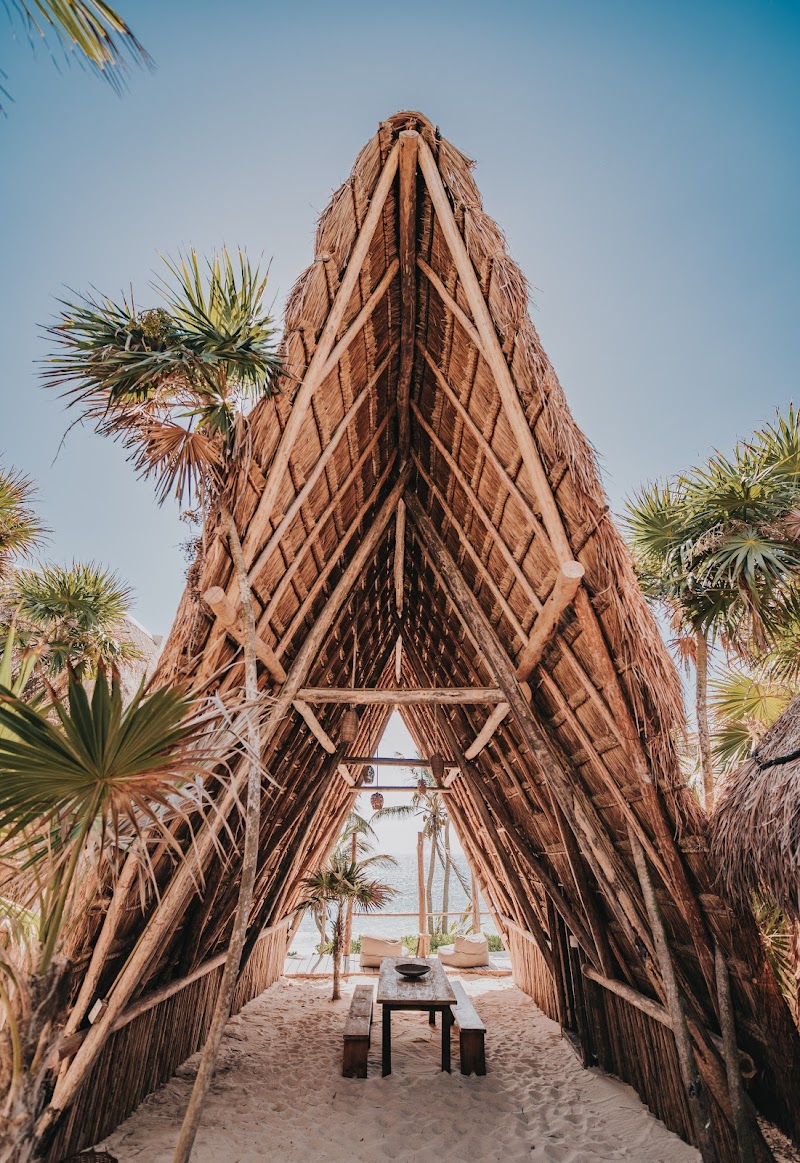
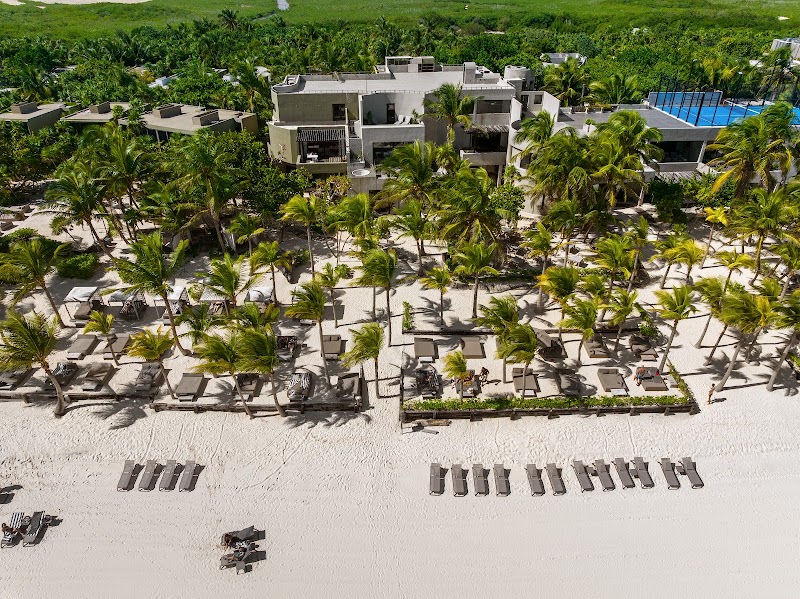
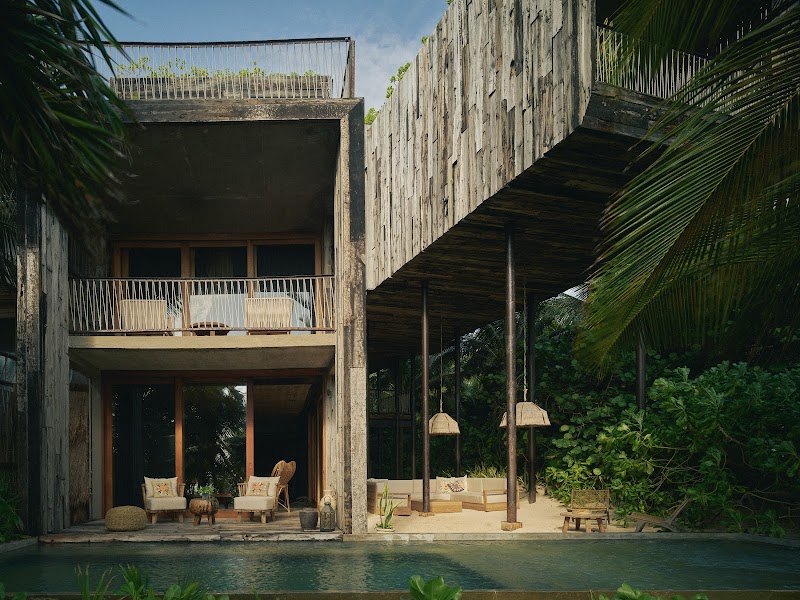
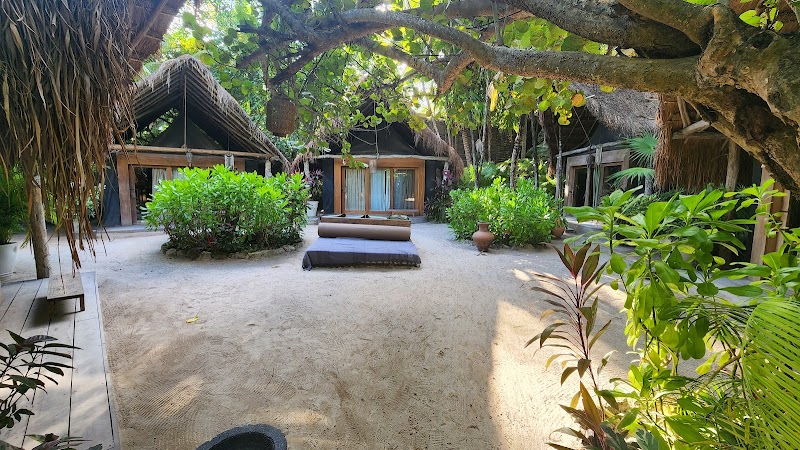
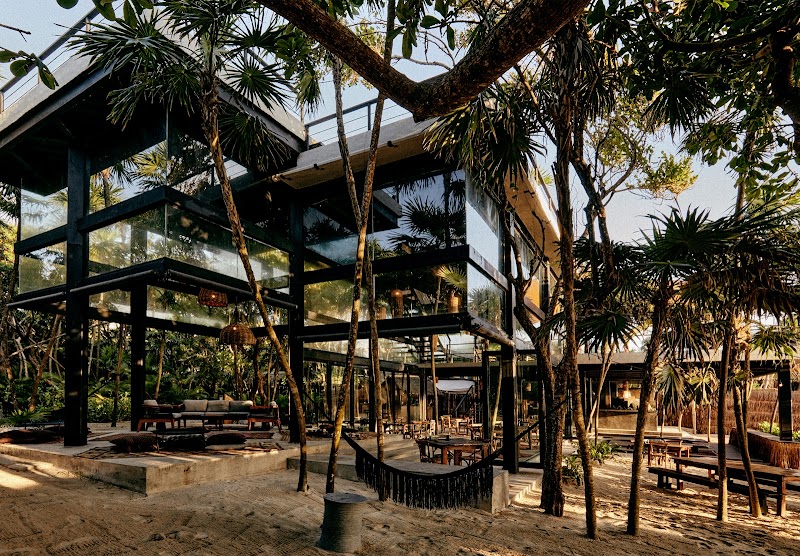
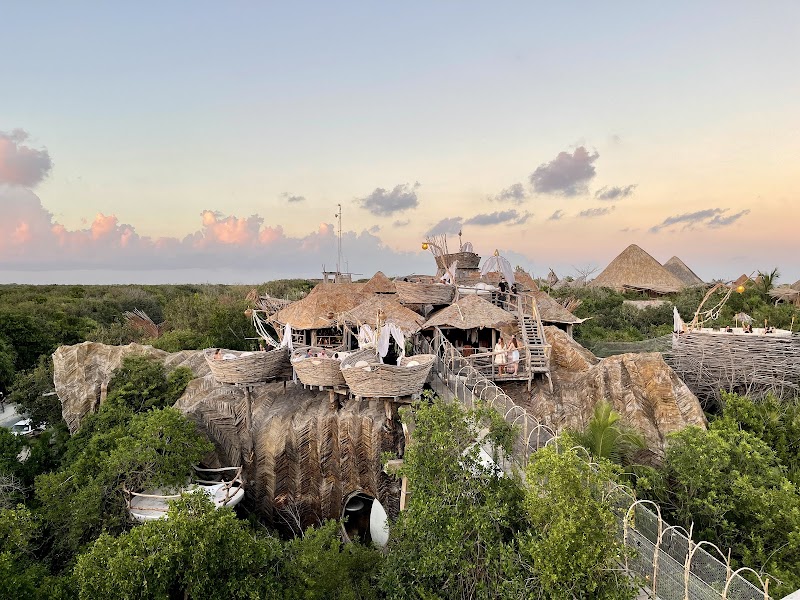
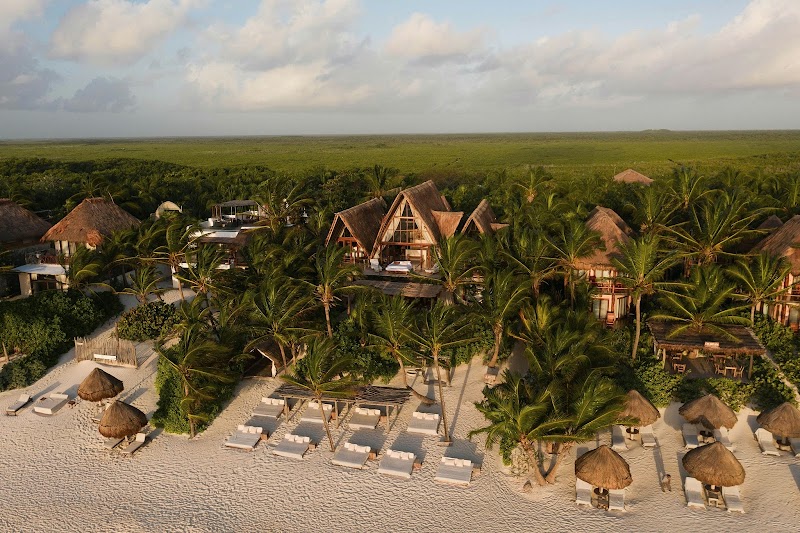
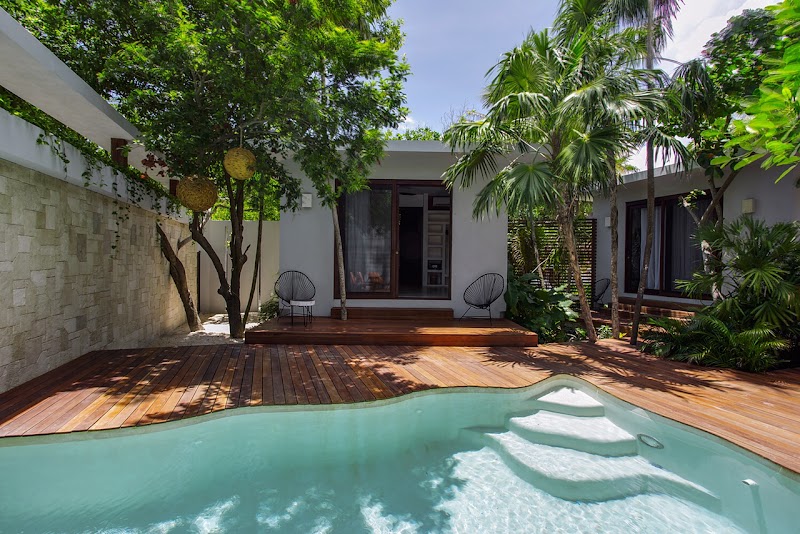
The Tulum Beach Zone road — Carretera Tulum-Boca Paila — is a single unpaved track running south from the Tulum ruins through a narrow corridor between jungle and Caribbean Sea. Every hotel that lines this road markets itself as beachfront, and technically every one of them is. What varies enormously is beach quality: the width of the sand, the clarity of the water, the management of sargassum seaweed, and the existence of natural reef or rock formations that affect swimming conditions.
Beach quality in Tulum is inseparable from the sargassum discussion. Since the mid-2010s, warm Caribbean waters have driven periodic — and in some years, massive — blooms of Sargassum fluitans and S. natans seaweed that wash ashore along the entire Riviera Maya coast. Tulum's beach strip is one of the more exposed sections. The arrival is unpredictable, it peaks most severely April through August, and no hotel's marketing materials will tell you about it. What separates the better properties is daily management: teams that rake and remove sargassum before guests reach the beach at 7am, and the construction of offshore barriers that intercept seaweed before it lands. Properties with active beach programs — Papaya Playa Project, Casa Malca, Nomade — consistently receive better beach reviews because of this operational commitment.
The northern end of the Beach Zone, closest to the Tulum ruins, has historically been the most crowded section. The presence of the ruins (one of the only Mayan sites on the Caribbean coast, and visually extraordinary from the beach below) makes this stretch a day-tripper hotspot, with tour groups arriving by the busload from Cancún and Playa del Carmen. Hotels in the northern zone benefit from access to the ruins but pay in crowd density and beach energy. The southern zone — from roughly the midpoint down toward Sian Ka'an — is quieter, often cleaner, and home to the properties most committed to the eco-resort ethos that built Tulum's reputation.
The beach itself is a Caribbean white-sand beach with warm, clear water when conditions are good — water temperatures average 26–28°C (79–82°F) year-round, and visibility in the ocean is excellent outside of sargassum events. The reef structure along parts of the Beach Zone means some areas have rocky entry points — important to know if swimming ease matters. Ask your specific hotel about entry conditions before booking if this is a priority.
Naturally, proximity to the beach comes at a price premium. Room rates on the Beach Zone typically run 3–5 times what you'd pay for equivalent quality in Pueblo, and 2–3 times what Aldea Zama properties charge for similar design and service levels. The premium is real and the experience is genuinely distinct — waking to the sound of the Caribbean, walking directly from your villa to the sand, and watching the sunrise over the water from a beach lounger are experiences that Pueblo hotels simply cannot provide regardless of their quality.
For guests who want beach access without Beach Zone prices, the compromise position is Aldea Zama — the planned residential-hotel quarter about halfway between Pueblo and the beach strip, roughly 2 kilometres from the sand. Several good boutique hotels here offer shuttles to the beach, and the cycling culture of Tulum means the beach is 15 minutes on a rented bike. The tradeoff is you don't have the ocean at your doorstep, but you gain access to the town's restaurants and a significant price reduction.
The best beach experience in Tulum — for guests staying on the Beach Zone — combines a morning swim before 9am (when tour groups begin arriving at the ruins area), a long lunch on a beach lounger with fresh ceviche and agua fresca, and an afternoon snorkel or kayak excursion that uses the calm Caribbean water to explore the reef patches and mangrove channels just south of the main hotel corridor. The Sian Ka'an Biosphere Reserve, which begins where the hotel strip ends, contains some of the most pristine Caribbean coast in Mexico — accessible on guided tours from any hotel on the strip.