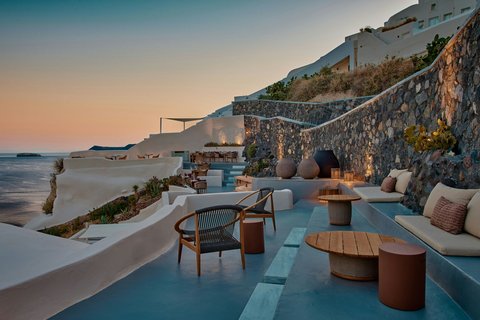
Santorini's culinary geography follows the caldera rim and the inland agricultural villages in ways that divide the food experience dramatically. The clifftop villages of Oia, Imerovigli, and Fira are where the caldera-view restaurants command spectacular settings and, frequently, prices to match. The quality ranges considerably — many of the sunset-view restaurants have learned to coast on their views — but the best tables here are genuinely extraordinary: Metaxy Mas near Exo Gonia serves Greek meze with such seasonal precision and local-ingredient focus that it has become one of the most cited restaurants in Greece; Selene in Pyrgos, the island's interior hilltop village, is the island's most serious fine-dining table, dedicated to Santorinian ingredients since 1991.
The interior villages — Pyrgos, Megalochori, and Emporio — represent a completely different register. These are working Santorinian communities where local tavernas serve the island's traditional cuisine without the caldera premium. Pyrgos, a well-preserved medieval village at the island's highest point, has several excellent restaurants and kafeneions (traditional coffee shops) where local men play backgammon and the food is prepared by people who have been eating this cuisine their entire lives. Canava Roussos, a winery and taverna in Kamari, serves barrel-aged Assyrtiko alongside simple grilled fish and fava at prices that feel impossibly reasonable.
Santorini's unique ingredients deserve extended attention. Fava — a split yellow pea puree made from a specific variety grown only on Santorini — is one of the simplest and most satisfying foods in Greek cuisine, served with capers, onion, and olive oil. The island's cherry tomatoes (tomatoaki), dried in the summer sun, are intensely sweet and used in everything from salads to tomatokeftedes (tomato fritters) that appear on every meze menu. Chlorotyri (fresh white cheese), Santorini capers from the vine-like caper plants growing from the caldera walls, and the whitebait fried in olive oil are all distinctive local preparations.
Wine is Santorini's greatest food product. The Assyrtiko grape, grown in the ancient kouloura (basket vine) training system that protects the vines from the Aegean wind, produces dry white wines of extraordinary minerality and laser-sharp acidity that pair perfectly with seafood. Domaine Sigalas, Gavalas Winery, and Estate Argyros are the most celebrated producers; the wine tours they offer combine vineyard walks, barrel tastings, and views that make the island's interior agriculture visible in a way that the clifftop restaurants obscure.
Santorini's fishing heritage is alive at Ammoudi Bay, below Oia — the small harbor at the base of 300 cliff steps is ringed by seafood tavernas where the catch comes directly from the boats moored at the dock. The octopus drying on lines in the sun, the grilled red snapper, and the sea urchin salad at Sunset Taverna or Roka are the most authentically Greek food experiences on the island.