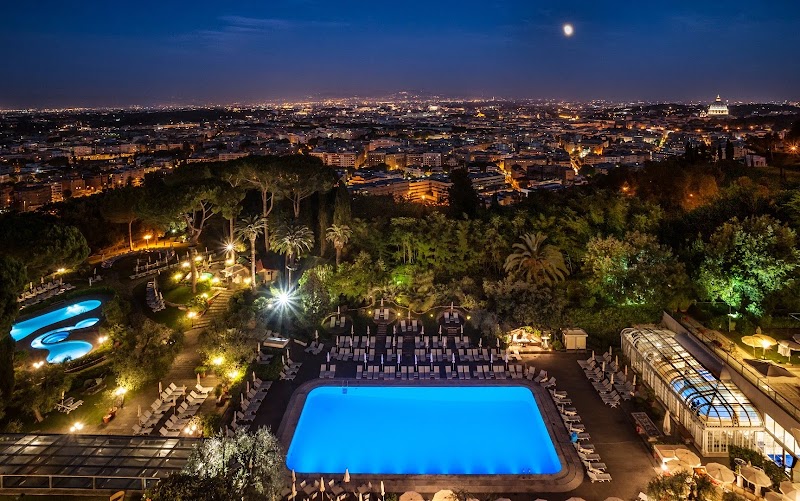
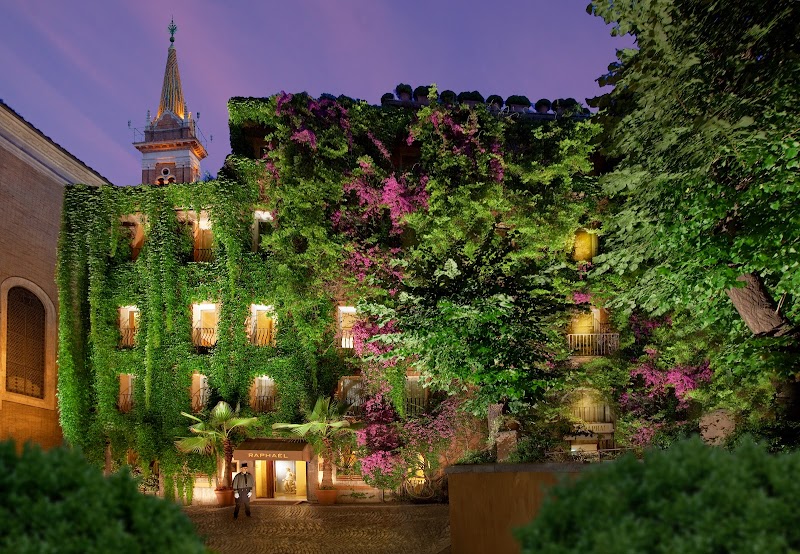
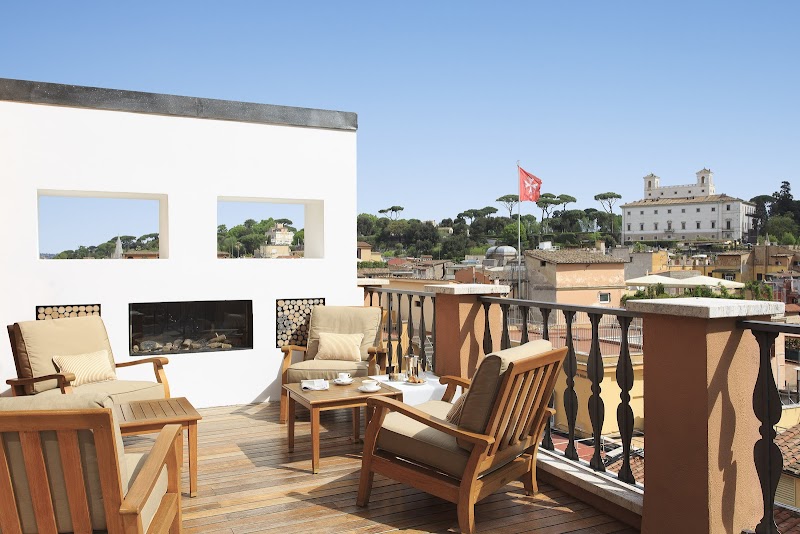
Rome's topography gives its hotels an unusual advantage: the city is built on seven hills, and the historic center concentrates extraordinary architecture in a relatively compact area, meaning that any sufficiently elevated position reveals multiple iconic landmarks simultaneously. The greatest views in Rome are not just skylines — they're compressed timescapes where a Baroque church dome sits beside a Republican-era column while a Renaissance fountain bubbles three floors below and the Vittoriano's white marble gleams in the middle distance.
The most celebrated Rome view is from the Janiculum (Gianicolo) hill, which overlooks the entire historic center from the west. At sunset, when the warm light turns the ochre and terracotta facades gold and the shadows of cypresses lengthen across the Trastevere rooftops, this is one of the most beautiful places on earth. The top of Castel Sant'Angelo, rising from the Tiber bend, offers a view that includes St. Peter's dome directly behind and the meander of the river below — the precise panorama that has appeared in Roman paintings for five centuries.
The Pincian Hill (Monte Pincio) above the Villa Borghese gardens overlooks the centro storico from the north, with the domes of Sant'Agnese in Agone and Sant'Andrea della Valle visible on clear days. The Pincio terrace is where Romans themselves walk on Sunday mornings, children flying kites against a backdrop of church towers and umbrella pines. Hotels near the Spanish Steps and the northern Tridente area benefit from proximity to this terrace while sitting at the center of the city's most glamorous shopping and restaurant district.
The Campo de' Fiori and Trastevere areas offer ground-level Roman beauty rather than panoramic distance — the sense of looking up at terracotta facades, medieval towers, and the dome of Sant'Andrea della Valle from the level of ancient paving stones is a different kind of view but no less powerful. Hotel terraces in the immediate Trastevere area often look across the Tiber toward the Castel Sant'Angelo or the Palazzo Farnese, and the sense of architectural proximity is extraordinary.
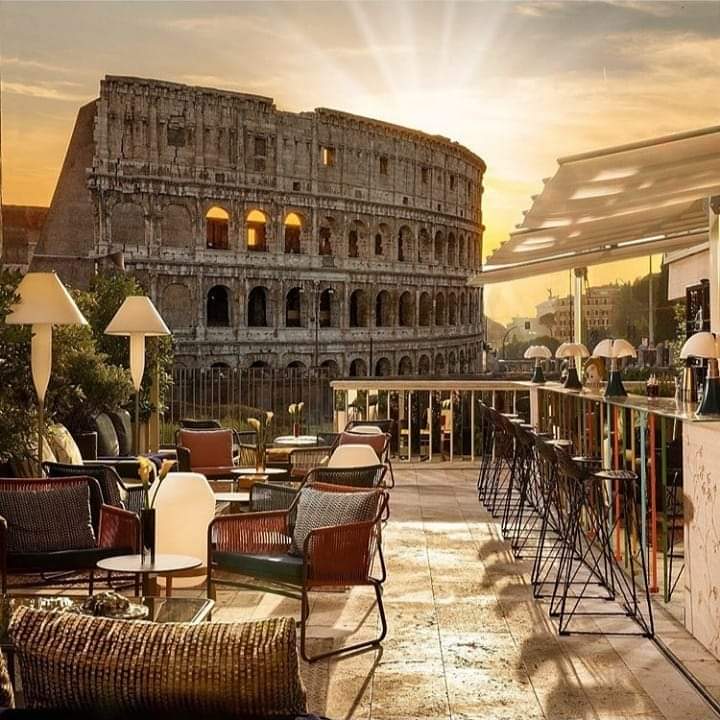
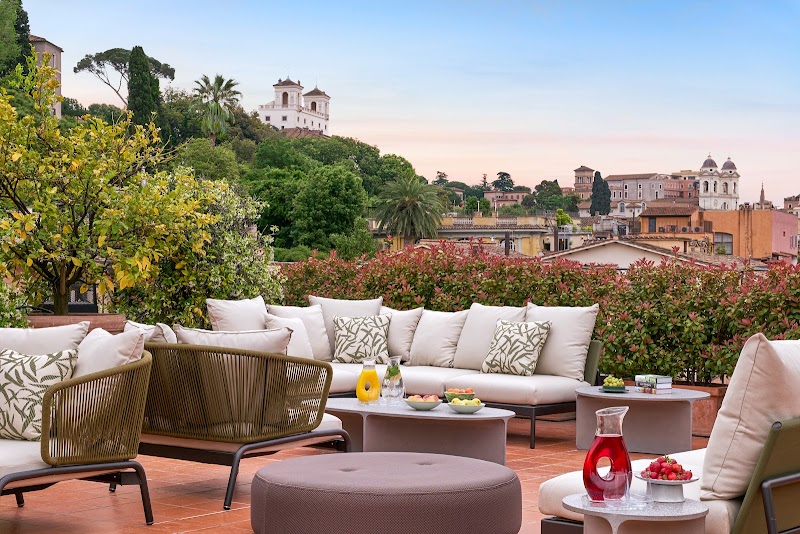
Rome's hotel rooftop culture deserves special mention — the aperitivo hour on a rooftop terrazza between 6pm and 8pm, with Campari soda or prosecco and a view of the Pantheon dome changing color in the evening light, is one of the city's most civilized pleasures. The competition between hotel rooftops for the most spectacular vista has produced extraordinary invested in terrace design — some of Rome's best views are earned with a cocktail, not a museum ticket.