Skip to content

Rome — Neighborhood Guide

Best Hotels in Rome City Center

The historic center of Rome — the Pantheon, Piazza Navona, Campo de' Fiori, and the tangle of medieval streets between them — is where the city reveals its most concentrated magnificence. Hotels here put you inside the eternal city's living museum, with ancient ruins and Baroque fountains as your daily backdrop.

best hotels in rome city center hotel rome historic center hotels near pantheon rome best hotels central rome 2026
Best Hotels in Rome City Center

Quick Answer

The Best Hotels in Rome City Center at a Glance

The historic center of Rome — the Pantheon, Piazza Navona, Campo de' Fiori, and the tangle of medieval streets between them — is where the city reveals its most concentrated magnificence. Hotels here put you inside the eternal city's living museum, with ancient ruins and Baroque fountains as your daily backdrop.

  1. 1
    J.K. Place Roma Historic Center — Near Spanish Steps · $$$$ · ★ 9.7 Exceptional
  2. 2
    Hotel de la Ville Spanish Steps / Via Sistina · $$$$ · ★ 9.6 Exceptional
  3. 3
    Albergo del Senato Pantheon — Piazza della Rotonda · $$$ · ★ 8.8 Excellent
  4. 4
    Palazzo Manfredi Colosseum — Via Labicana · $$$$ · ★ 9.3 Superb
  5. 5
    Campo de' Fiori Hotel Campo de' Fiori · $$ · ★ 8.6 Excellent

5 hotels reviewed · Price range: $$$$, $$$, $$ · Last updated March 2026

About This Guide

Rome's historic center occupies the core of the ancient city, contained within the bend of the Tiber River and stretching east toward the Trevi Fountain and Via Veneto. This is the Rome of postcard imagination — the cobblestone alleyways that open unexpectedly onto Bernini fountains, the trattorias with outdoor seating that has occupied the same piazza tables for generations, the morning light on travertine facades that makes even a walk to a coffee bar feel cinematic.

Hotels in the historic center are concentrated around three primary clusters: the Pantheon area (the most central and in-demand), the area around Piazza Navona, and the Campo de' Fiori/Largo Argentina corridor slightly to the south. Each has a distinct character. The Pantheon blocks are the most touristy but also the most architecturally extraordinary — you're essentially living inside a 2,000-year-old urban environment. Piazza Navona is slightly less overwhelmed in peak season, and the streets leading west toward the Tiber have the most authentic residential quality. Campo de' Fiori comes alive each morning with its vegetable market and becomes a nightlife hub each evening — wonderful for some travelers, insufferable for others.

Practical navigation from historic center hotels is genuinely excellent. Rome's major sights are extraordinarily compact — the Trevi Fountain, Piazza di Spagna, the Forum, and the Vatican are all within a 30-45 minute walk of any historic center hotel. The city's unreliable buses are supplemented by taxis (relatively affordable by European standards) and a small but useful metro network with stations at Barberini and Repubblica useful for eastern-city destinations.

The dining situation in the historic center is the paradox of all hyper-tourist neighborhoods: some genuinely terrible tourist-trap restaurants surrounded by some genuinely great ones. The rule of thumb holds here as everywhere in Italy — avoid menus with photographs, never eat at a restaurant adjacent to a major monument, and the best food is usually served in the least-decorated rooms.
Insider Tips

  • 1

    The Pantheon is free to visit but now requires a time-slot booking online — go at 7pm, when the tourist crowds have thinned and the light through the oculus has gone golden.

  • 2

    Campo de' Fiori's morning market runs 7am-2pm Monday through Saturday — the best produce and flower market in central Rome, also the most photographed.

  • 3

    Rome's cobblestones are brutal on wheeled luggage — porters at historic center hotels are genuinely valuable and worth tipping generously.

  • 4

    Book dinner at Roman trattorias at 8pm rather than earlier — the Italian dining rhythm means restaurants only reach their stride from 8:30pm, and tables at 7pm are invariably full of tourists.

  • 5

    The water from Rome's drinking fountains (nasoni) is safe, delicious, and cold — the best hydration option in the summer heat and a free alternative to expensive tourist-area bottled water.

Our Picks

Best Hotels in Rome City Center

5 hotels · Updated February 2026

J.K. Place Roma — Historic Center — Near Spanish Steps
$$$$ Ultra-luxury
★ 9.7 Exceptional

Historic Center — Near Spanish Steps

J.K. Place Roma

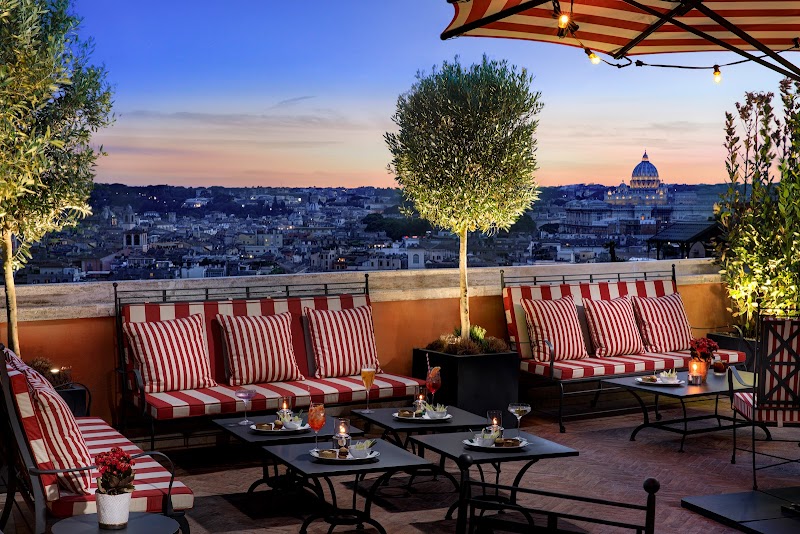
A 30-room boutique masterpiece that has never lost its position as the most coveted small luxury hotel in Rome's center. Michele Bonan's design channels a private Florentine palazzo — Biedermeier antiques, hand-painted murals, a roof terrace with a Trinità dei Monti view that defies rational description. Service is as personalized as it gets.

  • Ultra-luxury
  • Design lovers
  • Most exclusive
Check Availability
Hotel de la Ville — Spanish Steps / Via Sistina
$$$$ Ultra-luxury
★ 9.6 Exceptional

Spanish Steps / Via Sistina

Hotel de la Ville

Rocco Forte's flagship Roman property perched above the Spanish Steps on Via Sistina — terraces overlooking Rome, a rooftop that's the most spectacular dining room in the city, and Irene Forte's interiors that weave contemporary Italian craftsmanship through every room. The position at the top of the Steps is unrivaled.

  • Rooftop dining
  • Spanish Steps
  • Luxury Italian design
Check Availability
Albergo del Senato — Pantheon — Piazza della Rotonda
$$$ Upscale
★ 8.8 Excellent

Pantheon — Piazza della Rotonda

Albergo del Senato

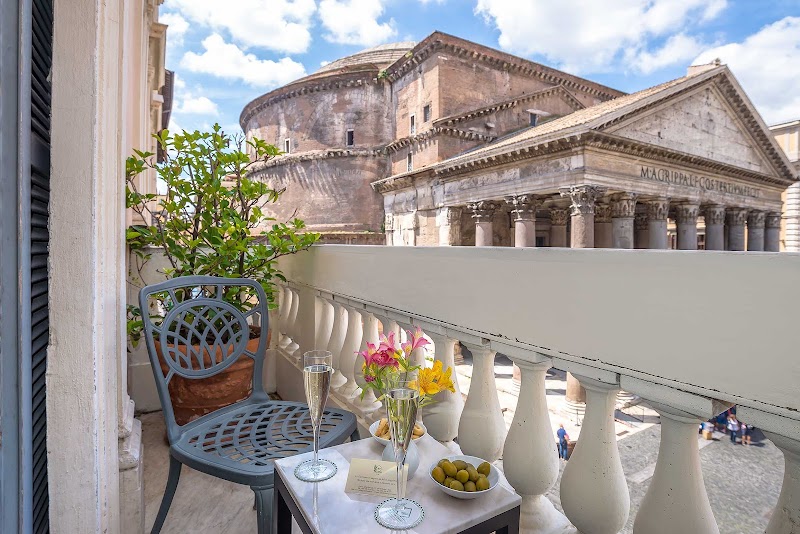
You can see the Pantheon's pediment from certain rooms. A traditional Roman three-star with unbeatable positioning on the Piazza della Rotonda — the most historically immersive hotel address in Italy. Rooms are simple and well-kept, breakfast is served with the Pantheon directly in view, and the price is honest.

  • Pantheon proximity
  • Historic atmosphere
  • Honest value
Check Availability
Palazzo Manfredi — Colosseum — Via Labicana
$$$$ Ultra-luxury
★ 9.3 Superb

Colosseum — Via Labicana

Palazzo Manfredi

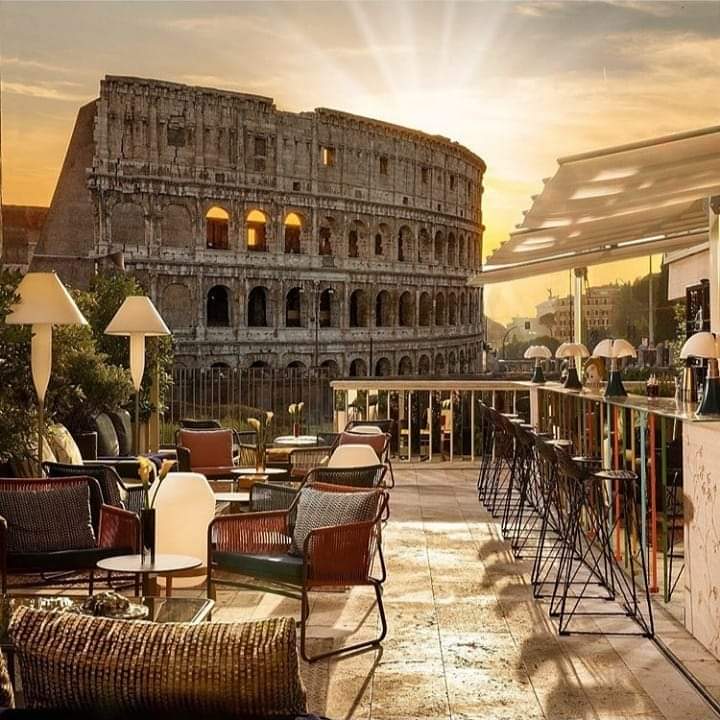
The only hotel in Rome with a direct Colosseum view from the rooftop and certain guest rooms — a jaw-dropping experience at sunset when the ancient amphitheatre turns amber. A small, service-focused property that attracts guests specifically for this once-in-a-lifetime sight line.

  • Colosseum views
  • History lovers
  • Rome bucket list
Check Availability
Campo de' Fiori Hotel — Campo de' Fiori
$$ Mid-range
★ 8.6 Excellent

Campo de' Fiori

Campo de' Fiori Hotel

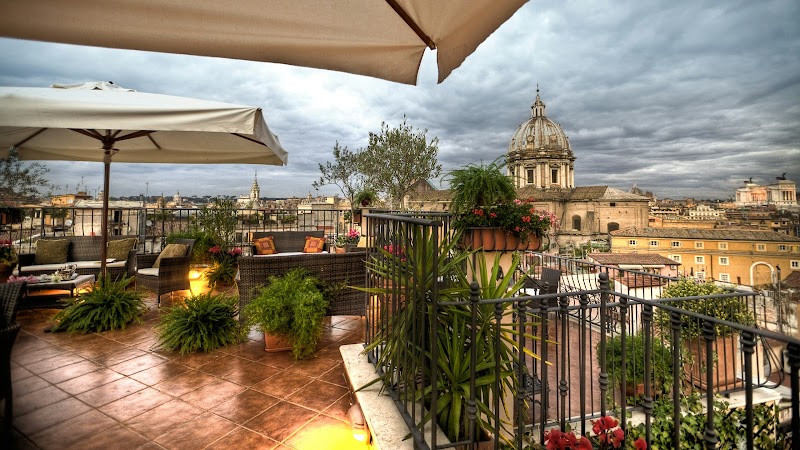
Rooftop terrace directly above one of Rome's most atmospheric piazzas — the morning market, the evening aperitivo scene, and the medieval street network all unfolding below. Simple, clean rooms at realistic prices with the most genuinely Roman street-life position of any hotel in the center.

  • Local atmosphere
  • Rooftop access
  • Value center
Check Availability

Common Questions

Frequently Asked Questions

What is the best area to stay in Rome for tourists?

The historic center (Centro Storico) is the best area for first-time visitors to Rome — it encompasses the Pantheon, Piazza Navona, Campo de' Fiori, and the network of medieval streets that constitute Rome's most densely historical neighborhood. The advantage is walkability — almost every major sight in Rome is within a 25-minute walk or a short taxi ride from the center. The Trastevere neighborhood across the Tiber offers a slightly more residential and arguably more authentically Roman atmosphere. For visitors who want luxury and convenience, the Spanish Steps area (Prati and Tridente) offers excellent hotels and proximity to the city's best shopping. Vatican-adjacent hotels make sense if the museum is a central trip priority.

How much do hotels cost in Rome city center?

Rome's historic center hotel prices span a wide range. Budget options (simple, clean rooms in pensione-style properties) start around €80-120/night. Mid-range boutique hotels with decent design run €180-280/night. Quality boutique hotels with notable design or superior locations (Albergo del Senato, Campo de' Fiori Hotel) are €250-400/night. The top tier — J.K. Place Roma, Hotel de la Ville, the Hassler — starts at €600-800/night and rises significantly for suites. April through June and September through October are the most expensive periods; July and August are surprisingly affordable at some properties despite the heat, as many Italian visitors leave the city for the coast.

Is it worth staying in the historic center of Rome?

Staying in the Centro Storico of Rome offers an experience that no other city neighborhood can replicate — the sense of living inside a 2,000-year continuously inhabited city, where turning any corner might reveal a first-century BC temple incorporated into the façade of a Baroque church. For first-time Rome visitors, the historic center is the unambiguous recommendation. The main arguments against are: tourist restaurant density (requires more navigational effort to find good food), limited parking for drivers, narrow streets that are difficult with large luggage, and noise on summer evenings in the Campo de' Fiori and Pantheon areas. For repeat visitors, Trastevere, Prati, or Monti often provide better lived-in character with slightly less tourist saturation.

What are the best restaurants near Rome city center hotels?

Rome's historic center has some excellent restaurants hidden among the tourist traps. The essential rule: look for osterie and trattorias on side streets, particularly those requiring reservations (indicating a local clientele rather than tourist walk-ins). Specific recommendations: Armando al Pantheon near the Pantheon (open for over 50 years, Roman classics executed faultlessly, book two weeks ahead for dinner), Da Enzo al 29 in Trastevere (a 20-minute walk, worth every step for cacio e pepe and abbacchio), Roscioli Ristorante in the Jewish quarter (sophisticated wine list alongside Roman classics), and Il Sorpasso in Prati for cicchetti and natural wine. For morning coffee: Sant'Eustachio il Caffè near the Pantheon is the best espresso in Rome, no real competition.

Is the Rome historic center safe?

Rome's historic center is very safe for visitors by any objective measure — violent crime against tourists is extremely rare. The practical safety concerns are: pickpocketing (the most common issue, primarily around the Trevi Fountain, Colosseum, Piazza di Spagna, and on crowded public transport) and scams targeting tourists near monuments (unofficial 'guides,' rose sellers who demand money after handing flowers to unsuspecting visitors). Standard precautions — money belt or anti-theft bag, keeping phones and cameras secured in crowded areas — are sufficient for the vast majority of visitors. The historic center has a strong evening street presence and restaurant activity until midnight, making it feel safe and animated late into the night.

Ready to book Rome?

Prices and availability change daily. Lock in the best rate by booking early — most of our top picks offer free cancellation.

View All Rome Hotels