Phuket's neighborhood geography matters enormously for solo travel — choosing the wrong area means either isolation (in the ultra-luxury north and south of the island) or overwhelming tourist density (Patong). The three neighborhoods that work best for solo travelers each offer a distinct experience.
Patong is Phuket's most socially dense neighborhood — the Bangla Road bar circuit, the beach club strip, the night market, and the concentrated restaurant scene on and around the beach road make this the easiest entry point for solo travelers who want to meet people quickly. The tradeoff is noise, tourist saturation, and an environment that can feel exhausting if you're not specifically there for the nightlife. The Standard-quality hotels in Patong (several internationally branded midrange properties) provide safe, comfortable bases in the $60–150 range. Eat at the stalls on Thanon Phang Nga in the evening — mussel pad thai, mango sticky rice, and grilled satay from the street vendors represent the best casual solo eating in the area.
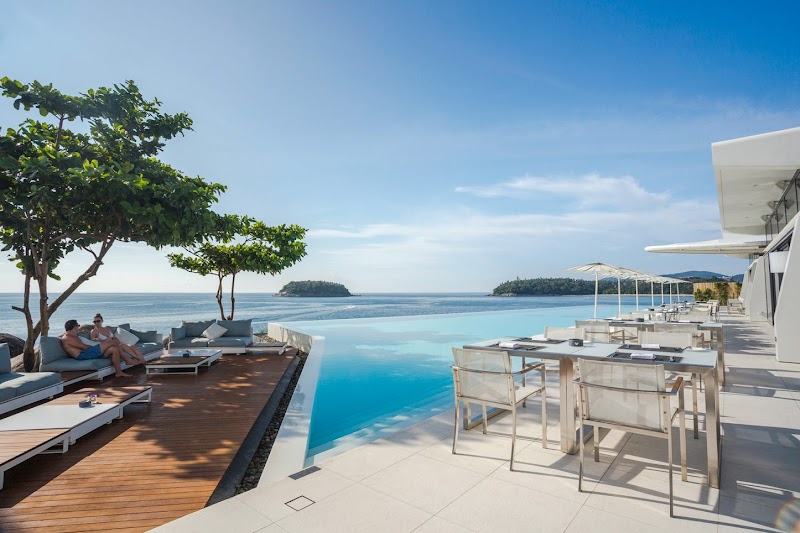
Kata and Kata Noi — 15 km south of Patong — offer the most balanced solo Phuket experience. The twin beaches are excellent for swimming (Kata Noi in particular is one of Phuket's finest smaller beaches), the restaurant scene on Kata's main street is genuinely good value (Capannina for Italian, Boathouse Wine & Grill for sunset drinks, the local-facing Thai restaurants on the parallel streets), and the social culture is relaxed without Patong's excess. Kata Rocks, the headland villa resort between the two beaches, occupies the ideal position for a solo traveler who wants luxury without isolation — the resort's fine-dining restaurant draws non-staying guests, creating a social overlay beyond the hotel's own guest list.
Old Phuket Town — the island's most underrated solo travel destination — offers something entirely different: a functioning Thai-Chinese urban neighbourhood with a historical depth that the beach resort strip completely lacks. The Sino-Portuguese shophouses of Thalang Road, the shrines of the nine-emperor gods festival (October), the Sunday Walking Street food market, and the coffee shops operated by third-generation Hokkien Chinese families create a Phuket that barely resembles the island of the tourist brochures. The boutique hotels in Old Town (Iniala Harbour House, Casa Blanca) attract independent travelers seeking this cultural dimension, and the motorcycle taxi network makes the beaches of Patong and Rawai accessible from this base.
For Phuket island-hopping (the Phi Phi Islands, James Bond Island, the Similan Islands), the departure points at Rassada Pier and Ao Chalong mean that base choice matters less than logistics management. Solo travelers targeting dive liveaboards should stay in Rawai or Chalong — the closest neighborhoods to the dive departure piers — rather than the more social but distant Patong.