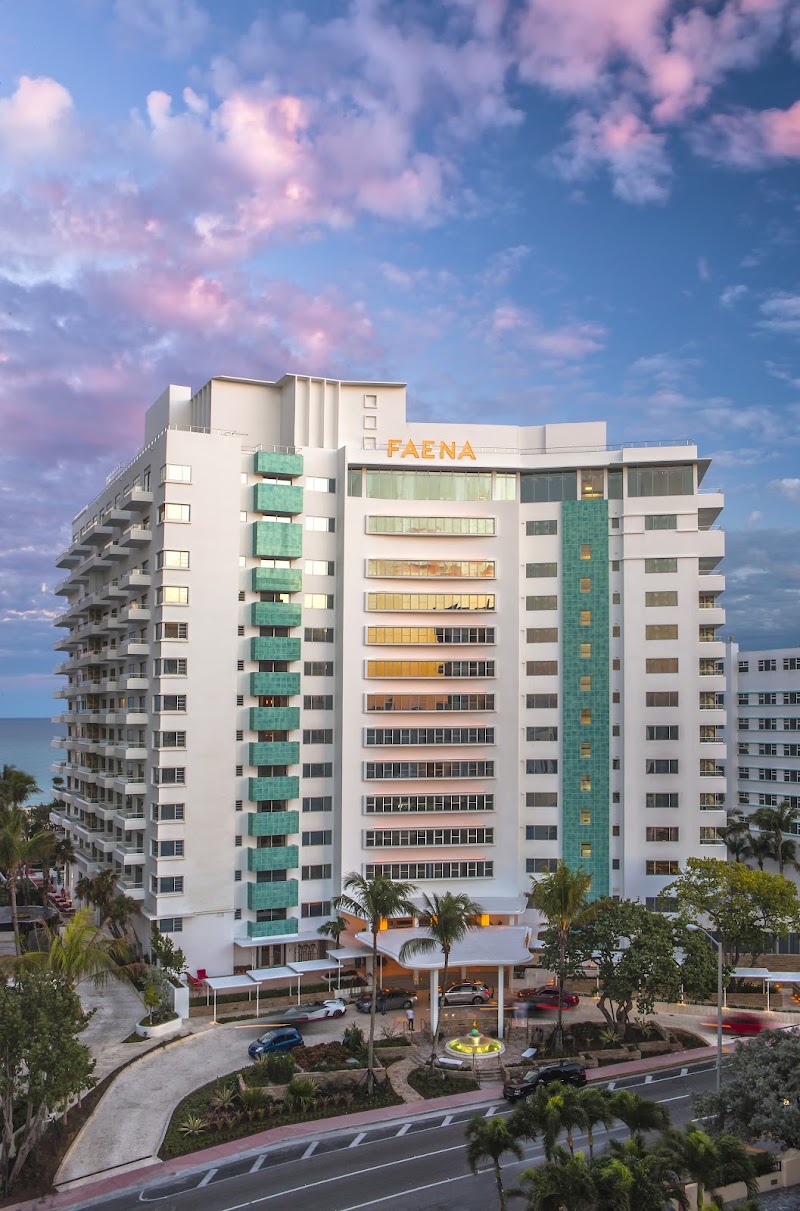
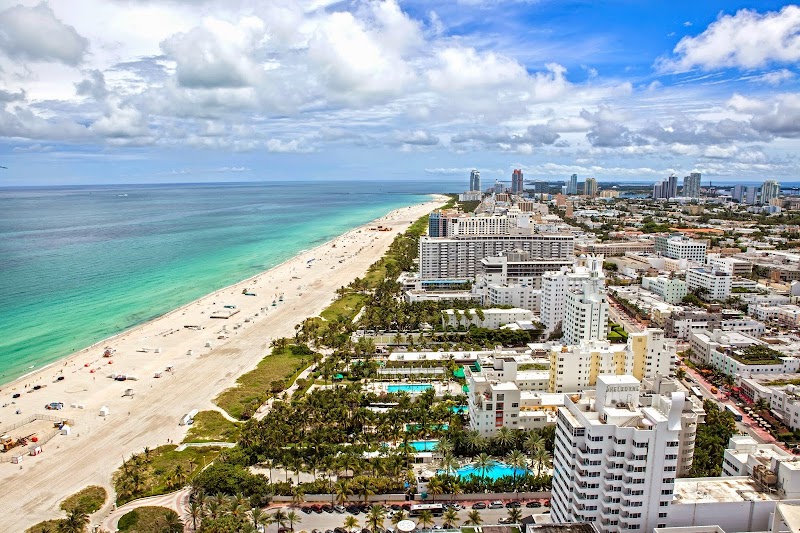
Miami Beach is actually a barrier island, and its hotel landscape stretches across several distinct neighbourhoods that share a coastline but differ significantly in character. South Beach — from 1st to 23rd Street — is the famous stretch: art-deco hotels, the Ocean Drive promenade, and an energy that runs from sunrise yoga to midnight poolside. Mid-Beach (24th to 63rd) is quieter, more residential, and home to some of the city's finest properties — the Faena, the Edition, and the Setai occupy this stretch. North Beach and Surfside offer a calmer alternative with excellent sand and a fraction of the crowds.
The most important decision for beach hotel guests isn't which hotel but which stretch of beach. South Beach's sand is wider and more social; Mid-Beach offers equivalent water quality with dramatically less foot traffic. Bal Harbour and Surfside at the northern end attract a moneyed crowd drawn to the shopping and the relative privacy. Key Biscayne, technically separate from Miami Beach on its own island, offers the most natural beach setting within city limits — Crandon Park and Bill Baggs are among South Florida's finest beaches.
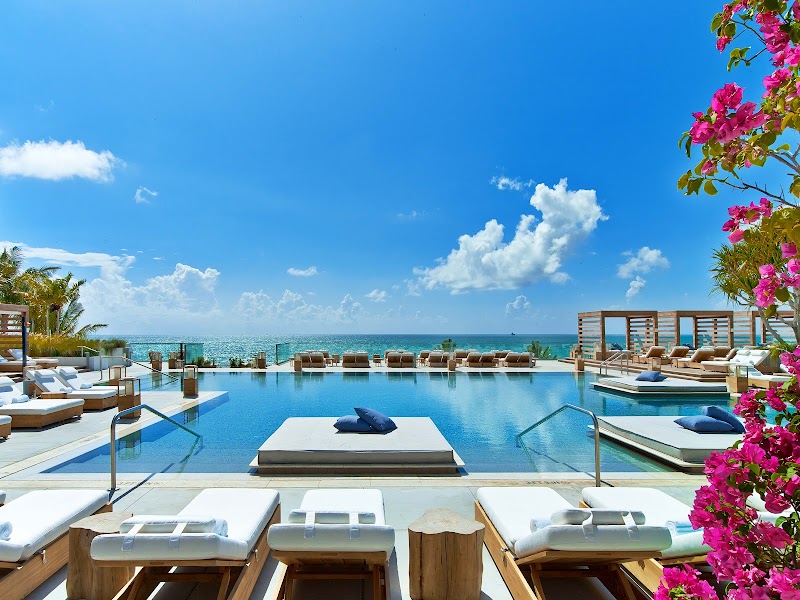
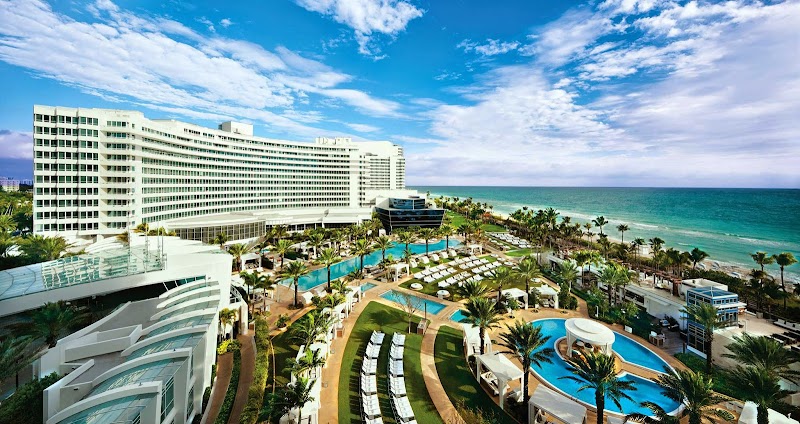
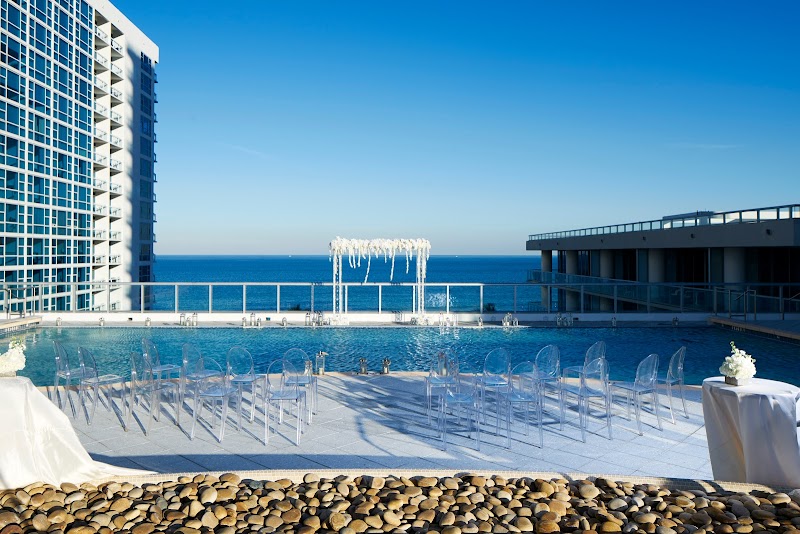
Hotel pools in Miami function as attractions in their own right. The Fontainebleau's pool complex, the 1 Hotel's reclaimed-wood pool deck, and the Faena's gold-leaf pool structure are each worth visiting regardless of where you sleep. Most beach hotels charge a resort fee ($25–$75/night) that typically includes beach chair access, towels, and pool use — factor this into your budget.
The best months for Miami beach hotels are November through April, when the weather is warm but not brutally humid, and the water temperature sits around 75–80°F. Summer (June–September) brings peak humidity, afternoon thunderstorms, and lower rates — the water is warmer but the atmosphere is more local and less glamorous. Hurricane season runs June through November, with September and October statistically the highest-risk months.