Istanbul's food geography follows the Bosphorus and the Golden Horn in ways that make neighborhood selection critical. Sultanahmet, the old historic peninsula, is where tourists congregate and where food quality can be uneven — but hidden between the souvenir shops are genuinely excellent spots: Tarihi Sultanahmet Köftecisi (Istanbul's most famous köfte restaurant, on Divanyolu since 1920), and the covered bazaar food stalls in and around the Egyptian Spice Bazaar (Mısır Çarşısı), which sells Turkish delight, dried apricots, and wild honey unlike anything in a supermarket.
Beyoğlu, across the Golden Horn, is Istanbul's culinary engine. The grand Istiklal Avenue is lined with pastry shops and fish restaurants, but the real action unfolds in the narrow side streets: Asmalımescit is a single alley that has been Istanbul's restaurant row for decades, packed with meyhanes where the meze arrives in waves and the rakı flows freely. Cihangir, the hillside neighborhood beloved by artists and journalists, has excellent breakfast cafés — Istanbul's breakfast culture is a phenomenon in itself, with spreads of white cheese, olives, tomatoes, cucumber, sucuk (spiced sausage), and fresh-baked simit that can occupy an entire morning.
Karaköy, at the foot of the Galata Tower, has transformed dramatically in the past decade. What was once a working fishing port is now Istanbul's most exciting food neighborhood: Karaköy Güllüoğlu serves the city's best baklava (made with Antep pistachios from southeastern Turkey) from a corner bakery that opens at 7am; Gram restaurant pioneered the Anatolian-fusion movement; and the covered market alleys between Karaköy and Galata are lined with specialty grocers, spice merchants, and breakfast cafés.
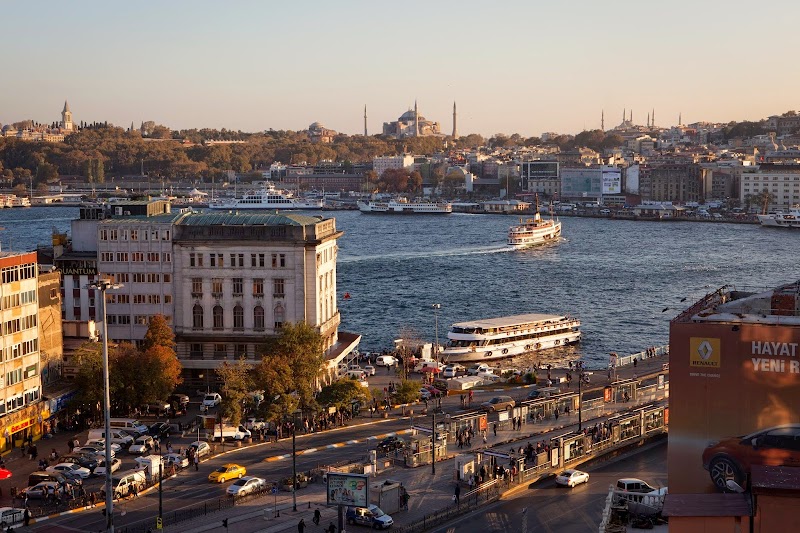
Beylerbeyi and Arnavutköy, on the Asian and European shores of the Bosphorus respectively, are the seafood heartland. Arnavutköy's İskelesi restaurant and the fish restaurants lining the Bebek waterfront serve the freshest Black Sea hamsi (anchovies), sea bass, and turbot — ideally eaten on a terrace with the strait's tanker traffic drifting by in the background. The fish sandwich boats near Eminönü bridge are a different register entirely, but equally essential.
Istanbul's food calendar peaks during Ramadan, when the streets around the Blue Mosque fill with night markets and the city's pide bakeries run 24 hours. The summer months bring stone fruit and fresh tomatoes from Anatolia, and the autumn brings the chestnut sellers who roast on every corner from October through January — one of the most evocative smells in any city on earth.