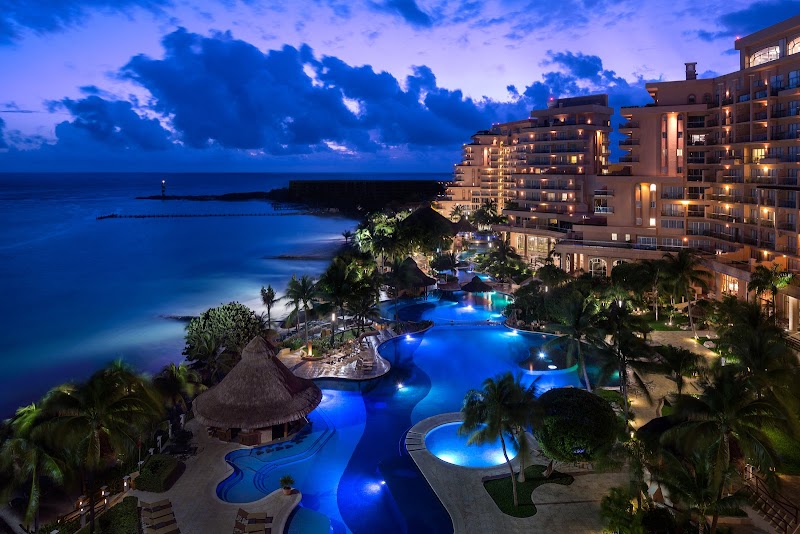
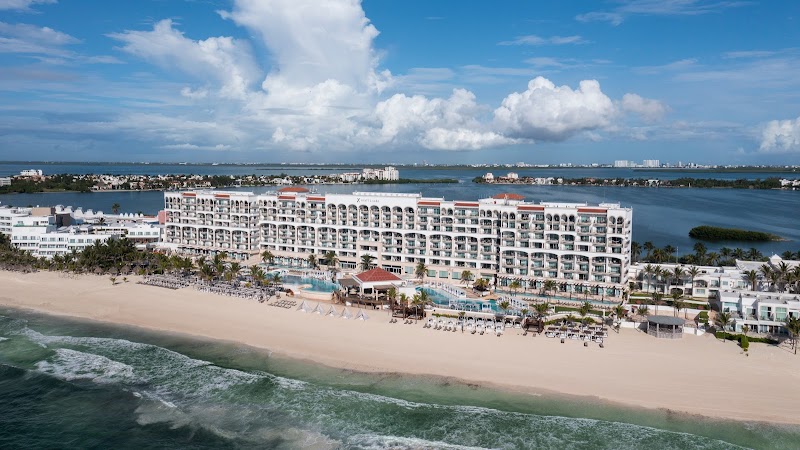
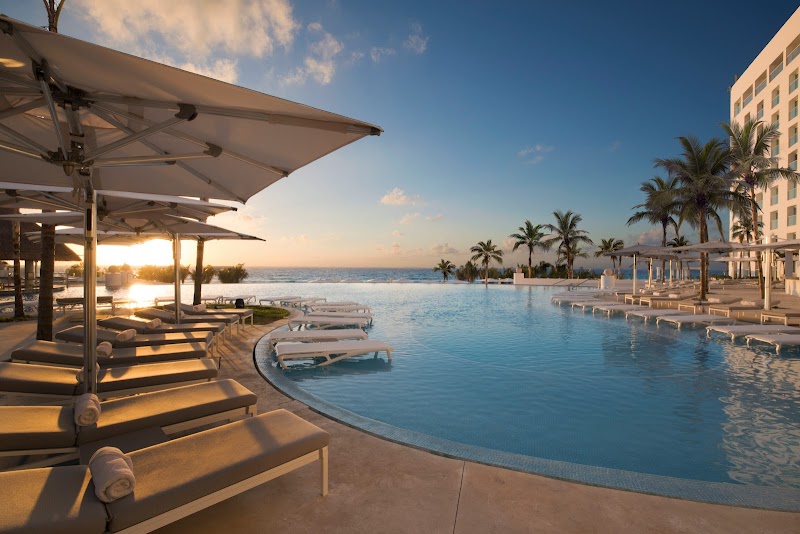
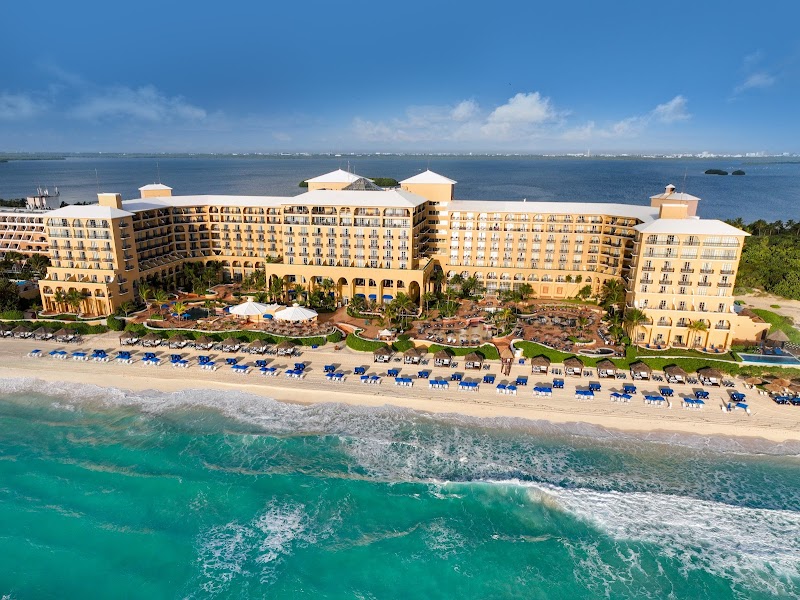
The Hotel Zone's 14 miles of coastline are divided into meaningfully different beach types that rarely get adequate explanation in hotel descriptions. The northern arc, from roughly km 5 to km 11, sits on a peninsula between the Caribbean Sea and the Isla Mujeres channel — this sheltered position produces calmer, more consistently swimmable water, wider beaches, and the classic postcard turquoise color that Cancún's marketing images universally depict. This is where the Grand Fiesta Americana Coral Beach, Hyatt Zilara, and Le Blanc sit, and their beach advantage over the eastern-facing Zone hotels is genuine and significant.
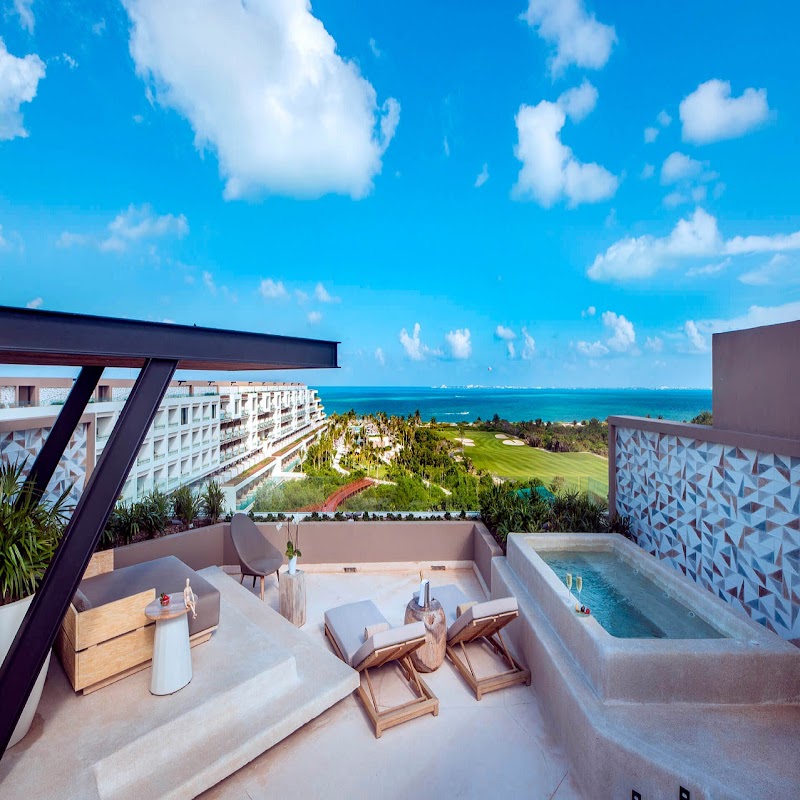
The eastern-facing Zone (km 11 to km 20) confronts the open Caribbean directly. The water here is more dramatic — deeper blues, larger waves, and more energetic conditions — but also less swimmable, particularly for children or weak swimmers. Hotels in this section often have flags limiting swimming (flags change based on conditions, with yellow and red common in summer months). The payoff for the wave exposure is dramatic scenery: the view from an upper-floor ocean suite facing east is genuinely spectacular, and the beach photography opportunity is unmatched anywhere in the Zone.
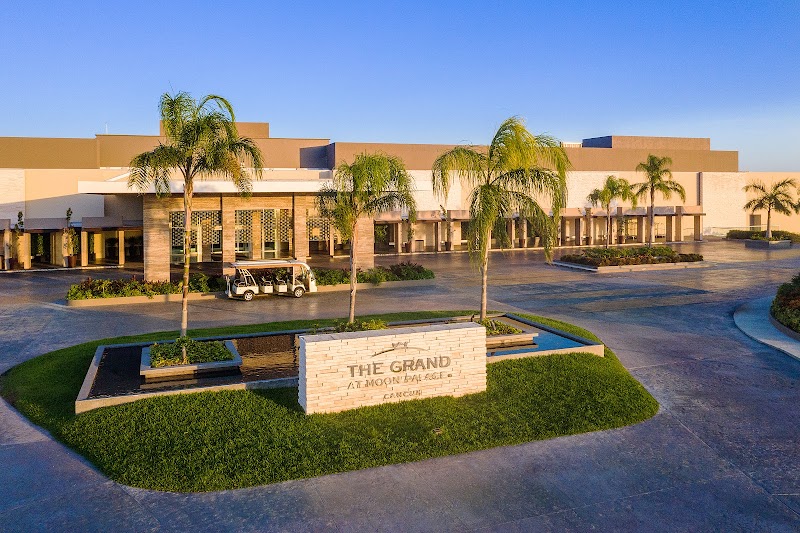
The southern end of the Zone, approaching km 20 and the Riviera Maya boundary, transitions toward the protected lagoon geography. Nizuc Resort & Spa and Moon Palace The Grand sit here and benefit from a different kind of calm — not the northern peninsula's sheltered channel but the lagoon-mouth's natural water attenuation, which creates swimmable conditions and broad, easily usable beach sections.
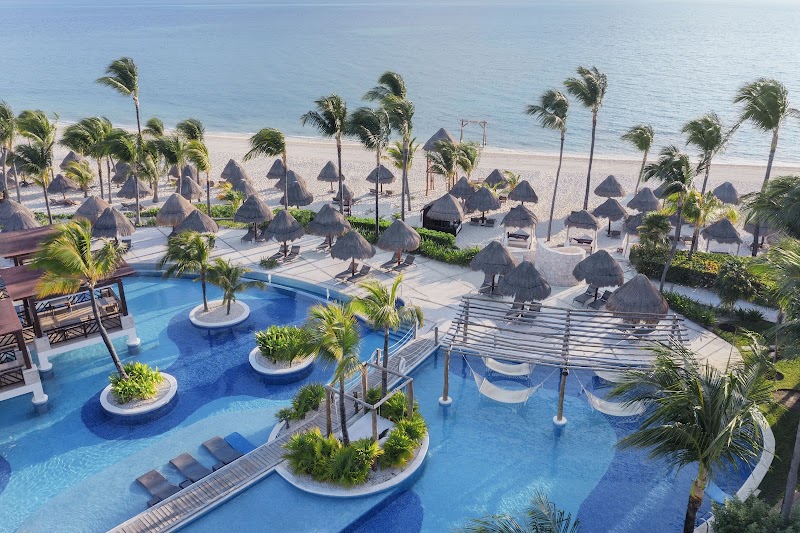
Beyond the Zone, Playa Mujeres is where the Cancún area's finest beach quality concentrates. The channel beach on the western edge of Isla Mujeres faces northwest, benefiting from both the channel's wave protection and the reduced sargassum exposure that affects the eastern-facing Zone beaches. Excellence Playa Mujeres, Atelier Playa Mujeres, and Beloved Playa Mujeres all sit on this beach, and guest reviews consistently rate it as superior to Hotel Zone beach quality — wider sand, calmer water, and significantly less seaweed.
Sargassum seaweed deserves honest discussion in any Cancún beach guide. The brown algae arrives in waves throughout the year, with peak arrivals typically June through October, and the eastern-facing Zone beaches are the most consistently affected. Top properties employ dedicated removal crews who clear overnight arrivals each morning, but no resort can guarantee a seaweed-free beach during a heavy-arrival period. The northern Zone and Playa Mujeres are structurally less exposed to the dominant sargassum drift patterns, making them the more reliable beach-quality choices for summer travel.
For travelers whose priority is maximum beach time, the practical calculus is: northern Zone or Playa Mujeres for calm-water swimming, central Zone for dramatic scenery and wave activity, southern Zone for a balance of both. No single beach position is objectively best for every traveler, but the premium positioned northern arc hotels — Grand Fiesta Americana, Hyatt properties, Le Blanc — occupy the section that most consistently delivers the classic Cancún beach brochure experience.