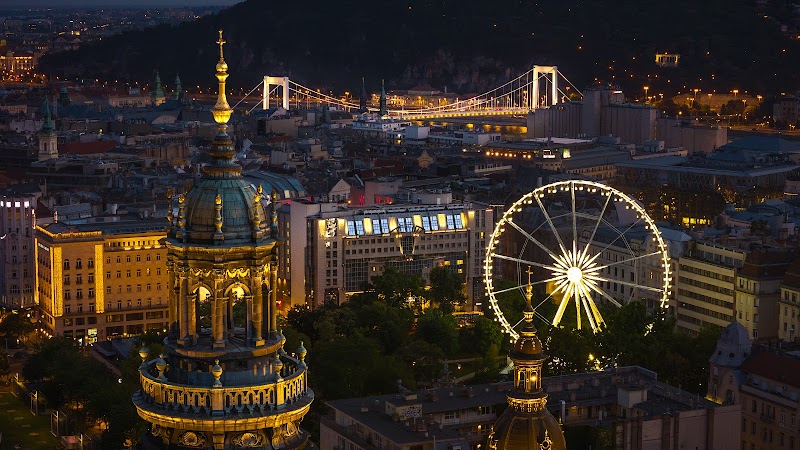
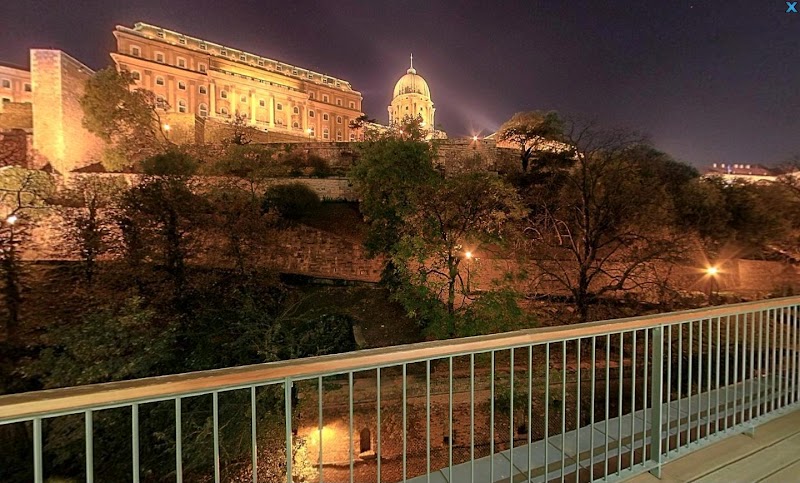
The Danube — in Budapest, the Duna — is the city's spine and its most romantic feature. Standing on the Chain Bridge at sunset, with the Buda Castle and Matthias Church on the hill above and the Parliament's neo-Gothic towers reflected in the flat water below, is the encounter with Budapest that most honeymooners had imagined from photographs but found, in reality, more moving than expected. The illumination system along the river — coordinated between the Castle, Parliament, bridges, and riverside palaces — makes the evening cityscape more extraordinary than many cities achieve with their most famous landmarks alone.
The Hungarian Parliament Building, arguably Europe's most beautiful legislative structure, anchors Pest's riverfront. Its neo-Gothic exterior alone justifies a Budapest honeymoon, but the guided interior tours — the domed assembly hall with its gilded pillars, the preserved Hungarian Crown Jewels, the crimson carpet of the committee rooms — reveal depths of architectural ambition that rival anything in Vienna or London. Book English-language morning tours in advance; afternoon light through the Parliament's river-facing windows is spectacular.
Buda Castle Hill, the UNESCO-listed historic district on the right bank, offers a different Budapest experience from Pest's café and restaurant culture. The Castle District's cobblestoned streets, medieval churches, and the Fisherman's Bastion — a neo-Romanesque terrace with turrets that looks across the Danube to the Parliament — are the architectural image most associated with Budapest internationally. The Matthias Church beside the Bastion contains one of the most beautiful Gothic interiors in Hungary, with Moorish-influenced geometric tile floors and painted walls of extraordinary complexity.
Budapest's thermal bath culture is not a tourist overlay but a daily social institution — Hungarians have been gathering in thermal waters since the Roman occupation and Ottoman reconstruction of the baths in the 16th century. For honeymooners, the historical baths are two distinct experiences: the Gellért Baths (art nouveau, attached to the Hotel Gellért, with an outdoor wave pool in summer) and the Széchenyi Baths in City Park (neo-Baroque, with three outdoor pools including a chess-playing thermal bath where elderly gentlemen play over floating boards). A private bath evening — renting a booth at Gellért for a couple's thermal soak — is one of Budapest's most intimate romantic experiences.
Hungarian cuisine and wine have emerged significantly in the past decade. Onyx (two Michelin stars) and Costes Downtown (one star, on the Danube bank) represent the apex of Hungarian gastronomy, while the market culture around the Great Market Hall and the wine bars of the 8th district showcase Hungarian varietal wines — Furmint from Tokaj, Kadarka from the Villány region — that are exceptional and essentially unknown outside the country. A wine tasting organized through your hotel with a specialist sommelier focusing only on Hungarian bottles is one of Budapest's most revelatory experiences.