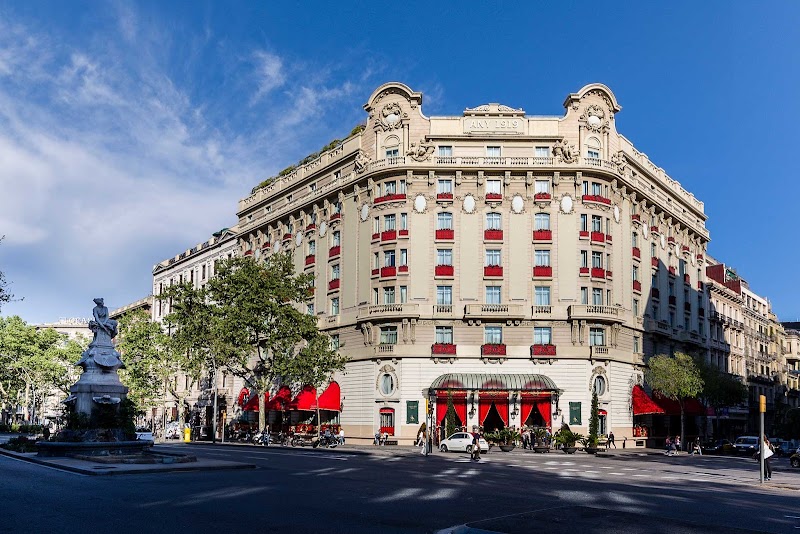
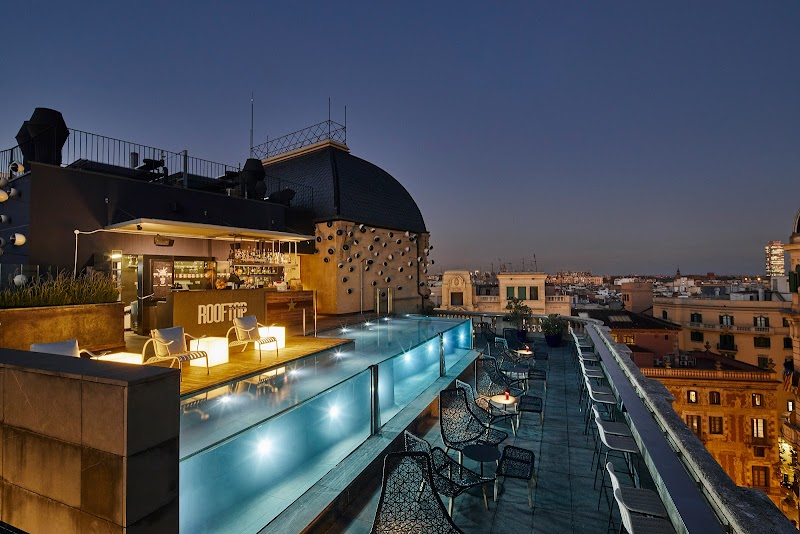
The Eixample — the 19th-century grid extension designed by Ildefons Cerdà — is where Barcelona's finest honeymoon hotels are concentrated, and where the city's architectural identity reaches its most extraordinary expression. The blocks of the Eixample contain Gaudí's Casa Batlló and Casa Milà (La Pedrera), Domènech i Montaner's Casa Lleó Morera and Palau de la Música Catalana, and dozens of lesser-known modernista masterworks whose carved stone and ceramic tile facades reveal new details with every passing. The best honeymoon hotels in this neighborhood place guests within the walking range of this architectural world, and the avenue of Passeig de Gràcia — Barcelona's equivalent of Paris's Champs-Élysées — anchors the district's social life.
The Sagrada Família, Gaudí's unfinished basilica now under construction for 140 years, is the singular experience of any Barcelona honeymoon. No photograph prepares the visitor for the scale, the strangeness, and the spiritual intensity of the interior — a forest of stone columns branching into vaulted ceilings of extraordinary complexity, filled with colored light from stained glass windows designed by Gaudí's successors in his tradition. Book tickets online well in advance; the interior tours with an audio guide take 90 minutes and the experience of being inside this building, which will not be completed within any living person's lifetime, is permanently altering.
The Gothic Quarter (Barri Gòtic) and El Born are the city's historic core — medieval lanes, Roman wall fragments, Gothic palaces, and the cathedral of Santa Eulàlia whose cloister contains a colony of 13 white geese (kept for 700 years as guardians of the Gothic Quarter's memory). El Born's Carrer del Parlament and the streets around the Basilica de Santa Maria del Mar have the most sophisticated restaurant and wine bar scene in Barcelona — compact, personal, intensely local — anchored by the Picasso Museum and the Palau de la Música around the corner.
Barcelona's food scene operates at a level of ambition and quality that has no equal in Spain. The city has more Michelin stars than Madrid, and the Catalan culinary tradition — anchored by the Can Roca brothers' influence and the late Ferran Adrià's revolution at El Bulli — has produced a generation of chefs who take local ingredients (Catalan olive oil, Penedès wine, La Boqueria market produce) with complete seriousness. Tickets (Albert Adrià's tapas bar near Paral·lel, reservations essential months in advance), Disfrutar (two Michelin stars, experimental Catalan cuisine), and the informal excellence of Bar Calders in Sant Antoni represent the spectrum.
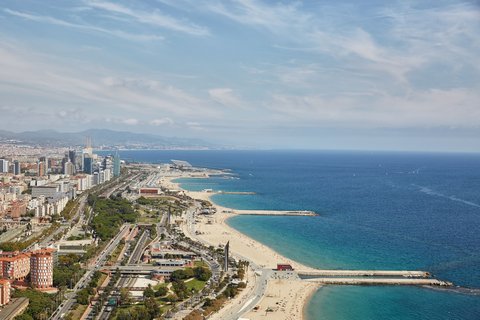
For beach access, the Barcelona waterfront is a 20-minute walk from the Barri Gòtic. Barceloneta beach is urban and lively; Bogatell and Nova Icaria further north are calmer. The most atmospheric beach time for honeymooners is late afternoon through sunset — the Barceloneta chiringuitos (beach bars) serve cold beer and fresh seafood as the light changes and the evening promenade begins.