Barcelona's food map is organized around La Boqueria, the great covered market on Las Ramblas that serves simultaneously as a tourist attraction and a genuine working provisioner for the city's chefs. The best time to visit is before 9am, when the market is full of Barcelonans buying produce rather than cameras taking selfies. The stalls of Petràs (mushrooms), La Boqueria's historic fishmongers, and the central produce stands supplied by Catalan farmers are the genuine article — and the freshly pressed juice bars and tapas counters on the market's perimeter are a fine breakfast even if you're not cooking.
The El Born neighborhood, immediately east of the Gothic Quarter, is Barcelona's most satisfying area for food exploration. The Carrer del Parlament, Carrer de Viladomat, and the streets radiating from the Basílica de Santa Maria del Mar are lined with wine bars, pintxos counters, and small-plates restaurants that embody Barcelona's contemporary food identity. Bar del Pla (Carrer de la Montcada), Llamber (a creative Asturian-Catalan restaurant), and El Xampanyet — a century-old cava bar on Carrer de Montcada — are all essential stops. The neighborhood also has excellent coffee, with Federal Café and other third-wave spots dotting the streets.
The Eixample, Gaudí's grid-pattern expansion neighborhood, is where Barcelona's serious restaurant scene lives. Disfrutar — currently among the world's top restaurants — operates on Carrer de Villarroel; Lasarte (three Michelin stars) is on Carrer de Mallorca; and Compartir, Bodega Sepúlveda, and Casa Leopoldo represent the middle register of excellent Catalan cooking. The Esquerra de l'Eixample (left Eixample) neighborhood around Carrer de Muntaner has Barcelona's most concentrated density of neighborhood restaurants, tapas bars, and natural wine shops.
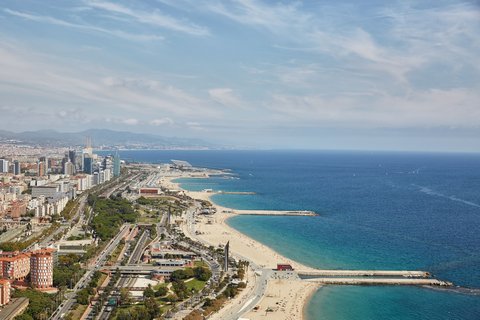
Gràcia, the village-within-the-city north of the Eixample, moves at a slower pace and has the most genuinely local restaurant scene. The terraces around Plaça del Sol and Plaça de la Vila de Gràcia are animated every evening from 7pm, and the Travessera de Gràcia is lined with excellent neighborhood restaurants that cater to locals rather than tourists. Barceloneta, the old fishermen's quarter by the sea, is the place for paella and fresh seafood — though any Barcelonan will tell you to choose your restaurant very carefully and avoid the tourist trap versions on the main beach promenade.
Catalan food culture runs on time in ways visitors must respect: breakfast (esmorzar) is light and early, lunch (dinar) is the main event at 2–4pm, and dinner (sopar) doesn't begin until 9pm. Arriving at a restaurant at 7pm puts you firmly in tourist territory — embrace the late-eating schedule and you'll immediately eat better and be surrounded by more local company.