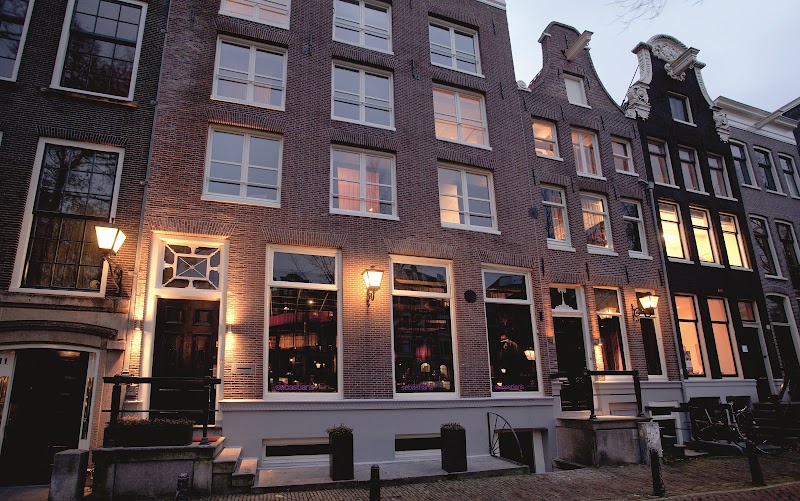
The Jordaan was originally a working-class district built in the early 17th century to house workers and immigrants outside the main canal ring. Today it's among Amsterdam's most desirable addresses, a neighbourhood that has gentrified without losing the density and intimacy that makes it special. Walking its streets — Eerste Bloemdwarsstraat, Tuinstraat, Westerstraat — you encounter a mix of galleries, florists, wine bars, and the occasional houseboat cat that gives Amsterdam its lived-in, unhurried character.
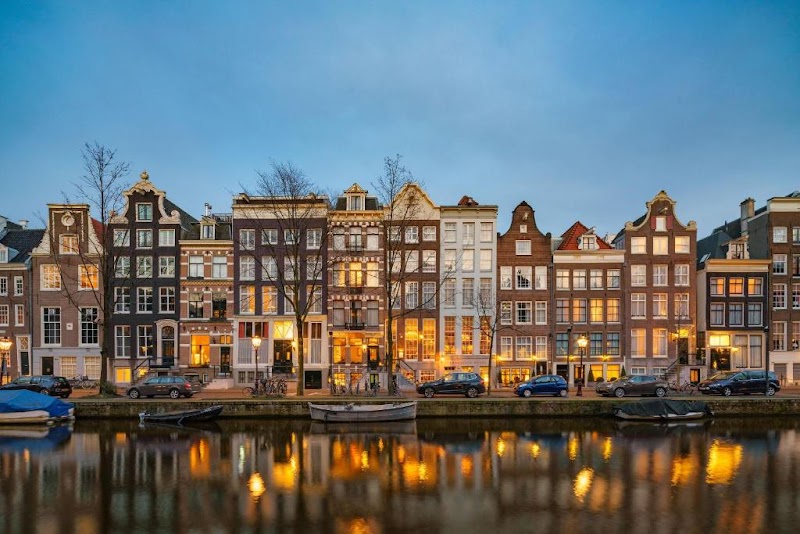
Hotels in the Jordaan tend to occupy converted canal houses, which means narrow staircases, rooms that vary significantly by floor, and a physical intimacy with the building's history. The better properties have invested in lifts and modern bathrooms while preserving original beams and tilework. If mobility is a concern, confirm lift access before booking — many historic properties have stairs only.
The western edge of the Jordaan borders the Prinsengracht, one of Amsterdam's principal canals and the location of the Anne Frank House (Prinsengracht 267). Staying in the Jordaan means you can visit early before the crowds build — a genuine advantage given that the Anne Frank House is one of the city's most visited and emotionally significant sites. Book tickets well in advance regardless of where you stay.
The neighbourhood's food scene is excellent. Toscanini on Lindengracht is one of Amsterdam's most consistently good Italian restaurants; Mossel & Gin on the same street is the place for Dutch mussels; De Reiger has been serving good Dutch-European food since the 1980s. The Saturday market at Noordermarkt offers the best cheese, bread, and organic produce in the city.
For practical orientation: the Jordaan's boundaries are roughly Brouwersgracht to the north, Leidsegracht to the south, Prinsengracht to the east, and Lijnbaansgracht to the west. Tram lines 13 and 17 connect the neighbourhood to Centraal Station and the wider city.